Martinique has lengthy occupied a definite place within the Caribbean. An abroad division of France positioned within the Lesser Antilles, it’s also the outermost area of the European Union. Its historical past of resistance to colonial domination and its mental contributions have formed international conversations round race, liberation and identification.
For Black Americans particularly, Martinique’s significance extends far past geography. The island’s political thought, cultural resilience and revolutionary legacy join deeply to actions which have formed Black life within the United States.
Martinique’s historical past
A rustic with a wealthy but advanced historical past, Martinique was built on the backs of Amerindian inhabitants earlier than the arrival of Europeans.
Although there was stark resistance from the Carib individuals to European colonization, the battle was in the end misplaced to the French, who sought to ascertain colonies within the West Indies to take advantage of the area’s pure sources.
They additionally aimed to increase their affect within the Caribbean. During French colonization, hundreds of women and men had been captured and bought into slavery, typically working in inhumane circumstances. Much like within the United States, this dehumanization of individuals turned a driving pressure of the financial system.
A step towards a brighter future
On May 22, 1848, the French authorities abolished slavery in Martinique. Yet, simply as was the case in America, most of the newly freed individuals confronted discrimination, monetary hardship and an total lack of identification.
Martinique wouldn’t be the entity it’s at the moment with out a long time of political change. From turning into a French division in 1946 to making a single native authority in 2020, many milestones have formed its present governance construction and civic identification.
“Martinique’s contribution to international Black political consciousness is inseparable from its lengthy historical past of resistance to slavery, colonial domination and cultural erasures, and from the thinkers it produced who translated that historical past into concepts that traveled the world,” Muriel Wiltord, director of the Americas for the Martinique Tourism Authority, instructed Blavity, including, “Frantz Fanon and Aimé Césaire, particularly, type a strong mental lineage that hyperlinks to the island’s native struggles to worldwide actions for liberation. I keep in mind the opening quote of Fanon within the film Panther by Mario Van Peebles. I had no thought Fanon’s work had traveled that far.”
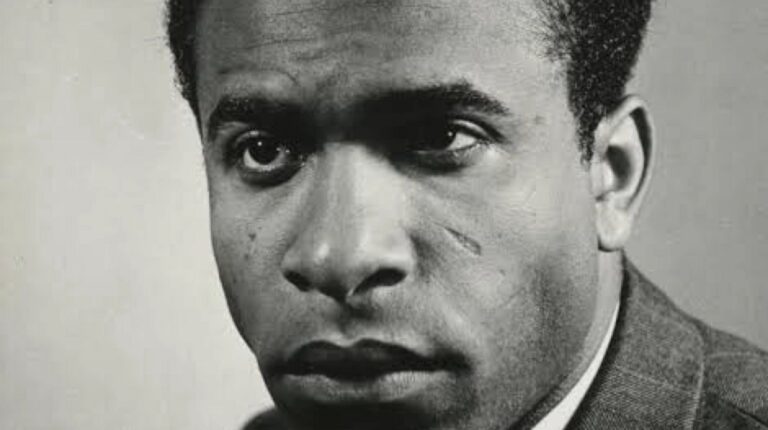
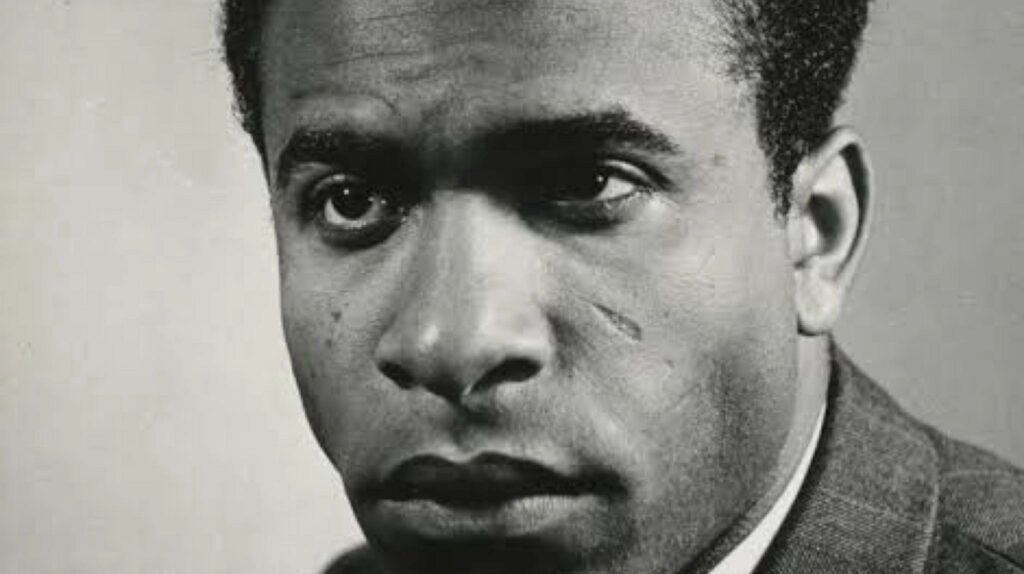
That international attain wouldn’t have been attainable with out leaders like Frantz Fanon, whose delivery centenary was celebrated all through the island in 2025.
Fanon’s connection to the United States
Born in Martinique’s capital of Fort-de-France on July 20, 1925, Fanon was a worldwide thinker whose work deeply influenced the strategy, discourse and ideology of the Black Panther Party.
In 2025, the island commemorated the centenary of Fanon’s delivery by means of memorials and discussions that honored him not solely as a local son but in addition as a worldwide thinker whose work stays deeply related to conversations round race, energy, colonialism and liberation.
Formed by Huey P. Newton and Bobby Seale and initially referred to as the Black Panther Party for Self-Defense, the Black Panther Party was based in Oakland, California, on Oct. 15, 1966.
The revolutionary group fought for Black liberation by means of armed self-defense towards police brutality, political motion and in depth group service applications, together with free breakfast for youngsters and schooling initiatives. Its total mission was to empower Black communities whereas basically altering systemic oppression quite than integrating into it.
Fanon’s affect may be seen in his writing on the psychological results of oppression and the liberating pressure of resistance, as outlined in his guide Les damnés de la terre (The Wretched of the Earth).
The literary work turned a necessary textual content for the Black Panther Party and served as a foundational information for understanding colonialism, decolonization and the psychological toll of systemic domination.
“His work stays a residing useful resource for understanding and difficult inequalities, not simply traditionally, however in at the moment’s social and political landscapes,” Wiltord stated.
Celebrating cultural resistance by means of language, music and reminiscence
Today, the Martinican Creole language, music, meals, dance and oral traditions stand as testimony to a broader diasporic sample of cultural survival below oppression. Much like Black Americans who’ve preserved and reshaped their cultural expressions within the face of systemic limitations, Martinique’s residents proceed to exhibit pleasure of their identification whereas acknowledging historic trauma and looking out towards the long run.
“For Black American guests, these residing cultural kinds resonate with African American vernacular traditions, blues, jazz, hip-hop and church practices, every born from the necessity to assert humanity below constraint,” Wiltord concluded. “Creole tradition turns into a reminder that resistance is just not solely political, but in addition cultural and religious.”
About The Author