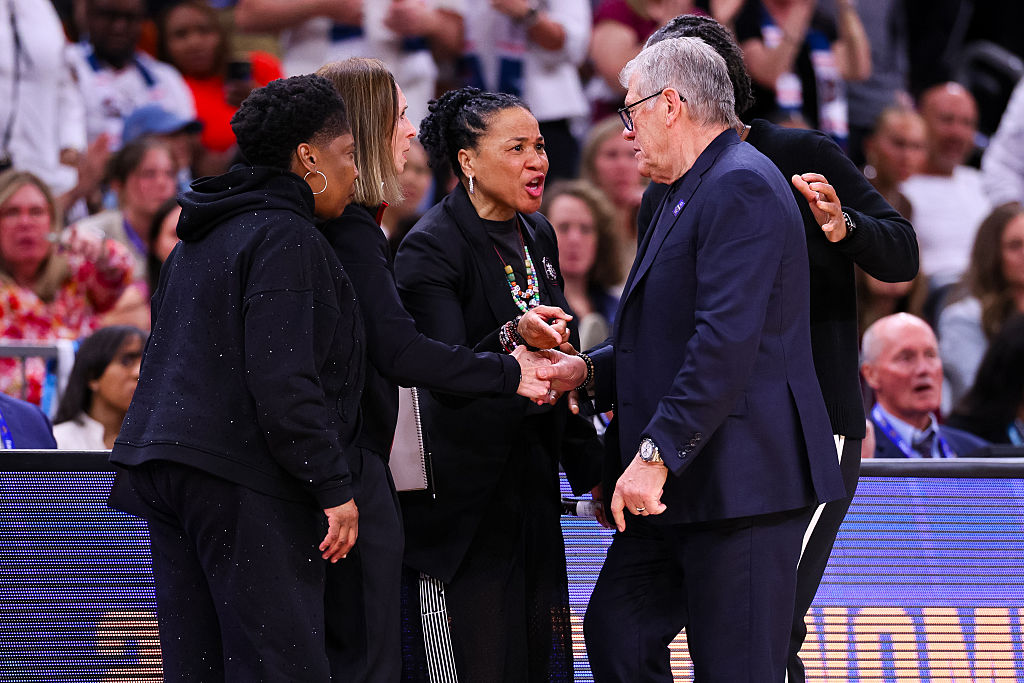
In the heat of competition, emotions can run high, especially in the world of sports. Recently, UConn coach Geno Auriemma’s disrespectful comments towards South Carolina coach Dawn Staley ignited a firestorm, drawing attention to the broader issues of race and gender in athletics. Auriemma’s outburst, accusing Staley of failing to shake hands after an intense game, struck a chord with many who recognize the systemic disrespect faced by Black women in various professional arenas.
Staley’s response, filled with both grace and defiance, highlights the dual struggle Black women often face: fighting for respect while navigating a landscape rife with bias. This situation isn’t just about a handshake; it’s emblematic of a larger pattern where Black women are often dismissed or undervalued in their fields. The fact that Staley has earned her place in sports history as a champion coach only amplifies the importance of this conversation.
Support poured in from fans and colleagues alike, emphasizing that this is a collective battle. Many took to social media to express their outrage at the disrespect shown, reinforcing the need for allies to stand with Black female leaders. It’s an opportunity to acknowledge and challenge the microaggressions that have long plagued Black women, not only in sports but across all professions.
As conversations surrounding equity and respect continue, the response to Auriemma’s comments serves as a reminder of the power of solidarity. Black women, like Staley, are deserving of the same level of respect and acknowledgment as their counterparts. This incident could very well be a pivotal moment for change in the sports community.
With the support of fans and advocates, the narrative is shifting, and it’s essential to keep this momentum going. Staley’s resilience is not just a personal victory—it’s a rallying cry for all who have felt undervalued in their workplaces. Standing up to disrespect isn’t merely about one individual; it’s about demanding recognition and respect for an entire community.
About The Author