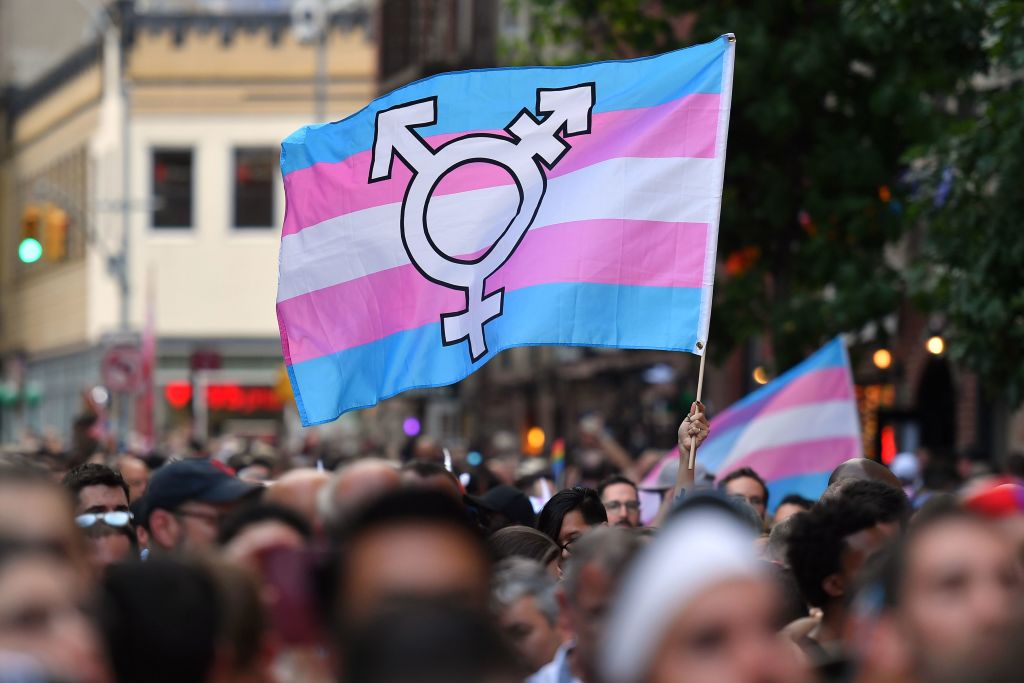
A person holds a transgender pride flag as people gather on Christopher Street outside the Stonewall Inn for a rally to mark the 50th anniversary of the Stonewall Riots in New York, June 28, 2019. - The June 1969 riots, sparked by repeated police raids on the Stonewall Inn -- a well-known gay bar in New York's Greenwich Village -- proved to be a turning point in the LGBTQ community's struggle for civil rights. (Photo by ANGELA WEISS / AFP) (Photo credit should read ANGELA WEISS/AFP via Getty Images)
In a move that feels like a punch to the gut for many in our community, the International Olympic Committee has announced a ban on transgender women competing in the Olympics. This is more than just a policy change; it’s a stark reminder of the ongoing battles faced by transgender athletes, and indeed, by all of us who advocate for inclusion and equity in sports and beyond. These decisions resonate deeply within our culture, where the fight for representation is never-ending and often met with resistance.
We’ve seen the world of sports evolve over the years, becoming a platform for voices that were once silenced. From the days of Jackie Robinson breaking the color barrier to the powerful impact of athletes like Colin Kaepernick and Muhammad Ali using their platforms for social justice, sports have always been intertwined with the fight for equality. Yet here we are, watching as a significant governing body rolls back the inclusivity that should be a hallmark of the Olympic spirit. It rings hollow when we consider the very essence of the Olympics — a celebration of human potential and unity.
The implications of this ban extend far beyond the track and field. It speaks to a larger issue of identity and belonging. In many ways, we are all still navigating our own paths to acceptance, and this decision serves as a reminder of the barriers that still exist. Transgender women athletes have fought tirelessly for their right to compete, to stand on the same stage as their peers, and to earn their place in history. By excluding them, the IOC not only diminishes their hard work but also sends a message that their identities are less valid than those of their cisgender counterparts.
It’s crucial for us to recognize that this decision doesn’t just affect a few athletes; it reverberates throughout our entire society. We should be supporting the right of every individual to express themselves and chase their dreams, regardless of how they identify. The camaraderie and resilience found in sports should transcend gender binaries, not reinforce them. As a community, we must stand in solidarity with our transgender brothers and sisters, challenging this ban and advocating for a more inclusive future.
We cannot afford to be silent. Conversations around gender identity, personal rights, and equality are essential, especially in spaces like sports where traditions often clash with progress. This moment calls for our activism, our voices, and our action. As we continue to push for a world where everyone can participate and thrive, let’s remind the IOC that the true spirit of the Olympics lies in embracing diversity, not shutting it out. The fight for inclusivity in sports is far from over, and we need to keep pushing forward.
From The Source
About The Author