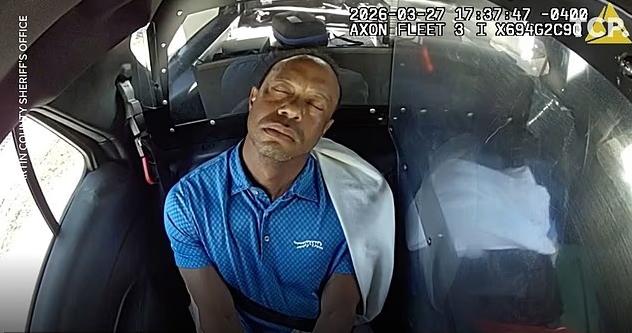
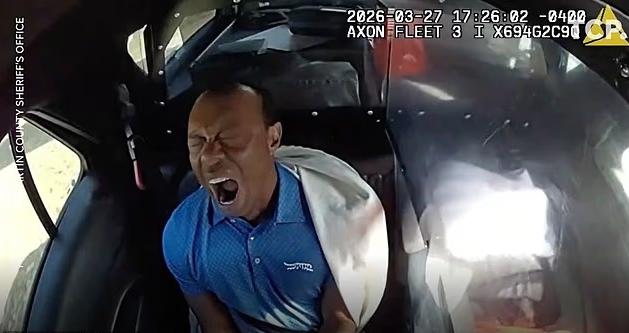
When we think of Tiger Woods, we often picture the golfer who’s shattered records and transcended the sport, but the recent news about his call to Donald Trump after a DUI crash has us raising a collective eyebrow. According to newly released police footage reported by TMZ, Woods reached out to Trump shortly after flipping his car on March 27. The circumstances around that call are as murky as the aftermath of the crash itself, and they leave us questioning how his past and present intersect in unexpected ways.
The body cam footage shows Woods interacting with police officers, who were evaluating him for signs of impairment. You can see the tension in the air as they conduct field sobriety tests. But just moments before that, here’s Woods, a figure whose career was built on discipline and focus, dialing up a former president known for his divisive rhetoric and controversial policies. Why reach out to Trump, of all people? It feels like a twist in a narrative we’re still trying to unpack.
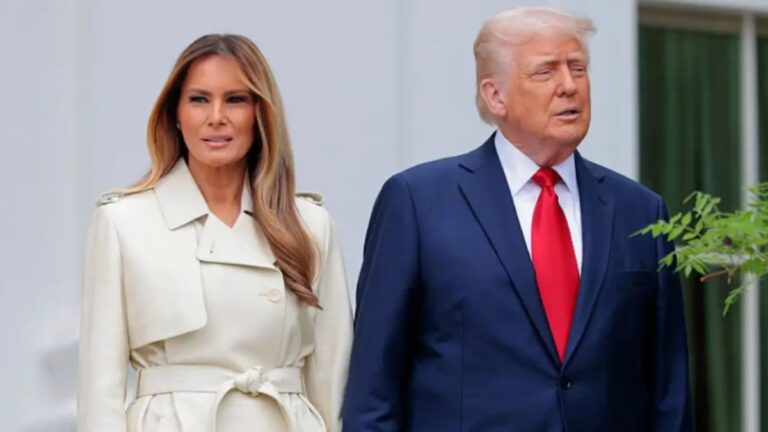
It’s hard to ignore the implications of this moment within our community. Woods’ journey has been one of triumph and tragedy, and now, in a time of personal crisis, he chooses to connect with a figure whose presidency was often marked by a disregard for the very issues that impact Black lives. This action could easily be interpreted as an attempt to align with power, but it begs the question: what does that say about the state of influence and connection in our world?
For many of us, the relationship between sports and politics isn’t new. It’s been a hotbed of conversation for decades, especially as we watch athletes navigate their platforms. But Woods’ decision to reach out to Trump adds a new layer of complexity. How does this move resonate with fans who have cheered him on through both his victories and downfalls? Did he see Trump as a lifeline in a moment of vulnerability, or is this a calculated move in a game much larger than we understand?
As we sift through this tangled web of fame, politics, and personal struggle, we can’t help but wonder where Woods goes from here. Will this call impact his legacy? Does it change how we view him in the broader spectrum of sports and culture? These questions linger as we dissect not just a moment in time, but a reflection of the challenges we face in understanding the intersections of our identities, our choices, and the powers that be.
In a world where every decision is scrutinized through the lens of race, politics, and celebrity, Woods’ move leaves us contemplating the delicate balance of personal and public life. We’re reminded that sometimes the biggest headlines don’t come from the golf course, but from the unexpected connections we make in our darkest hours.
From The Source
About The Author