President Donald Trump has long made it clear that loyalty isn’t optional. Inside his orbit, it’s expected, and at times enforced both directly and indirectly. This expectation creeps into the very fabric of his administration and extends far beyond the White House, shaping the actions of government agencies in ways that raise serious ethical questions. Recently, a shocking report revealed that the Pentagon allegedly attempted to leverage U.S. power to strongarm the Vatican into endorsing Trump’s agenda, a move that speaks volumes about the lengths to which this administration will go to secure allegiance.
The implications of such maneuvers are staggering. We’re not just talking about political theater here; this is a blatant attempt to manipulate a revered religious institution for personal gain. The United States has long prided itself on being a champion of democracy and freedom, yet reports like these reveal a darker side of power dynamics where loyalty trumps moral obligations. The Vatican, with its influence over millions of Catholics, represents a beacon of hope and guidance, and to hear that it was targeted in this way feels like a betrayal not only to faith but to the very foundations of the values that America claims to uphold.
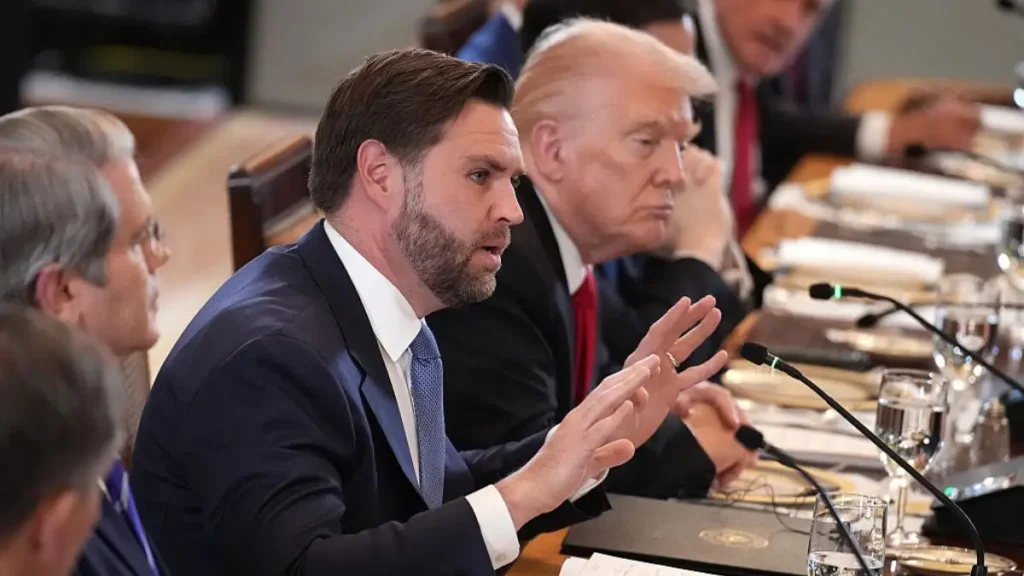
Meanwhile, Ohio Senator JD Vance, who has frequently aligned himself with Trump’s vision, found himself in hot water after being confronted about these allegations on camera. When asked about the Pentagon’s reported actions, Vance visibly stumbled, trying to balance his party loyalty with the undeniable gravity of the situation. His failure to provide a coherent response underscores how deep the cracks are in the façade of unquestioning loyalty that Trump demands. It’s as if the weight of the ethical breach was too heavy for Vance to carry, revealing the tensions that arise when personal ambition clashes with moral clarity.
This is a critical moment not just in American politics but in the broader cultural narrative about integrity and loyalty. Are we willing to let loyalty become a justification for unethical practices? The moral stakes couldn’t be higher, and as citizens, we must hold our leaders accountable. As we continue to dissect these troubling revelations, it becomes clear that loyalty should never be weaponized for power; it should be a bond built on trust and mutual respect. The question remains, how far are we willing to go as a society before we demand a return to the values we claim to cherish?
About The Author