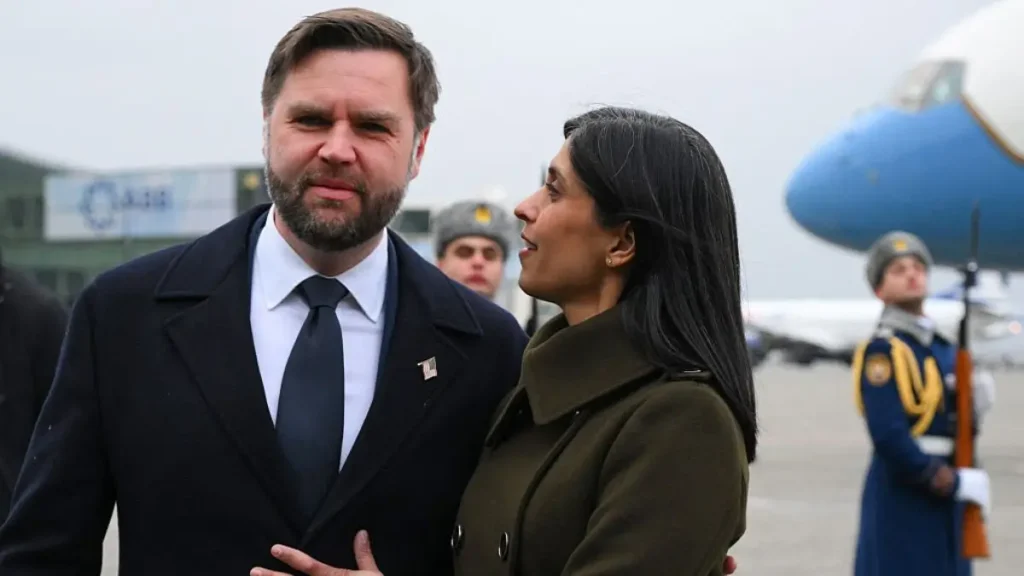
In recent weeks, Vice President JD Vance has found himself in some hot water over a peculiar defense of military actions towards Iran, but this time, he took it a step too far by dragging his pregnant wife, Usha, into the conversation. The moment came during a public address where Vance attempted to justify escalating tensions with Iran, and instead of sticking to the facts, he started referencing his wife in a baffling attempt to illustrate his point. The bizarre inclusion left many scratching their heads and raised eyebrows about the way he perceives not only the geopolitical landscape but also his role as both a husband and a leader.
The line that caught social media’s attention was a troubling throwaway that implied Usha’s opinion on military matters was somehow secondary to his. Critics quickly seized upon this, coining the slogan “Run Usha, Run,” which highlights not just the absurdity of the statement but also raises questions about Vance’s respect for his wife’s agency and voice. In an age where discussions about gender equality and the empowerment of women are more critical than ever, Vance’s comments felt like a throwback to an outdated mindset that many thought we had left behind. Instead of presenting a thoughtful discussion on international relations, he created a cringe-worthy moment that overshadowed any legitimate points he might have had.
As a figure who is often associated with the Trump administration, Vance has walked the line between populism and political correctness, but this incident could mark a significant shift in how he is perceived. For many, this isn’t just a slip of the tongue; it’s a reflection of a broader attitude that can resonate deeply in the Black community and beyond. The notion that a man’s perspective should drown out a woman’s, especially in a public sphere, is not just outdated—it’s detrimental to the progress we’ve fought so hard to achieve. The backlash is indicative of a society that is growing increasingly aware of and sensitive to the nuances of gender dynamics.
As the political landscape continues to shift and evolve, figures like Vance will need to adapt or risk becoming relics of a bygone era. The voices we choose to elevate in discussions about war, peace, and governance matter, and they should represent a diversity of thought, including that of women. Vance’s clumsy attempt to defend military action has opened the door to a much larger conversation about respect and representation in politics. It’s a reminder that understanding and empowering one another is vital, especially when navigating the complex issues facing our world today. So as we watch this story unfold, one can’t help but wonder if he’ll learn from this misstep or continue to let his tongue run wild, leaving Usha—or anyone else—on the sidelines.
About The Author