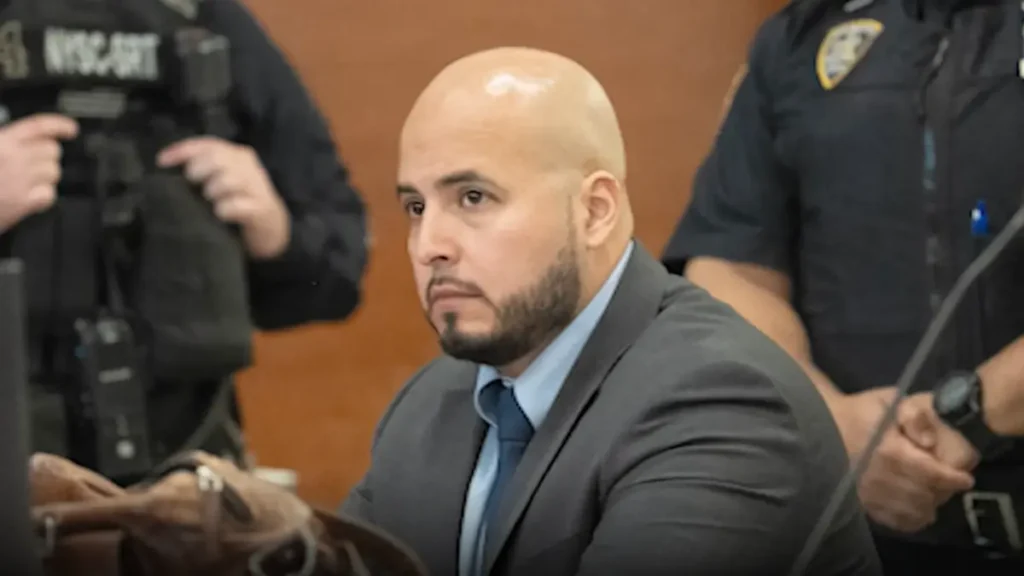
In a somber courtroom scene that underscored the tragic consequences of reckless actions, a former New York City police officer was sentenced to a minimum of three years in prison for the death of a father of two. This case, which began with a seemingly inconsequential act—throwing a picnic cooler—has revealed the serious ramifications of violence and the fragility of life. The ex-cop’s plea of remorse, as he faced the grieving family, reverberated through the courtroom, a harsh reminder that some actions can never be undone, no matter how deep the regret.
The incident unfolded on a day that should have been ordinary, but it quickly spiraled into chaos when the defendant hurled a cooler at the victim, causing a fatal crash. This seemingly absurd choice of weapon was a catalyst for tragedy, one that resonates deeply within our communities where violence too often overshadows everyday life. The life taken was not just a statistic; he was a husband, a father, a friend—leaving behind a family grappling with unimaginable loss. The defendant’s statement in court, “I regret everything,” is a haunting echo of the devastating impact of one momentary lapse in judgment.
Justice was served, but not without stark reminders of the systemic issues at play. The incident raises questions about how we address violent behaviors and the responsibilities that come with wearing a badge. The expectation for law enforcement is to protect and serve, yet here we see a betrayal of that oath. The community’s trust in those who are supposed to uphold the law can only be repaired through accountability and genuine remorse. This case is a critical point for reflection on how we, as a society, respond to such breaches of trust.
As the family of the victim continues to navigate their grief, we must recognize the broader implications of this event. It is a call to action for all of us to advocate for change, to hold those in power accountable, and to foster a culture that values life above all else. The painful lessons learned from this tragedy are opportunities for growth and understanding in our communities. While the ex-cop may have expressed regret, it is the families affected by such violence that carry the weight of loss, a burden that no expression of sorrow can truly alleviate. In the end, we are reminded that justice is not just about punishment; it is about healing, accountability, and striving for a world where such tragedies no longer occur.
About The Author