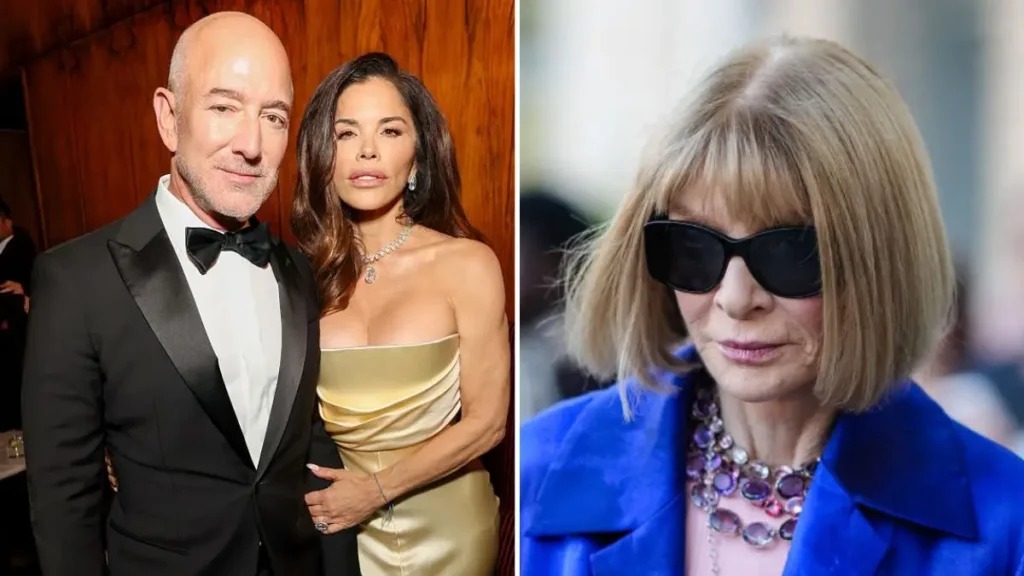
The Met Gala is more than just a celebration of fashion; it’s a cultural touchstone that reveals the dynamics of power, influence, and societal norms. This year, the stakes seemed even higher as Lauren Sánchez, the wife of billionaire Jeff Bezos, stepped into the spotlight. With Bezos on her arm, all eyes were not just on him as a tech titan, but on the image that Sánchez has begun to cultivate in this ultra-elite social landscape. Once seen primarily as a news anchor and media personality, her recent association with one of the richest men in the world has transformed her public persona, leading many to suggest that Bezos has helped refine and elevate her image, allowing her to confidently navigate the intricate rules of fashion’s biggest night out.
At the heart of this discussion is Anna Wintour, the iconic editor-in-chief of Vogue and a formidable figure in the fashion industry. Wintour’s influence over the Met Gala is legendary, as she plays a pivotal role in shaping the guest list and the overall theme of the event. Her decisions often reflect deeper societal trends and expectations, and with Sánchez now prominently featured, it raises questions about how Wintour’s established protocols are evolving to include new narratives that defy traditional norms. Sánchez’s bold choices and the buzz surrounding her Met Gala appearance indicate that she is not just a passive participant in this world; she is a player, redefining what it means to be in the limelight.
As anticipation builds leading up to the event, the spotlight is clearly on what Sánchez will wear. Will she opt for a daring, avant-garde statement piece that reflects her evolving identity, or will she adhere to a more classic style that aligns with the gala’s prestigious history? Regardless of her choices, it’s clear that the dialogue around her attire transcends fashion; it speaks to broader themes of identity and representation in a space often dominated by longstanding traditions. The Met Gala provides a unique stage where personal narratives intersect with cultural commentary, and Sánchez’s role in this year’s event is emblematic of a significant shift in how we view success and influence, particularly for women of color in spaces historically reserved for the elite.
In essence, Lauren Sánchez is not merely riding the coattails of her billionaire husband; she is carving out her own space within a complex social hierarchy. With Jeff Bezos by her side, she embodies the transformative power of personal reinvention—an idea that resonates deeply within the Black community and beyond. As we reflect on her journey and await her Met Gala debut, we are reminded that fashion is not just an art form; it’s a platform for storytelling, empowerment, and the reclaiming of identity. In the grand tapestry of Black history and culture, moments like these serve as powerful reminders of how far we’ve come and the possibilities that lie ahead.
About The Author