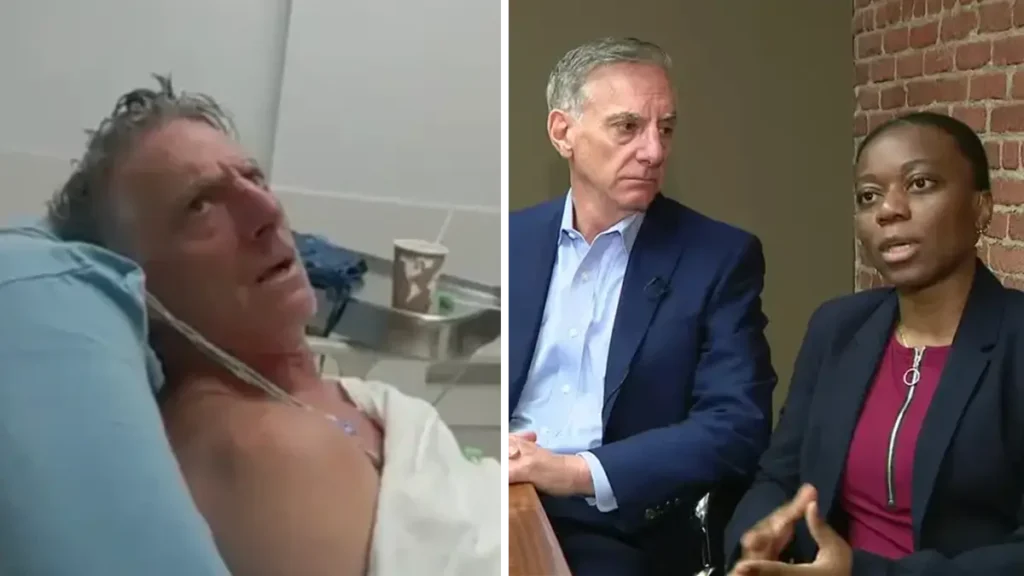
In the early hours of August 29, 2022, Alice Frankel was suddenly jolted from her sleep by the sounds of distress coming from her fiancé, who was suffering a seizure. In a moment that no one should ever have to witness, the man, clearly in need of medical assistance, was met instead with the force of law enforcement. Bodycam footage later revealed a disturbing reality: police arrived just in time to add chaos to an already traumatic situation, fatally mistaking a man in a vulnerable state for a threat. Instead of providing help, they resorted to using a taser on him, an action that would leave many questioning the judgment and training of those sworn to protect and serve.
The aftermath was just as horrifying. Once subdued, the man was charged with fabricated offenses that appeared to stem from the officers’ unwillingness to admit their grave error. The case unfolded like a scene from a dark drama: a disoriented individual in need of medical care found himself behind bars instead. It was a stark reminder of how the system can so easily fail those who are most vulnerable—especially within Black communities where stories like this are far too common. The initial intention of the police to serve and protect had morphed into an act of aggression and misunderstanding, leaving deeper scars than just the physical.
However, what could have been the closing chapter of an unjust ordeal became a narrative of resilience and justice. After much public outcry and legal battles, the man managed to secure a settlement amounting to $3.15 million—a bittersweet victory that served as a reminder of the long road ahead in the fight for accountability in policing. The funds were not simply a monetary gain, but a symbolic gesture of the acknowledgment of wrongdoing and a step toward healing the deep-rooted wounds inflicted by systemic failures.
This particular incident sheds light on a broader issue: the need for comprehensive police reform and better training in handling mental health emergencies. It also illustrates the growing awareness within communities of color around unjust treatment and the importance of standing up against it. The man’s story is not just his own; it resonates with countless others who have faced similar battles, often without a chance at vindication. In the end, his laugh came not just from the settlement, but from the power he reclaimed—a reminder that despite the challenges, resilience and justice are on an unyielding path toward triumph.
About The Author