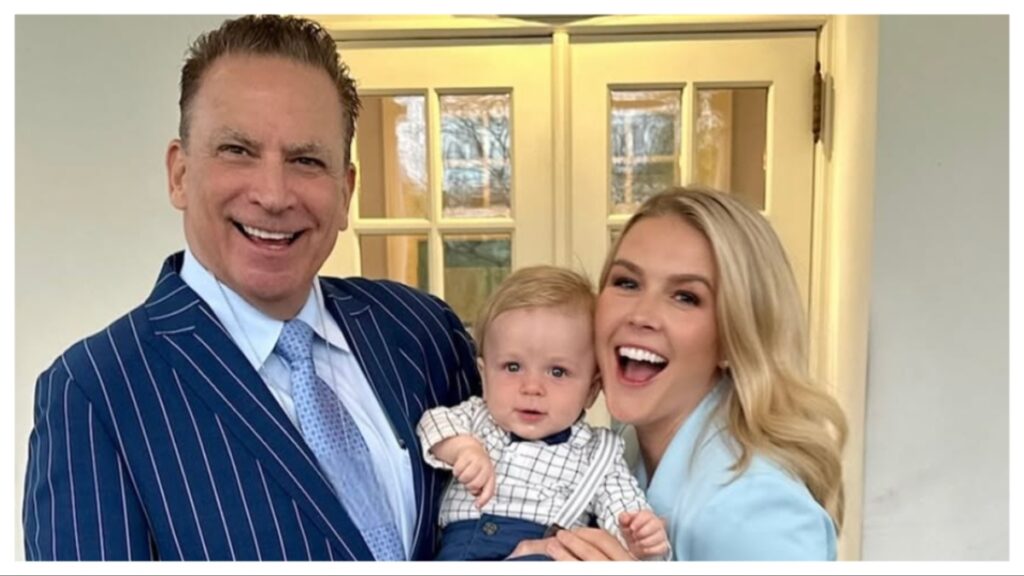
In the age of the internet, where every snapshot can spark a wildfire of debate, Karoline Leavitt found herself in an unexpected social media frenzy. What she likely intended as a wholesome family moment quickly spiraled into a spectacle, leaving critics and fans alike examining the details with a magnifying glass. After years of staunchly defending President Trump’s controversial policies and statements, many followers felt this latest attempt at personal branding was anything but genuine. It seems that Leavitt’s online image managers have their work cut out for them, especially when fans zoom in on aspects of her life she thought she could scrub away.
The incident highlights how scrutinizing the lives of public figures is now a sport for many, especially when those figures have a history of polarizing rhetoric. In a world dominated by memes and quick judgments, Leavitt’s family photos became a canvas for public commentary, where the focus shifted from a quaint family gathering to deeper conversations about authenticity and accountability. Critics dissected everything, from her choice of background to the expressions on her family’s faces, revealing a dissonance between her public persona and the private life she tried to portray.
What was meant to be a simple family share turned into a lesson on how one’s past actions can come back to haunt them, especially for someone who has positioned herself so closely to a divisive political figure. Fans were quick to draw lines between her family moments and her political assertions, reinforcing the idea that the personal and political are intricately connected.
As backlash mounted, it became clear that Leavitt couldn’t simply post away her history or expect followers to ignore the complexities of her persona. In a culture obsessed with authenticity, her attempt to pivot from political rhetoric to familial warmth felt disingenuous to many, creating a chasm between her and her audience. Ultimately, her story serves as a reminder that in the digital realm, transparency is not optional; it’s expected. The age of cancel culture has made it crucial for public figures to navigate their narratives with care, for once something is shared online, it can be nearly impossible to unsee it.
About The Author