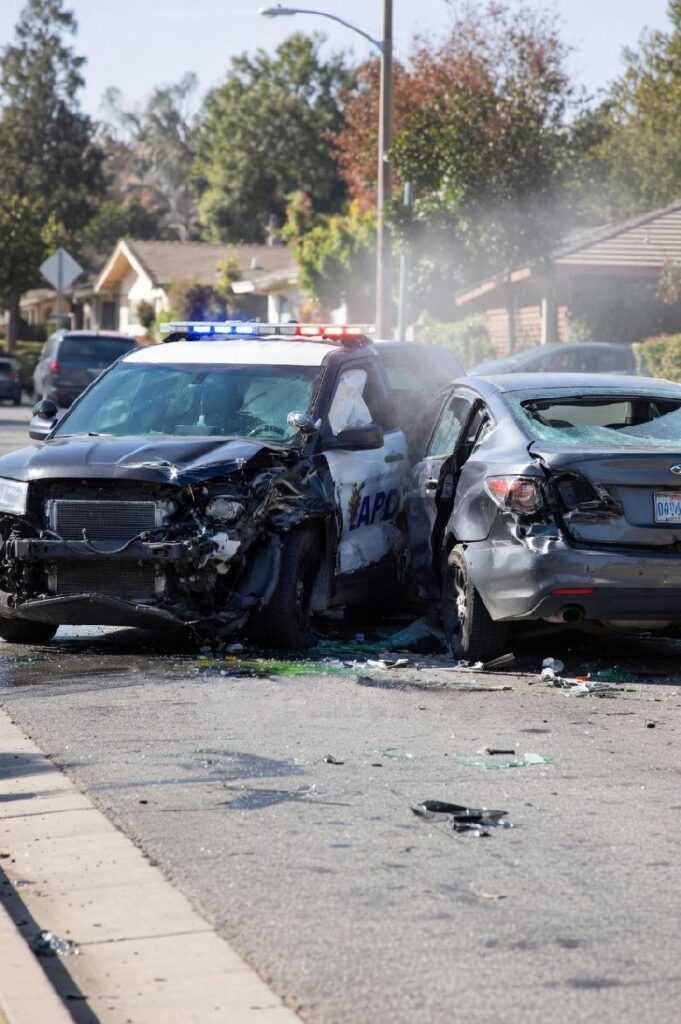
One recent night, I watched several LAPD cars blow through one of the busiest intersections in South L.A. with lights flashing and sirens going full blast. It was a scene so chaotic that it felt like the city was teetering on the edge of a nervous breakdown. Some cars abruptly stopped, their drivers frozen in the headlights of the impending crisis, while others jerked quickly to the side of the road, desperately trying to avoid a collision. The tension in the air was palpable as the police vehicles sped past, their pursuit not just a moment of excitement for onlookers, but a stark reminder of the dangers that high-speed chases present in our communities.
These high-stakes pursuits are more than just adrenaline-filled moments for the officers involved; they are incidents that can have far-reaching consequences, particularly for Black and Hispanic communities. The unfortunate truth is that the chaos created during these chases often spills over into the lives of innocent bystanders. We see it all too frequently: lives disrupted, families shattered, and communities left to pick up the pieces. With each siren blaring and tire screeching, the risk grows higher for those not involved in the crime, yet who find themselves caught in the crossfire of a system that too often views them as collateral damage.
Earl Ofari Hutchinson’s recent commentary on this issue sheds light on the ticking time bomb that is the LAPD’s approach to high-speed pursuits. His insights remind us that while the primary concern for law enforcement may be apprehending a suspect, the collateral impact on civilians—especially those from marginalized communities—cannot be ignored. The statistics show that Black and Hispanic drivers are disproportionately affected, raising essential questions about systemic inequalities in policing and public safety policies.
It is crucial for community leaders, advocates, and law enforcement officials to come together and engage in meaningful dialogue about these high-speed pursuits. The urgency is clear: we need to prioritize strategies that protect the lives of our community members while still holding offenders accountable. As we navigate these discussions, we must remember that each intersection, each chase, and each siren represents real lives and real families, reminding us of the human cost behind the flashing lights. It’s time we call for reform, not just for the sake of justice, but for our collective safety and humanity. We deserve a system that protects everyone, not just a few.
About The Author