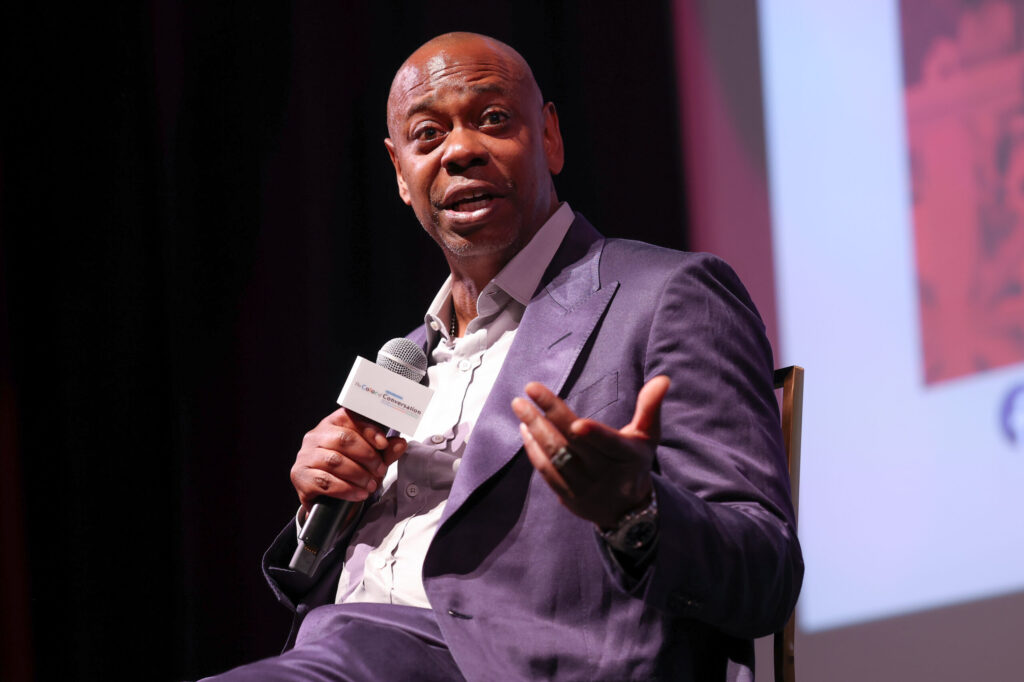
MARTHA'S VINEYARD, MASSACHUSETTS - AUGUST 08: Dave Chappelle speaks at the premiere of "Dave Chappelle: Live In Real Life" benefitting the Duke Ellington School of the Arts during the 2025 Martha's Vineyard African American Film Festival at Martha's Vineyard Performing Arts Center on August 08, 2025 in Martha's Vineyard, Massachusetts. (Photo by Arturo Holmes/Getty Images)
In a recent reflection, Dave Chappelle has expressed that his comedic takes on transgender issues were co-opted by some factions of the Republican Party to further their political agendas. While Chappelle points fingers at the GOP for using his jokes as ammunition in the culture wars, it’s essential to unpack the complex interplay of humor, politics, and societal perceptions.
Chappelle’s humor has always sparked controversy, especially concerning his satirical takes on marginalized communities. Yet, the dynamics of comedy and its interpretation can often lead to unexpected consequences. The comedian suggests that his trans jokes have been misconstrued and exploited by those looking to stoke division and reinforce outdated stereotypes. This is a familiar tale in the realm of political discourse, where rhetoric is frequently taken out of context to serve a particular narrative.
However, attributing the blame solely to Republicans overlooks the broader societal implications of Chappelle’s material. The conversations surrounding gender identity, representation, and comedy are intricate and multifaceted. While Chappelle has every right to express his perspective, the responsibility of comedians often extends beyond the punchline. The way audiences interpret and react to these jokes can lead to serious ramifications that ripple through society.
As the debate continues, it’s crucial for both comedians and audiences to engage in open dialogues about the impact of humor on culture. Chappelle’s narrative about his jokes being weaponized serves as a pivotal entry point into discussions about accountability in comedy and the way humor can reflect or even influence societal attitudes. It’s a complicated dance that highlights the fine line between free expression and social responsibility, reminding us all that in the age of information, context matters more than ever.
About The Author