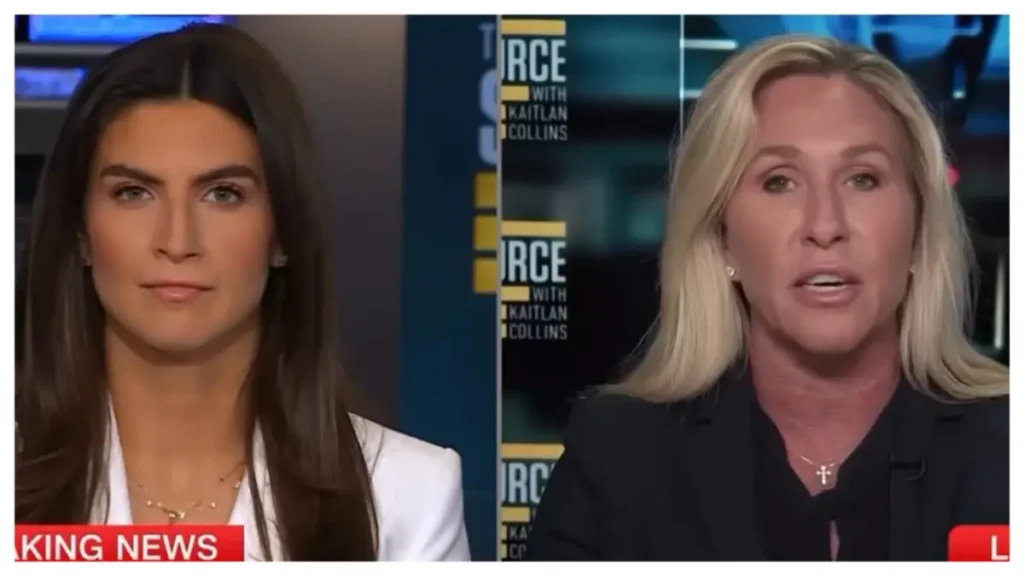
In a surprising twist of political drama, Representative Marjorie Taylor Greene found herself on the wrong side of the mic when she publicly demanded an apology from former President Donald Trump. Known for her staunch loyalty to Trump, Greene’s latest move sent ripples through social media and, more importantly, caught the attention of CNN. During a recent appearance on the network, the tables turned in a fascinating way that showcased not just Greene’s vulnerability but also the media’s ability to scrutinize even the most vocal supporters of controversial figures.
Greene’s quest for an apology stemmed from Trump’s comments that had stirred controversy and criticism even among his staunchest allies. Her demand echoed through the airwaves, raising eyebrows across the political spectrum. However, when she faced CNN’s probing questions, it became clear that she wasn’t prepared for the heat. In what could only be described as a moment of unexpected vulnerability, Greene stammered under the pressure, attempting to articulate her stance while grappling with the implications of her allegiance to a figure whose words can ignite a firestorm.
The interview showcased how even the most vocal supporters can find themselves in a precarious position when faced with the media’s relentless pursuit of accountability. Greene’s discomfort highlighted a broader narrative—a reminder that loyalty to Trump comes with its own set of challenges, especially when the rhetoric turns incendiary. Her reactions painted a picture of a politician who, while unyielding in her support, must navigate a landscape where every statement is scrutinized and the fallout can be intense.
As Greene fumbled her way through the questioning, social media erupted with commentary. Clips of her stammering became viral moments, with users gleefully pointing out the irony of a figure who often criticizes others for their perceived weakness now finding herself in a position of vulnerability. It raises an essential question about the nature of political loyalty: how far are supporters willing to go, and at what cost?
In the end, Greene’s confrontation with both Trump and CNN serves as an intriguing case study in modern politics. It underscores the unpredictable dynamics of loyalty in the age of social media, where one misstep can lead to widespread ridicule. For many, her experience is a reminder that in the volatile world of political discourse, even the most fervent supporters can be caught off guard, leaving us to wonder what her next move might be—and whether she’ll continue to back a leader whose words might have unintended consequences for his most loyal followers.
About The Author