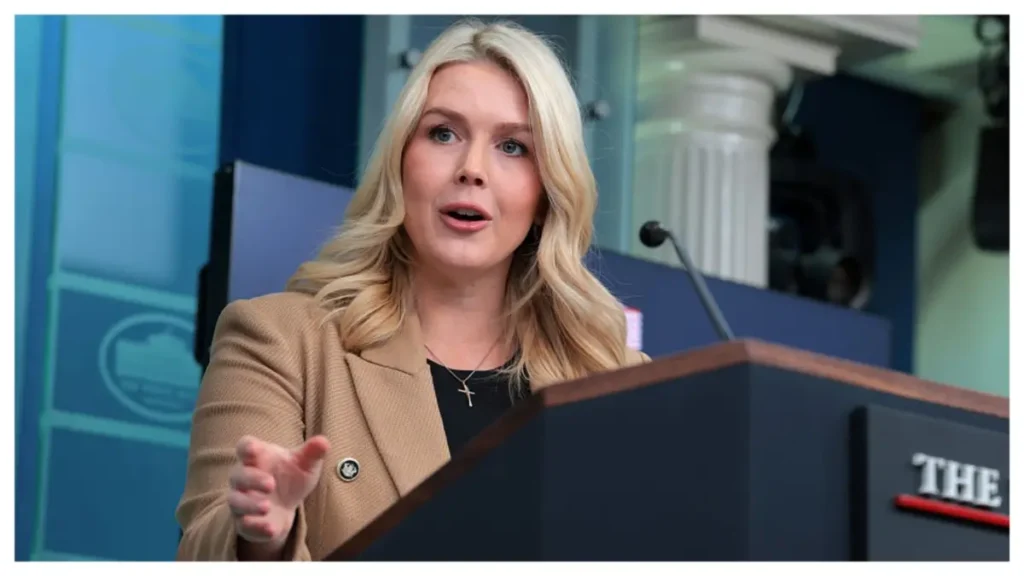
In the swirling maelstrom of political discourse, where every statement is dissected and scrutinized, White House press secretary Karoline Leavitt recently found herself in a precarious position. She stepped up to the plate, as she has done time and again, to defend former President Donald Trump, portraying him as a beacon of strength and decisiveness. However, her latest attempt to shift the narrative quickly unraveled when a report surfaced, exposing the truth behind the scenes of a particular event that her claims sought to glorify. The revelations painted a starkly different picture than the one Leavitt was eager to present, highlighting her struggle to manage the narrative in a charged political environment.
The report detailed moments that contradicted Leavitt’s polished rhetoric, showcasing not just Trump’s usual bravado but also a more chaotic backdrop that belied her characterizations. It’s not just about the words spoken at the press briefing; it’s about the context, the unfiltered reality of events that often gets lost in translation. This disconnect between reality and the narrative spun by Leavitt raises a larger question about authenticity in political communications. In a world where image often trumps substance, how long can one maintain a facade before the truth inevitably seeps through the cracks?
What’s particularly striking about this incident is the broader implications it has for the political landscape. As the public grows weary of disinformation and half-truths, the demand for genuine discourse becomes more pressing. Leavitt’s attempt to showcase Trump as a steadfast leader ironically highlights the fragility of such portrayals when faced with the scrutiny of independent journalism. With social media amplifying every misstep and revealing the nuances behind the scenes, the stakes are higher than ever for those in the political spotlight.
For many, this incident serves as a reminder of the power of truth and the importance of accountability in leadership. As the narrative begins to shift and the reality of events surfaces, it raises a collective eyebrow over who we choose to believe and follow. In a culture that often prizes charisma over clarity, Leavitt’s misfire could be a pivotal moment in our ongoing struggle for transparency in politics. The unfolding drama not only underscores the challenges faced by political defenders but also speaks to the resilience of truth itself, reminding us that no amount of spin can completely obscure the reality of a situation.
About The Author