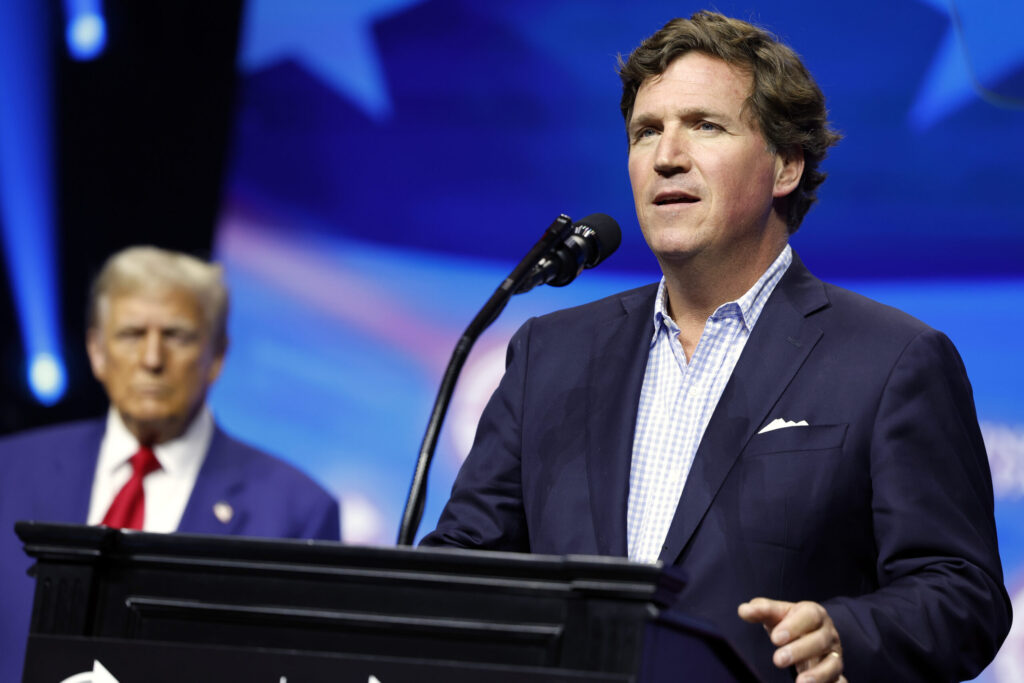
DULUTH, GEORGIA - OCTOBER 23: Political Commentator Tucker Carlson speaks alongside Republican presidential nominee, former U.S. President Donald Trump during a Turning Point Action campaign rally at the Gas South Arena on October 23, 2024 in Duluth, Georgia. Trump is campaigning across Georgia today as he and Democratic presidential nominee, U.S. Vice President Kamala Harris attempt to win over swing state voters. (Photo by Anna Moneymaker/Getty Images)
Tucker Carlson, the controversial former Fox News host, has recently made headlines by expressing a surprising sense of regret regarding his past support for Donald Trump. After spending years as one of the staunchest advocates of the former president, Carlson’s acknowledgment of his misgivings raises questions about loyalty, accountability, and the shifting dynamics of political allegiance in America today. In a world where media figures wield tremendous influence, Carlson’s change of heart serves as a potent reminder of the responsibility that comes with such power.
In his candid remarks, Carlson reflected on the consequences of his unwavering support for Trump, admitting that he perhaps overlooked the more destructive aspects of the former president’s agenda. This moment of introspection is particularly striking given Carlson’s reputation; he has long been a polarizing figure, often peddling divisive rhetoric that captivated a particular audience. His recent admission invites us to think critically about the narratives crafted by influential commentators and the impact they have on public opinion.
The political landscape in America is ever-evolving, marked by a growing disconnection between leaders and the very people they claim to represent. Carlson’s regret is not just personal; it echoes the sentiment among many who have grappled with their political choices in recent years. With a rising tide of disillusionment, particularly within the Black community, there is a pressing need for a dialogue that addresses the complexities of political identity and the ramifications of blind allegiance.
As Carlson navigates this new territory of humility, it’s essential to consider the broader implications of his words. For many, the idea of regret can sometimes come too late, especially in a sociopolitical climate that demands accountability from those in the public eye. Whether Carlson’s newfound perspective will inspire change or simply serve as a momentary blip in the media cycle remains to be seen. However, it does open the door for a discussion about redemption and the importance of owning one’s missteps, encouraging us all to reflect on our own choices in a world that often feels chaotic and divided.
About The Author