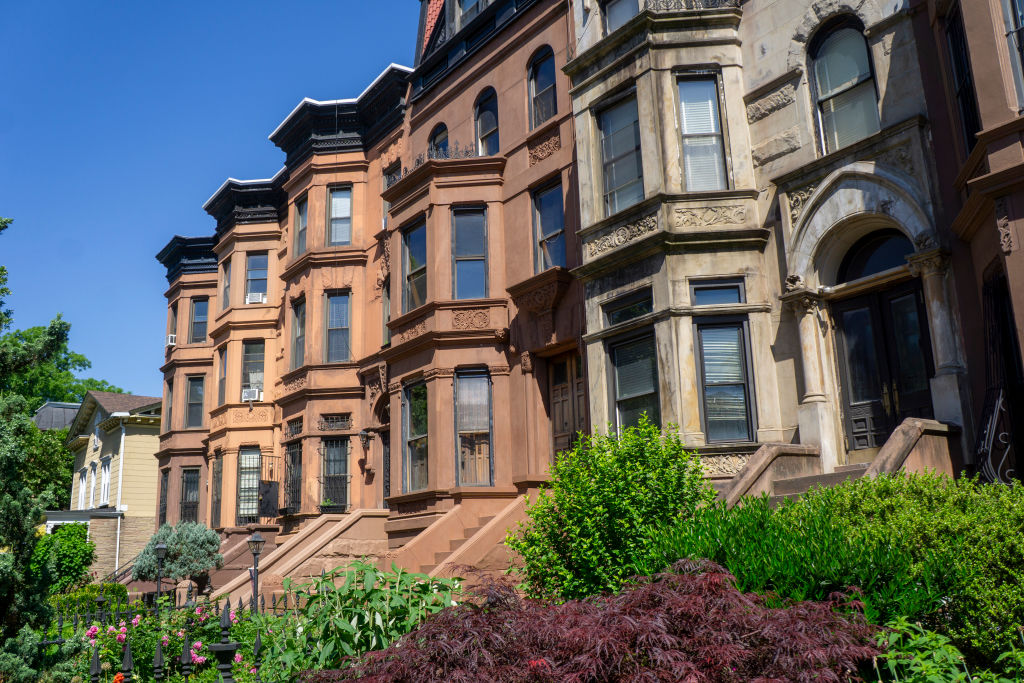
Row of brownstone houses, MacDonough Street, Bedford-Stuyvesant, Brooklyn, New York City, New York, USA. (Photo by: Plexi Images/GHI/Universal Images Group via Getty Images)
In the heart of Brooklyn, a silent crisis is unfolding, one that gnaws at the very foundation of Black community life. Long-time homeowners, many of whom have poured decades of hard work and love into their homes, are falling victim to a ruthless wave of deed theft scams. These scams don’t just rob people of their properties; they erase legacies, disrupt families, and leave lifelong residents feeling helpless in a city that has been their home for generations.
The vulnerability of these homeowners often stems from a combination of financial strain, the complexities of property law, and a lack of awareness about the scams infiltrating their neighborhoods. Unscrupulous individuals prey on the elderly or those in financial distress, filing fraudulent documents to claim ownership of homes that have been in families for decades. The emotional toll is incalculable, as these families find themselves facing eviction notices and legal battles, all while struggling to comprehend how their homes could be stolen right from under them.
This crisis speaks to a broader issue of systemic inequality, where Black families are disproportionately affected by property theft and fraud. The history of disenfranchisement and exploitation in Black communities continues to echo today, manifesting as a new form of displacement that is both insidious and alarming. As neighborhoods gentrify, the urgency to hold onto property has never been more critical. It is a painful reminder of how the fight for homeownership and stability is still an uphill battle—one that leaves many feeling like they’re fighting ghosts in a system stacked against them.
Community organizations and activists are stepping up, working tirelessly to raise awareness and help victims navigate the complex legal landscape. Initiatives to educate homeowners about their rights and the signs of deed theft are becoming increasingly essential, as they empower residents to protect their most cherished and hard-earned possessions. But the fight isn’t just about individual homes; it’s about preserving the soul of neighborhoods that have long been vibrant centers of culture and resilience.
As we delve deeper into this crisis, it’s clear that the stakes are high. Losing a home is losing a piece of self, and for many Black families in Brooklyn, that history cannot be replaced. We must amplify their voices, advocate for stronger protections, and ensure that these injustices are addressed. The future of these communities depends on it.
About The Author