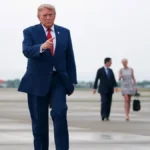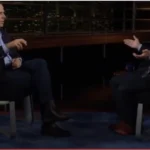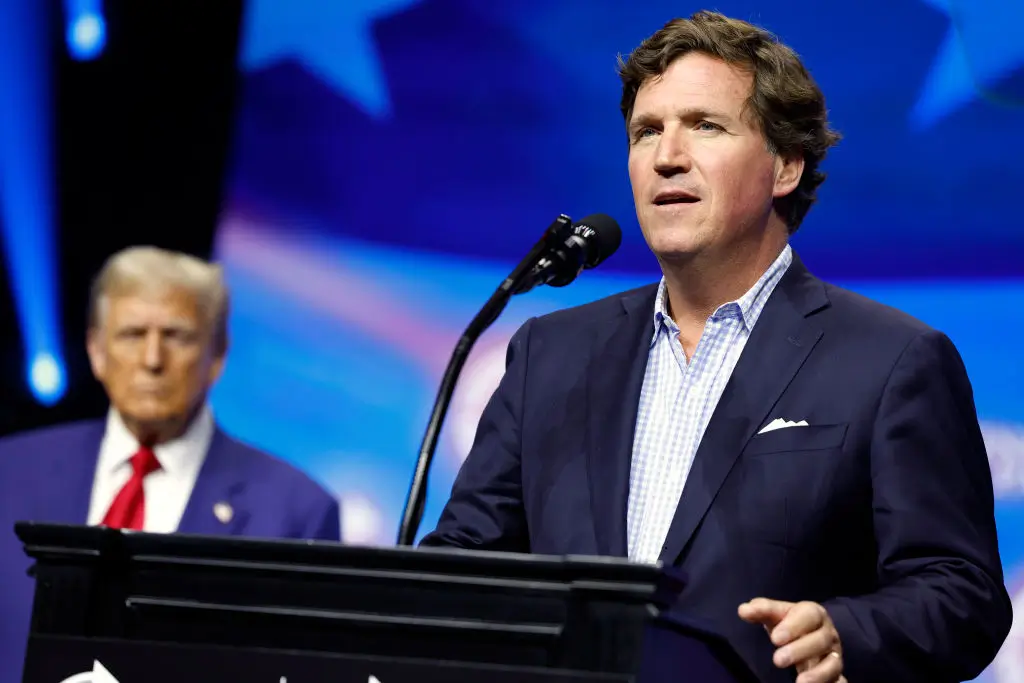
When Tucker Carlson found himself face-to-face with a reporter armed with a clip of his previous condemnation of Donald Trump, the tension in the room was palpable. Known for his sharp rhetoric and often controversial opinions, Carlson had labeled Trump with a biting moniker that seemed to encapsulate his frustrations regarding the former president’s rhetoric around faith and war. Yet, when pushed to account for his words, Carlson seemed to fold, failing to defend the very criticisms he had once articulated with such vigor. The clip played back like a ghost haunting him, highlighting the confusion and hesitation that often accompany the politically charged landscape of discourse.
The exchange not only illuminates Carlson’s struggle to navigate his own statements but also serves as a broader commentary on the accountability of figures in media and politics. In an era where words can build or destroy, Carlson’s reluctance to stand firm on his past judgments raises questions about the integrity of his positions. Is his commentary merely a reflection of the moment, or does it point to a deeper reluctance to confront the shifting loyalties within his audience?
Perhaps most telling is the silence that followed the clip’s revelation. It was a moment that encapsulated the discomfort many feel within the current landscape of American politics, where the lines between personal belief and public persona are increasingly blurred. Carlson’s attempt to navigate this precarious terrain left him open to scrutiny, and in that moment, he became a symbol of the larger issue facing many commentators today: the fear of backlash juxtaposed with the need for honest discourse.
Ultimately, this incident serves as a reminder of the complexities surrounding political rhetoric in a polarized world. As Carlson tried to brush off the implications of his own words, it became clear that this was not just about him—it was about the challenges we all face when truths collide with public expectations. The clip serves as a stark reminder that in the age of social media, nothing is forgotten, and the reputations we build can easily crumble when challenged by our own pasts.
About The Author