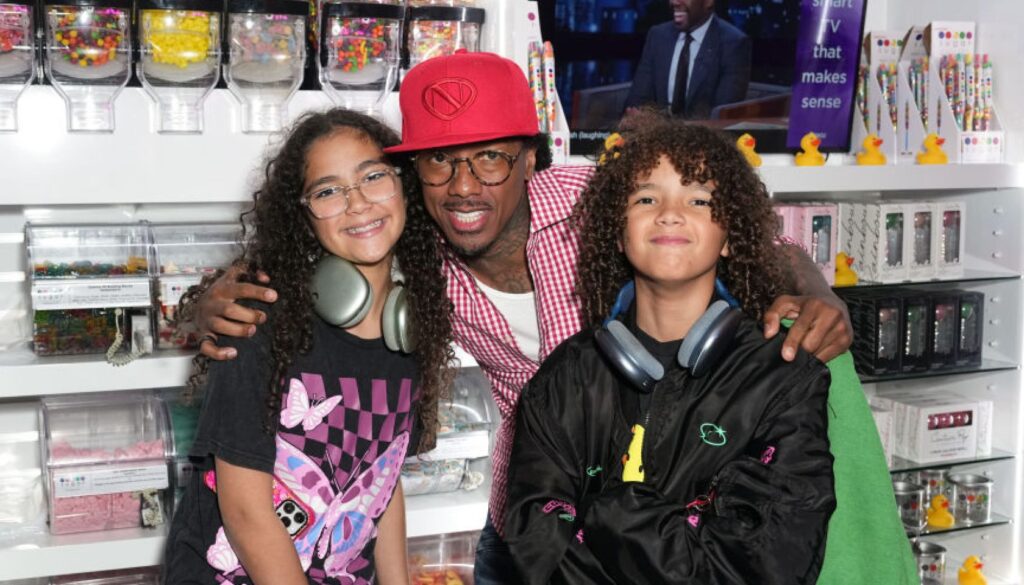
In a recent social media stir, Moroccan Cannon, Nick Cannon’s 15-year-old son, took to the internet to address the glaring double standard in his father’s parenting. Nick’s candid admission during an interview that he encourages Moroccan to date but has reservations about his twin sister, Monroe, dating has raised eyebrows and sparked heated discussions about gender norms and parenting styles. The hypocrisy of allowing one child the freedom to explore romantic relationships while placing restrictions on another ignited a wave of criticism online, with many questioning why Nick seems to impose different standards based on gender.
Critics have been vocal, pointing out that it sends the wrong message not only to his children but also to the broader community about how young girls are often treated differently compared to boys. The conversation has shed light on the societal expectations and stereotypes that govern dating, particularly for teenage girls, who frequently face harsher scrutiny than their male counterparts. Social media users expressed their discontent, calling out Nick for being an unserious “seed-spreader” who fails to grasp the implications of his parenting choices.
Moroccan’s reaction reflects a growing awareness among young people about the discrepancies in how genders are treated, especially when it comes to relationships and the autonomy over their own lives. In a world striving for equality, such double standards are increasingly being challenged. As the conversation evolves, it’s evident that young voices like Moroccan’s are crucial in steering the narrative toward more equitable treatment.
As this dialogue continues online, it raises important questions about how we raise our children in a society filled with ingrained biases. Nick Cannon’s admission may have unintentionally opened a Pandora’s box, compelling many to rethink their own beliefs about parenting, masculinity, and feminism. The reaction from Moroccan and the rest of the community indicates a desire for change and a call for parents to critically assess their own biases, ensuring they foster an environment of equality and respect for all their children, regardless of gender.
About The Author