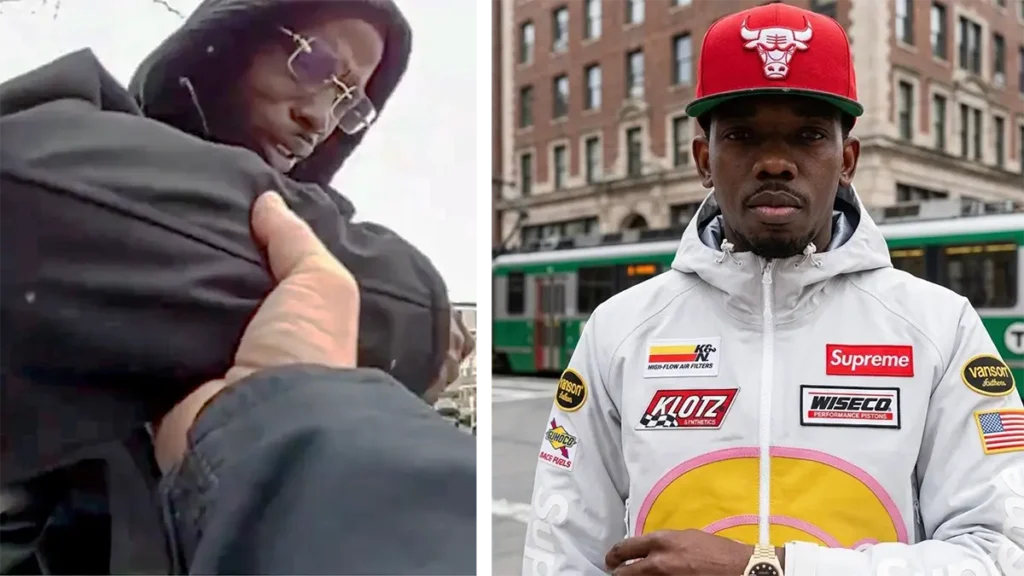
In a disturbing incident that has once again put the spotlight on the intersection of race and gun rights, bodycam footage has surfaced showing a Boston police officer forcibly taking a firearm from a licensed Black security guard. The guard, who was openly carrying his gun in accordance with Massachusetts law and holding a license issued by the very department that disarmed him, faced an alarming encounter that raises serious questions about the treatment of Black gun owners. As the officer shouted, ‘You can’t! You can’t!’ the scene unfolds in a manner that is both jarring and reminiscent of the pervasive racial biases that often plague interactions with law enforcement.
The security guard, simply trying to do his job, found himself in a precarious situation that many in the Black community have been all too familiar with. Legal or not, it seems that the color of his skin overshadowed the legitimacy of his actions. This incident highlights the ongoing struggle for Black Americans to navigate their rights, particularly when it comes to the Second Amendment. Despite being fully compliant with the law, he was met with suspicion and aggression, a reflection of the deeply ingrained stereotypes that suggest Black individuals with guns are automatically a threat.
This episode is not merely an isolated incident; it serves as a stark reminder of the obstacles faced by Black gun owners across the country. While the right to bear arms is enshrined in the Constitution, the reality is that systemic racism complicates this freedom for many. For the licensed Black security guard in Boston, the experience of being disarmed by an officer who is supposed to uphold the law speaks volumes about the ongoing challenges of equity in America.
As discussions around gun rights and race continue to evolve, we must confront the uncomfortable truths that this incident lays bare. The narratives surrounding gun ownership and Blackness are often fraught with peril and misunderstanding. As a society, we need to acknowledge these disparities and advocate for a future where all individuals, regardless of race, can exercise their rights without fear of disproportionate response from those sworn to protect them.
About The Author