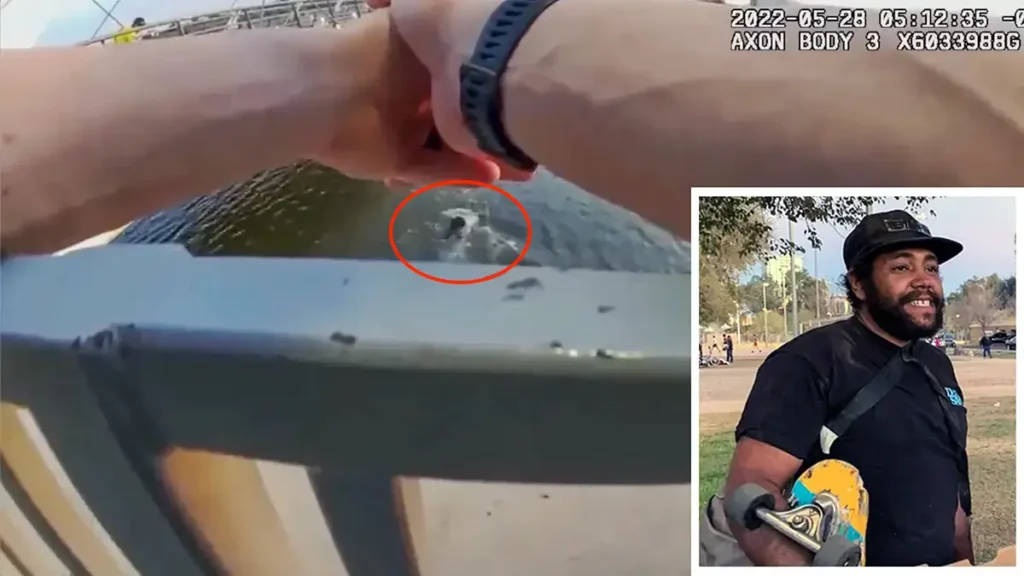
In a shocking turn of events that has ignited outrage and calls for accountability, the Tempe Police Department faces scrutiny after officers stood by while a Black man, Sean Bickings, drowned in a lake. Just eleven days prior, those same officers heroically rescued a drowning dog, showcasing a stark contrast in their willingness to act depending on the life being threatened. This tragic incident is not merely about one man’s life lost; it is a reflection of broader systemic issues that plague our society, particularly the disparities in how individuals are treated based on race. The chilling disregard for Bickings’ pleas for help raises critical questions about the duty of care police officers owe to every community member.
Bickings, who was struggling in the water, called for assistance, but the officers reportedly responded with shockingly callous remarks. They were heard saying, ‘I’m not jumping in after you,’ as they watched his life slip away. This blatant display of indifference to a human life underscores a deep-rooted problem within law enforcement—a failure to recognize the value of Black lives. The juxtaposition of the officers’ willingness to jump into action for a dog yet choosing inaction for a person highlights a grotesque prioritization that many in the Black community know all too well.
In the aftermath, as outrage grew, the city of Tempe is now grappling with the repercussions. Activists and community leaders are demanding justice for Bickings and accountability for the police officers involved. This tragic loss has galvanized calls for reforms within the policing system, emphasizing the need for training that instills empathy and a commitment to serve all individuals, regardless of their race. It’s a call to action that echoes the sentiments of countless families who have been similarly affected by the inequities and injustices that plague our communities.
As we reflect on Bickings’ tragic fate, it serves as a harsh reminder of the work still needed to ensure that every life is treated with the dignity and respect it deserves. The conversations surrounding this incident are crucial, not only for seeking justice for Sean Bickings but also for addressing the broader societal issues that allow such indifference to persist. The public demands change, not just in policy but in the very culture of how law enforcement engages with the communities they are sworn to protect. It’s time to stand up and say that every life, regardless of color, matters—in the water, on the streets, and everywhere in between.
About The Author