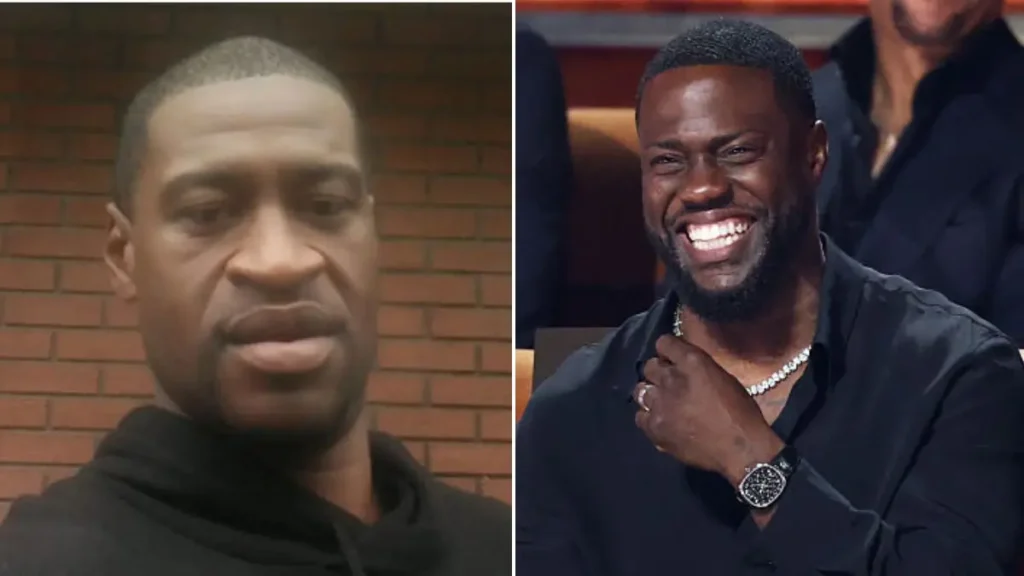
In a world where laughter can often be a balm for the soul, it can also cut deeper than a knife, especially when it touches on the very real and raw wounds of our society. The recent uproar surrounding Kevin Hart’s interaction with a white comedian’s unfunny ‘breathing’ joke has reignited the painful memories of George Floyd’s tragic death. While comedy has long been a space for pushing boundaries and tackling social issues, some lines should never be crossed, particularly when they exploit the grief of a family still healing from an unimaginable loss.
Floyd’s family has expressed their heartbreak over Hart’s decision not to address the inappropriate quip, which many consider a callous mockery of the circumstances surrounding Floyd’s death. In their eyes, allowing such jokes to slide not only minimizes the gravity of the issue but also disrespects the legacy of their loved one. They’re asking an important question: when does comedy become cruelty? For a community still grappling with systemic racism and police brutality, moments like these are painful reminders that sensitivity and understanding should be at the forefront of our societal conversations.
Hart, who has a reputation for pushing comedic boundaries, finds himself in a precarious position. The world of comedy is often a tightrope walk between humor and taste, but in the face of such sensitive topics, the stakes feel even higher. As public figures, comedians have a responsibility to be aware of the impact their words can have, particularly surrounding issues that affect marginalized communities. By not shutting down the joke, Hart may have inadvertently sent the message that these topics are fair game, regardless of the pain they carry.
In an era where we must constantly evaluate the messages we send and the narratives we uphold, it’s crucial to remember the power of empathy. The backlash against Hart’s decision is not simply about one joke; it’s about the broader context of how we handle discussions around race, trauma, and the lives lost in the fight for justice. The voices of George Floyd’s family deserve to be heard, and they are calling for a more compassionate response from those wielding influence in entertainment.
As we delve deeper into the intersection of comedy, culture, and justice, let us not forget to uplift the stories of those who have suffered injustices. Rather than turning pain into punchlines, it’s time to turn our collective focus towards healing and understanding. The legacy of George Floyd is not merely one of sorrow but a rallying cry for a more just world. And in that pursuit, we must hold each other accountable, demanding better from our leaders in all spheres—whether on the streets or on the stage.
From The Source