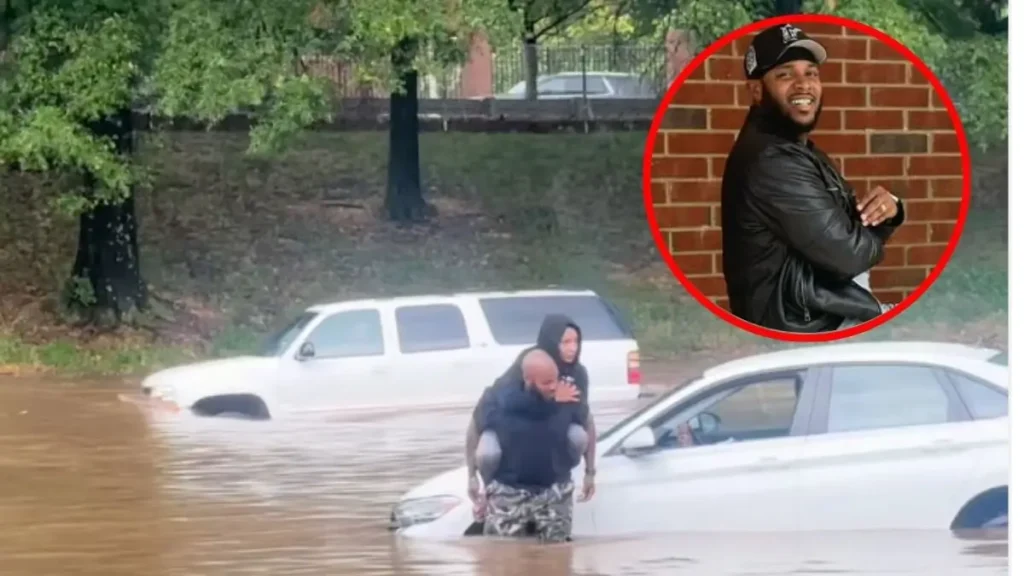
A military veteran who served in Iraq is being hailed as a hero after his selfless actions during last week’s devastating floods in downtown Atlanta. As torrential rains inundated the city, this brave veteran didn’t think twice before jumping into the fray to save a woman trapped on the roof of her sinking car. In a moment that some might overlook, he risked his own life to ensure that she made it to safety. Yet, in the aftermath of this heroic act, he revealed that the experience triggered memories of his own traumatic past, reminding him of the chaos and despair he witnessed during his service.
Despite the accolades and praise pouring in from the community, the veteran’s journey is one of complexity and pain. He courageously recounted the harrowing scene where, while others merely drove by, he felt an undeniable calling to act. “People just drove past her,” he said, his voice trembling. This statement encapsulates a profound truth about humanity’s disconnect in times of crisis, showcasing how one person’s inaction can contrast sharply with another’s instinct to help. His choice to intervene speaks volumes about the spirit of service and the moral compass that guides those who have served our country.
As he continues to grapple with the resurfacing of his PTSD, this veteran’s story is not just about a single act of bravery; it shines a light on the mental health struggles faced by many who have served in combat. His experience serves as a poignant reminder that heroism can come with hidden scars. In a world that often glorifies acts of courage without addressing the underlying consequences, it is vital to support those who continue to fight their battles long after the uniforms are put away. Here’s to honoring the true essence of heroism, which lies not only in the acts of bravery that save lives but also in the enduring courage it takes to confront one’s own demons.
About The Author