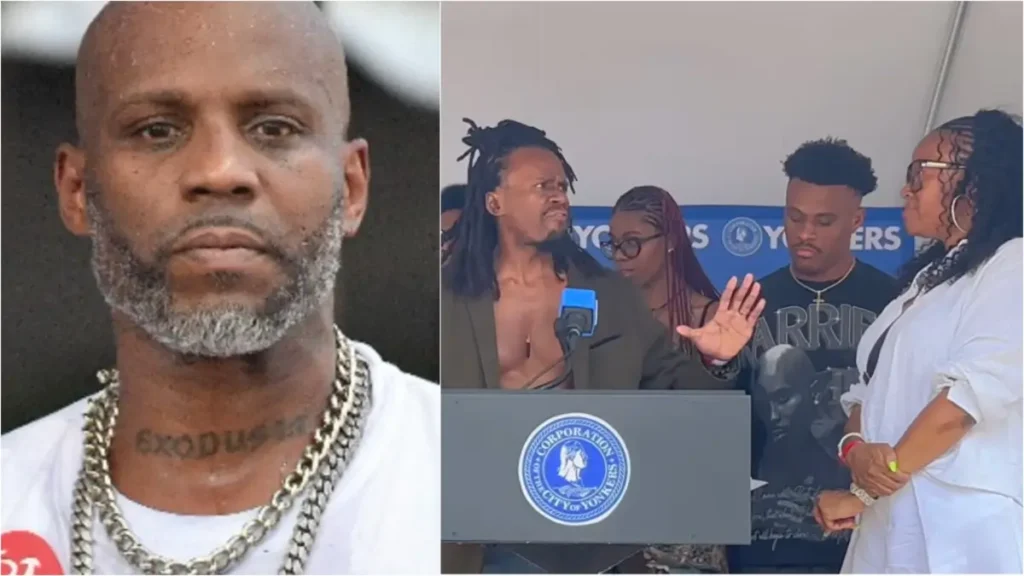
It’s been five years since rapper DMX passed away at the young age of 50 due to a cocaine-induced heart attack, yet the impact of his life and legacy continues to reverberate through hip-hop culture and beyond. Recently, a heated confrontation took center stage, illuminating the ongoing struggles within DMX’s family dynamics. His eldest son has publicly accused his late father’s fiancée, Desiree Lindstrom, of sidelining his ‘original family’ during moments meant to honor DMX’s memory.
The tension came to a head during a recent event celebrating DMX’s legacy, where emotions ran high and familial bonds were tested. DMX’s son expressed his discontent, claiming that Lindstrom’s actions have effectively erased the presence of those DMX considered his closest family. This is not just a mere squabble over inheritance or stage time; it’s a profound and painful reminder of the complexities that come with fame, love, and loss. The public display of discord is a stark reflection of how unresolved issues can fester even after a beloved figure’s passing, challenging the narrative of unity in grief.
As fans and family members alike grapple with the legacy of DMX, this incident raises important questions about who gets to carry the torch of memory and how different branches of family navigate the terrain of grief and public perception. DMX was a figure defined by his raw honesty and emotional depth; his family’s ongoing struggles echo this complexity. Ultimately, his son’s assertion that “he isn’t wrong” speaks volumes about the need for recognition, respect, and the right to mourn in one’s own way. The legacy of DMX is not just in his music, but also in the lives he touched and the family he left behind, each carrying pieces of his spirit in their hearts.
About The Author