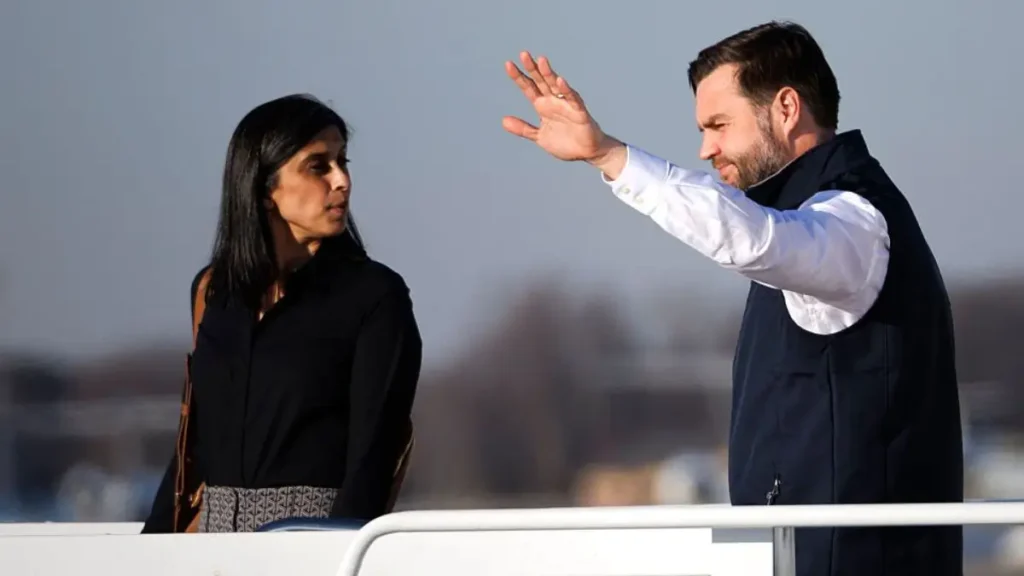
Usha Vance, the wife of Vice President JD Vance, is making waves in the media after her recent appearance on live television where she wore what some critics have dubbed a ‘cheap’ pregnancy outfit. Rather than shrinking away from the scrutiny, Usha shot back, boldly stating that her fashion choices should not overshadow her professional contributions or personal experiences. In an era where women are constantly judged for their appearances, her refusal to be silenced has sparked important conversations about the expectations placed on women in the public eye.
However, the drama didn’t stop with Usha’s defiance. JD Vance’s response to the backlash has ignited a fresh wave of outrage. His remarks, perceived as dismissive, suggested that the scrutiny of Usha’s outfit was merely a distraction from more pressing political issues. Critics argue that this mindset perpetuates a culture of silence around women’s issues and ignores the challenges they face in balancing public life with personal choices.
As the Vances navigate this turbulent media landscape, it raises a larger question about the intersection of fashion, politics, and gender. Usha’s bold stance could very well redefine how we discuss women’s roles in the political arena, shifting the focus from their wardrobe choices back to their capabilities and contributions. Amidst all this, one thing is clear: the Vances are not backing down, and the public’s response is only growing more intense.
The conversation surrounding Usha’s outfit and JD’s comments highlights the need for a reevaluation of how we perceive women in positions of power. It’s time to move past superficial judgments and focus on the substance of their contributions, rather than their clothing. In a political landscape fraught with division, Usha Vance’s pushback serves as a reminder that women deserve respect and autonomy, both in their wardrobes and in their voices.
About The Author