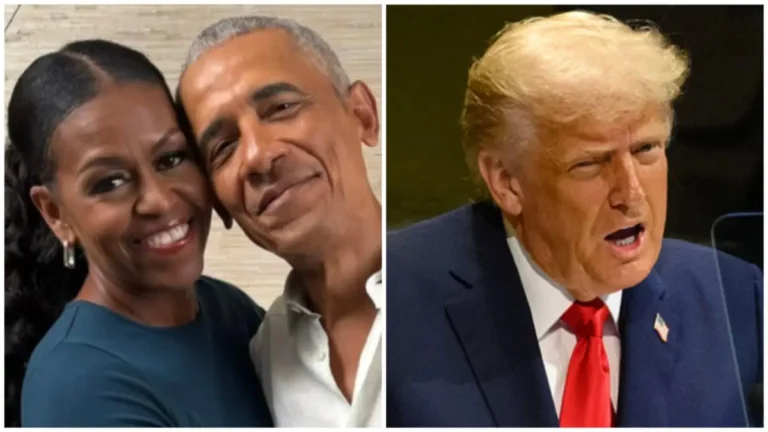
In the world of high-stakes politics, few things are as theatrical as the performance of Donald Trump. Recently, social media erupted over the former president’s latest attempt to conceal his age and physical decline, leading to whispers that his heavy makeup made him look like a corpse. It’s ironic, given that he’s spent years painting a rosy picture of his achievements, only to be caught on camera with a mask so thick it could rival the most extravagant Halloween getup. But that’s the reality of living in a world where the superficial often overshadows authenticity, and for Trump, that facade is crumbling faster than ever.
Trump has always relied on a blend of bravado and smoke-and-mirrors, using barricades and scaffolding not just to shield his physical presence, but to mask his failures and shortcomings. His administration’s track record is littered with broken promises, divisive rhetoric, and blatant attempts to undermine democracy itself. But when the camera zooms in, it reveals more than just the layers of makeup; it exposes the hollow core of a man desperately trying to maintain an image that no longer resonates with the American people. As more people tune into the imagery of his public appearances, they’re not just looking at a man—they’re dissecting the remnants of a legacy built on bluster and denial.
The internet wasted no time in dissecting Trump’s latest missteps, turning his cosmetic efforts into a meme-worthy moment. From comparisons to characters like the crypt keeper to jokes about his “corpse-like” appearance, the reactions offer a collective catharsis for those who have spent years watching this spectacle unfold. It’s a reminder that while he may have once commanded the attention of the masses, today, he’s the subject of ridicule, a cautionary tale on the perils of prioritizing image over substance. In a culture that values authenticity, it’s no wonder that the public is increasingly uninterested in the polished facade he presents.
What’s particularly telling about this moment is how it illuminates the deeper truths about race, power, and representation in America. For too long, we’ve watched as figures in power, regardless of their backgrounds, have been able to manipulate narratives to suit their agendas. But as the veil lifts on Trump, it raises critical questions—who gets to define what power looks like? In a society where the Black community has long been marginalized, the juxtaposition of Trump’s theatricality against the relentless scrutiny we face highlights the stark disparities that persist in our political landscape.
As we dissect these moments, let’s remember that our culture thrives on truth, resilience, and authenticity. Trump might try to hide behind layers of makeup and staged appearances, but the cameras have a way of revealing what’s beneath. In the end, it’s not just about what we see on the surface; it’s about recognizing the fragility of power and the strength of a community that continues to rise above the noise. The truth is always waiting to emerge, and as long as we keep our eyes wide open, we’ll see it for what it truly is.
About The Author