
Anthony Constantino's NY Win: What It Means for Hip Hop and Politics
By Tanya Brooks, PowerVault Staff Anthony Constantino, a name not commonly associated with Hip Hop, just nabbed a congressional seat in New York's 21st District, and his next move is as bold as it is perplexing: he's...
Advertisement

By Tanya Brooks, PowerVault Staff
Anthony Constantino, a name not commonly associated with Hip Hop, just nabbed a congressional seat in New York's 21st District, and his next move is as bold as it is perplexing: he's calling on Donald Trump to 'free Diddy.' For those who aren’t familiar, Anthony Constantino is not your average political figure. As the CEO of Sticker Mule, his journey from business to politics has been nothing short of unconventional. Operating out of Amsterdam, New York, this entrepreneur turned politician has now set his sights on shaking up the system in Washington. His call for Trump to grant clemency to Sean 'Diddy' Combs thrusts him into the national spotlight, tying his political ambitions to a high-profile figure in the Hip Hop world. This move has raised eyebrows and questions about his true intentions and the kind of political chess he’s playing.
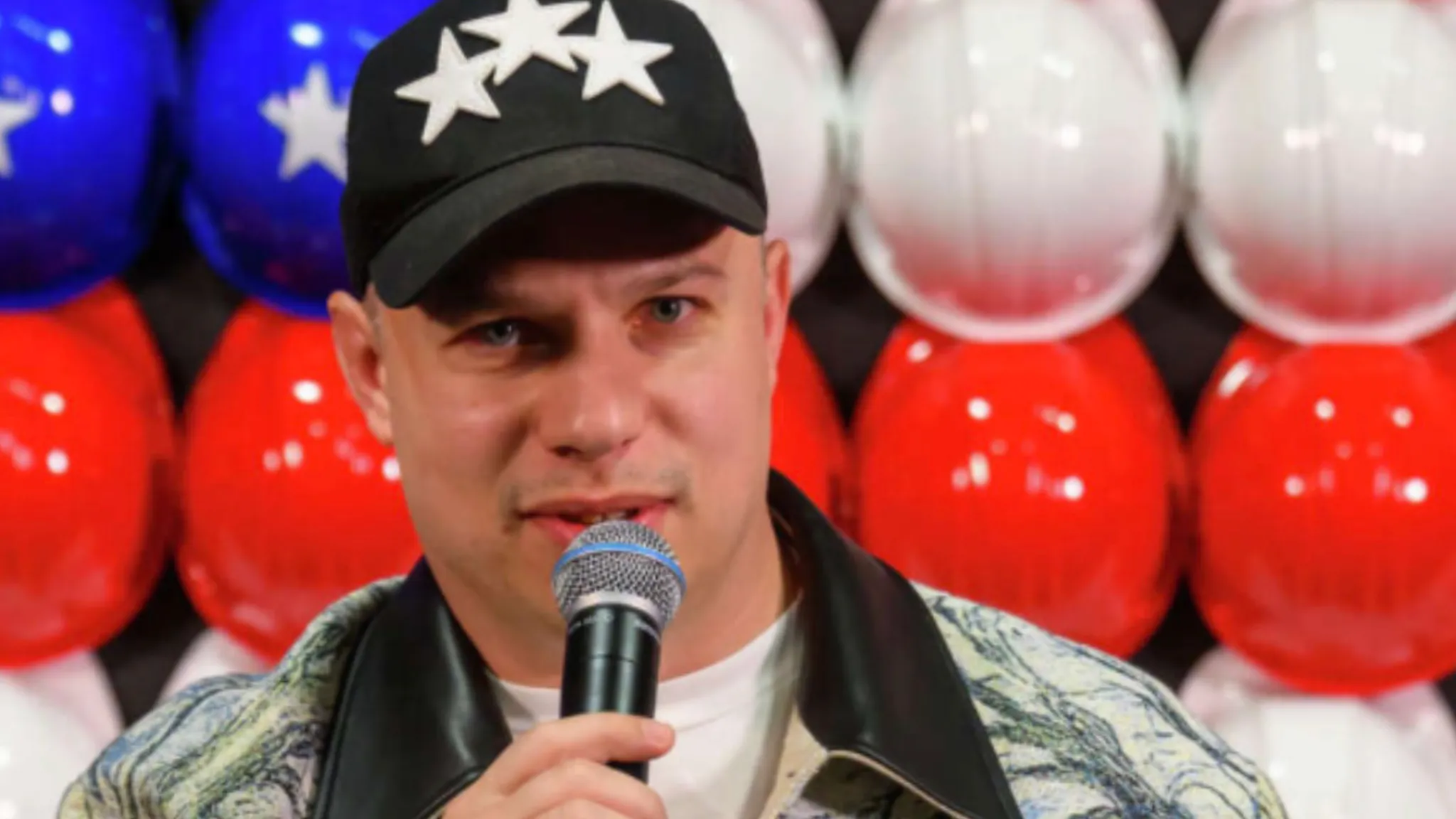
It’s a bizarre collision of Hip Hop and politics, made even stranger by Constantino's victory speech at the Sticker Mule headquarters in Amsterdam, New York, as reported by WWNY. Amidst a backdrop of a massive 'Vote for Trump' sign, he didn't just thank supporters, he also took a moment to highlight his wish for Trump to offer clemency to Sean 'Diddy' Combs, who is currently serving a federal sentence for transportation to engage in prostitution, after being cleared of more severe charges in 2025. In a room filled with supporters, Constantino's comments about Diddy seemed to blend genuine concern with political theatrics. His supporters cheered, signaling a shared belief in this unusual alliance. The setting itself was a spectacle of political showmanship, complete with a towering symbol of Trump's influence, as Constantino positioned himself as a bridge between two worlds that rarely intersect so boldly.
Constantino’s speech wasn't all about Diddy, though. He made sure to lay into the press, booting WWNY journalist Garrett Domblewski from the room over a supposed scowl. The move highlighted his combative stance toward media scrutiny, a tactic reminiscent of Trump's own approach to the press. And, not to be outdone by any rapper, he debuted a new track, 'NY 21,' from his album 'Thank You, President Trump.' The album has been drawing eyes and ears throughout his campaign, serving as an unconventional campaign tool that mixes political messaging with his own brand of Hip Hop. This is more than an album; it's a strategic weapon in his political arsenal, designed to resonate with a base that craves both entertainment and political change. Constantino's use of music as a rallying cry shows his understanding of cultural influence in the digital age.
Check out the boldness in his speech in the clip below. The footage captures the essence of Constantino's audacious style, a fusion of business acumen, political strategy, and a flair for the dramatic. As the camera pans across the crowd, you can see the mix of supporters who have rallied behind his unconventional message. This is more than a political rally; it's a spectacle, a performance that blurs the lines between political discourse and entertainment. Constantino's speech is packed with the kind of rhetoric that both energizes his base and draws criticism from detractors. Watching the clip, you can almost feel the electric tension in the room, proof of how Constantino is redefining the political playbook in a way that feels more like a Hip Hop concert than a traditional political event.
His political journey is an odyssey of its own. Sticker Mule hit headlines in July 2024 when Constantino sent an email to his customer base declaring his support for Trump after an assassination attempt on the former president. He tried to turn that shocking news into a marketing pitch, selling Trump-themed T-shirts at a cut-rate price. His political voyage only accelerated from there, using Trump ally Roger Stone as a key campaign consultant to seal his primary win. This move showed Constantino's willingness to leverage his business platform for political gain, blending entrepreneurship with a bold political stance. The email not only showcased his support for Trump but also revealed his knack for turning controversy into opportunity. Partnering with Stone, a seasoned political strategist known for his unconventional tactics, further cemented Constantino's commitment to shaking up the political scene.
Once Rep. Elise Stefanik vacated the seat, Constantino was ready to swoop in. With Trump having historically carried the district easily, the path seemed clear, but political tides can shift quickly in New York. The district's tendency to support Republicans gave Constantino a solid foundation, but the challenges are just beginning. The political scene in New York is as dynamic as it is unpredictable, with shifting demographics and changing voter priorities that could easily alter the course of any campaign. Constantino's victory, while significant, is just the first step in a complex political journey. He must handle a district that, while historically leaning Republican, is not immune to the broader shifts in political sentiment sweeping across the nation. The real test will be his ability to maintain support while addressing the diverse concerns of his constituents.
And here's where we pivot. The intersection of Hip Hop, politics, and media takes center stage in a narrative that defies traditional boundaries. Constantino's story is proof of how these elements are increasingly intertwined, creating a new kind of political discourse. This is more than a story about a man winning an election; it's about how culture, influence, and power are reshaping the political scene. As we delve deeper into this intersection, it becomes clear that the implications extend far beyond a single election. This is a moment where the cultural and political narratives collide, offering a glimpse into the future of political engagement in an era defined by multimedia platforms and cultural cross-pollination.
Hip Hop's global influence doesn't shield it from the harsh realities of political maneuvering.
What's fascinating here isn't just Constantino's win but the underlying implications for Hip Hop's legacy and how it's being used in the political arena. Hip Hop has long been a voice for the marginalized, a platform that challenges authority and speaks truth to power. Yet, here we have a businessman-turned-politician using the genre as a tool for political gain, aligning himself with Trump's polarizing rhetoric. This puts a spotlight on the commercialization of Hip Hop and its power dynamics in society. The genre, born from the streets as a form of resistance and empowerment, finds itself at a crossroads where its cultural capital is being leveraged for political ends. Constantino's use of Hip Hop elements in his campaign is a stark reminder of how the culture's authenticity is perpetually at risk of being commodified and repurposed in ways that may not align with its original spirit.
On an industry level, the lines between politics and entertainment are increasingly blurred. The majors have always known how to shift with the cultural winds, and now politics is becoming another arena for social influence and market expansion. Constantino’s alliance with Trump reflects how the industry navigates power, and Hip Hop, the culture that fueled worldwide movements, isn't exempt from that. The corporate co-opting of Hip Hop's language and style feeds into a larger strategy to reach audiences that might otherwise remain politically disengaged. The blending of these spheres is not just an evolution but a strategic move to harness the influence of Hip Hop's global community. Constantino's political maneuvering exemplifies how cultural symbols and narratives are integrated into political campaigns, creating a new paradigm where entertainment and politics are inextricably linked.
For the audience, particularly the young, diverse demographics that define Hip Hop's core fanbase, this moment is a cultural Rorschach test. Does Constantino's call to free Diddy resonate as an earnest plea to correct a judicial wrong, or is it another calculated move in a chess game where Hip Hop is a pawn? The intersection of identity, media, and power here is crucial, and fans are left to decode the authenticity versus opportunism in this narrative. As they handle the complexities of this scene, the fans are tasked with discerning the genuine from the performative. This scenario challenges them to consider what Hip Hop means at a time when its symbols are used in political arenas that may not reflect their values. The ongoing dialogue within the community becomes a critical examination of the culture's role and its potential for influence within the broader social and political fabric.
Deep down, it’s clear that Constantino's story is as much about race and class as it is about politics and music. Hip Hop's global influence doesn't shield it from the harsh realities of political maneuvering. The transition of artists and cultural icons into political figures is not new, but this fusion with Trumpian politics marks a critical shift. It's a complicated mesh of capitalism and cultural appropriation, where even the most grassroots movements can be leveraged for political gain. Constantino's journey shows the perpetual tension between commercial interests and cultural integrity, revealing how power dynamics play out in real-time. This narrative is a reflection of the broader societal issues where race, class, and cultural heritage intersect with political ambition. The stakes in this political theater are high, as they challenge the essence of what Hip Hop represents and its potential to effect meaningful change.
Advertisement
The next chapter hinges on whether Trump will take any steps regarding Diddy's case, but the broader implications are already unfolding. The intersection of politics and Hip Hop is not going anywhere, if anything, it’s deepening. As Constantino takes his seat in Congress, the political scene may see more such unconventional alliances, challenging the very fabric of what Hip Hop stands for. This is a moment for fans to reassess and reclaim the culture's roots, and for emerging artists to consider their role in this evolving narrative. The unfolding events signal a shift in how political power and cultural influence are wielded, inviting both reflection and action from those who hold Hip Hop close to heart. As the culture continues to evolve, its stakeholders must handle this new terrain with an eye toward preserving its revolutionary spirit while adapting to the changing tides of political engagement.
More from PowerVault Network:
