
Bounce Music and the New Orleans Sound That Refused to Leave.
Ask anybody from New Orleans to explain bounce and they will not describe a genre so much as a feeling at home. The drum break from the 1986 Showboys record "Drag Rap" rolls underneath, somebody hollers into a mic, an...
Advertisement

Ask anybody from New Orleans to explain bounce and they will not describe a genre so much as a feeling at home. The drum break from the 1986 Showboys record "Drag Rap" rolls underneath, somebody hollers into a mic, and the room answers. That sound never needed permission from Atlanta, New York or Los Angeles to exist. It stayed home, stayed loud and stayed defiant, and when the rest of the country came looking for the New Orleans that built Cash Money and No Limit, the bounce was already there waiting.
Pitchfork writer Alison Fensterstock, who covered the scene for the New Orleans Times-Picayune, laid out the shape of it in a 2016 piece about singer and producer PJ Morton coming back to the city that raised him. Morton is the son of Bishop Paul S. Morton, the Grammy-nominated gospel star and prominent local pastor. He learned piano in the jazz band at St. Augustine High School, home to one of the city's most celebrated marching ensembles, and he landed his first professional gig at the House of Blues gospel brunch before he even graduated. Then he did what ambitious New Orleans musicians have always done. He left.
Fensterstock put the reason plainly. New Orleans music has always run high on quality and influence but low on infrastructure. Morton wrote and produced a bonus track on India.Arie's Grammy-winning 2002 album Voyage to India while still at Morehouse in Atlanta, then joined Erykah Badu's touring band, and in 2010 became Maroon 5's keyboardist. By her count he spent about 14 years living away from home. "I didn't really have intentions on coming back," Morton told her. "I used to come home for my mom's cooking, but I didn't have examples here. I felt boxed in." That sentence is the whole economic story of Black New Orleans music in one breath. The talent was never the missing piece. The ladder was.
Yet Morton's own teenage soundtrack came from the only homegrown infrastructure the city had. Fensterstock points to Cash Money Records and Master P's No Limit as the grassroots machinery whose releases scored his adolescence as much as his father's church did. Morton went to high school with Mack Maine, who went on to be president of Young Money Entertainment, and Young Money put out Morton's 2013 solo album, fittingly titled New Orleans, with Lil Wayne guesting on the bonus track "Lover." Two labels run by Black New Orleanians had shown that a hometown sound could be sold from the home address. Almost nobody copied the model at the street level where bounce lived, and that gap is the story.
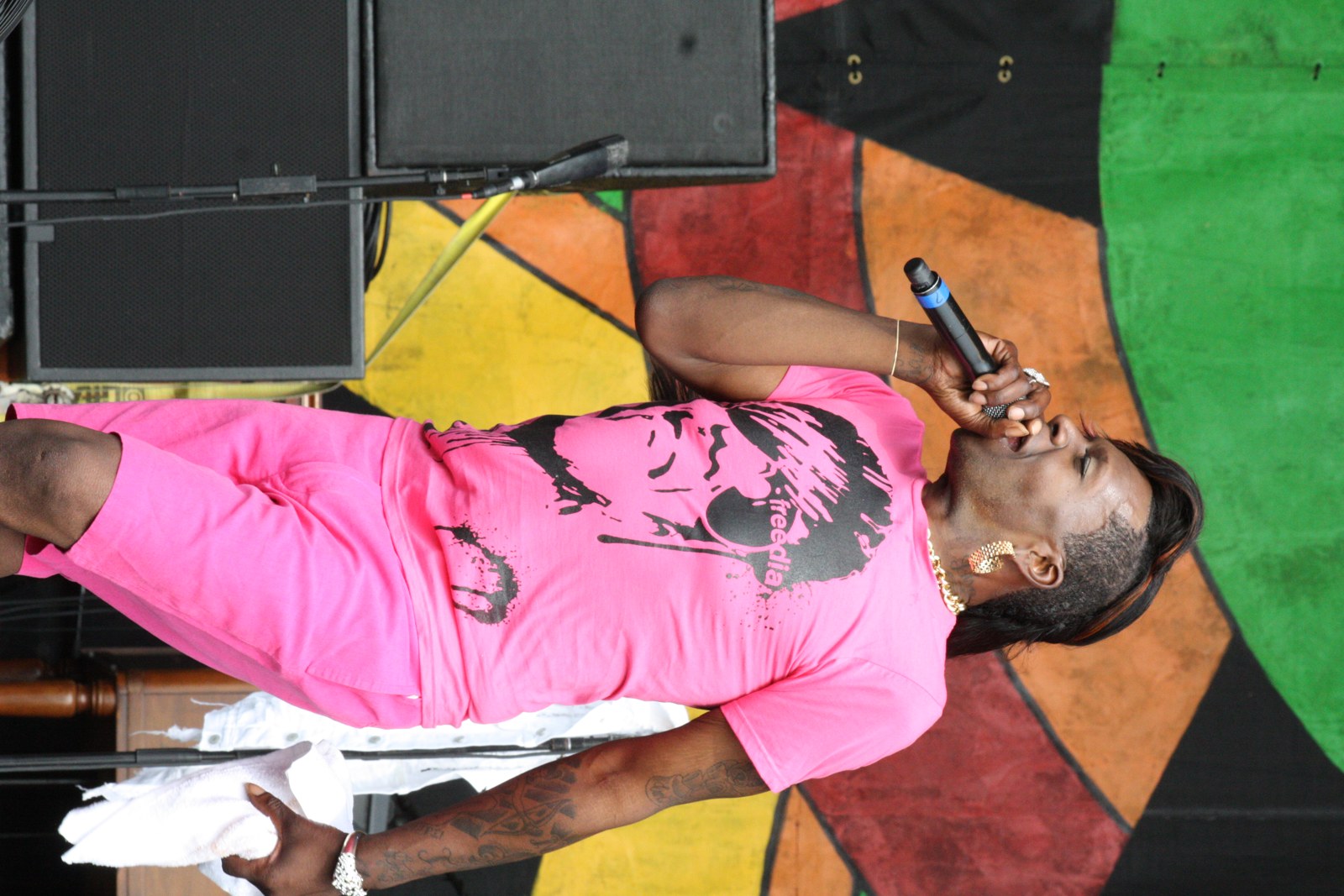
Here are the receipts on how deep the bounce lineage runs. Fensterstock names the foundational samples behind the vintage highlights as the 1986 Showboys track "Drag Rap" and Cameron Paul's "Brown Beats." She notes the Lil Weezyana Fest revue in August 2015, which lovingly showcased old school bounce stars from 5th Ward Weebie to Ms. Tee, a first generation Cash Money signee. At a listening party in a coffee roasting warehouse, PJ's Coffee marketing director Reid Nolte joked that he almost threw out his back dancing to DJ Jubilee. And she traces the modern revival through Big Freedia, who sharpened her craft in the street level scene alongside the rise of Cash Money and No Limit, and who later broke through nationally as a recording artist, a reality television star and a Beyonce collaborator.
Fensterstock also credits Nicky da B, whose career was buoyed by social media and online listening tools that did not exist when indie bounce artists like Freedia started out. His death in 2014 at age 24 cut short a career that Rolling Stone had heralded for its blend of traditional roots and global dance influences. That loss is a reminder of how much of this music was carried by young Black artists with talent and a following.
Then there is the great delineator. Fensterstock writes that Hurricane Katrina will define New Orleans history in terms of before and after for decades to come, and that its devastation created a sense of cultural emergency for a city whose identity is tied to culture. The need to protect it demanded that it be defined. Over the ten years that followed, she argues, more serious documentation, more diverse audiences, and inclusion in tradition driven institutions like community radio and the major local festivals all showed bounce and New Orleans hip hop edging into the canon, under the umbrella of heritage. A music once policed as a nuisance became something the city said it wanted to keep.
The clip below is a short tribute to the two label empires that put the city on the national map. Bounce grew up beside that machinery.
Watch: No Limit and Cash Money, a New Orleans hip hop tribute
Back to Morton, because his homecoming is the part of the Pitchfork piece with the most practical lesson. In late 2015 he moved back with a plan: start an independent label, Morton Records, out of a studio he intended to build in New Orleans East, the once heavily flooded area where he grew up. "I started to see the value at home," he said, "and I thought, if there's no infrastructure, maybe I can bring that." His first release, the mixtape Bounce & Soul Vol. 1, dropped March 25, 2016, and pulled in Juvenile and Mannie Fresh for the first time, plus Lil Wayne, Weebie, Trombone Shorty and Dee-1, with DJ and producer Raj Smoove hosting.
Smoove supplied the instrumental copies of those old bounce samples, and Morton chopped them up and rebuilt them in his own pop and R&B voice, even giving his Stevie Wonder collaboration "Only One" a bounce remix. The spoken interludes are where the project becomes a document. Mack Maine reminisces about the origins of Young Money and the 17th Ward Hollygrove neighborhood where he and Lil Wayne grew up. Wayne is sampled quoting Big Freedia's earliest local street hit, "Gin In My System." Q93.3 FM's DJ Wild Wayne, the city's best known hip hop radio voice, drops references to a Krewe of Ghana ball out in Thibodaux. Fensterstock called it a collage of deep insider talk that feels, to an outside fan, like stumbling on a little secret.
That is the through-line to the national industry, and it is worth stating without inflating it. Bounce did not simply feed the Cash Money and No Limit hits. It ran beside them, with its own heroes, its own call and response and its own rules about who dances and who watches. What the national business learned from New Orleans was that a regional sound with a hard local identity could outlast a trend, that independent Black owned labels could move units from a city the majors ignored, and that the sample, the chant and the shout were as valuable as the verse. The famous records told the world New Orleans had arrived. Bounce told New Orleans who it already was.
The harder point sits underneath. A city that loves the music has often been slow to fund or protect the musicians. Morton felt boxed in for the same reason so many of his peers did. When the labels and clubs are few, an artist's growth ends where the local business does.
So where does New Orleans stand now? The festival stages and community radio slots that Fensterstock described as signs of canon were real signs of progress. But the old questions still hang over New Orleans East, where Morton planned to build his studio, and over Hollygrove, where Mack Maine and Lil Wayne grew up. Who owns the masters, who owns the venues, and who gets paid when the world borrows the sound? Culture that survives a flood still needs a business model to survive a market.
That is where you come in. If you danced to DJ Jubilee, if you remember the first time you heard Ms. Tee or Weebie out of a car window, if you sat in a Q93.3 listening session with Wild Wayne on the dial, PVN wants the part of the story the record missed. Drop the club names, the block parties, the call and response lines and the years in the comments. The people who lived it are the only complete archive this history has, and Pitchfork and Alison Fensterstock did the reporting that gave us a place to start.
New Orleans did not export a sound so much as refuse to let anyone take it. The bounce stayed. The kids who left came back, as Morton did, and said what he said: there is really no place like this. The credit for that, and the infrastructure to back it, is long overdue.
Advertisement
Source: Pitchfork, "How Bounce Music Brings New Orleans Natives Back Home," by Alison Fensterstock (April 7, 2016). Photo: Big Freedia at the New Orleans Jazz & Heritage Festival, 2014, by kowarski, CC BY 2.0 via Wikimedia Commons.
More from PowerVault Network:
