
Chris Brown's Escaped Prison Sentence: Inside His London Nightclub Assault Case
By Marcus Ellison, PowerVault Staff Chris Brown once again dodges the confines of a prison cell, this time after being handed a suspended eight-month sentence for a violent incident in a London nightclub. The R&B sing...
Advertisement

By Marcus Ellison, PowerVault Staff
Chris Brown once again dodges the confines of a prison cell, this time after being handed a suspended eight-month sentence for a violent incident in a London nightclub. The R&B singer's penchant for controversy continues to shadow his career as he faces legal consequences without jail time for attacking a producer with a bottle. This isn't the first time Breezy's found himself on the wrong side of the law, and it likely won't be the last. His ability to evade significant legal repercussions remains proof of the complexities of celebrity justice. Despite the high-profile nature of his missteps, Brown's career seems to endure, fueled by a fan base willing to separate the artist from his actions.
According to XXL, the incident, which could have landed Brown behind bars, concluded with a judicial slap on the wrist. Brown, along with his co-defendant and rapper HoodyBaby, pleaded guilty to affray in London's Southwark Crown Court for their roles in the February 2023 attack on producer Abraham Diaw. The court's decision reflects a larger pattern of leniency afforded to celebrities when faced with legal troubles. This outcome puts a spotlight on the influence of fame and fortune in the legal system. With Brown's history of legal issues, the public often wonders if an ordinary citizen would receive the same treatment under similar circumstances.
The altercation at Tape nightclub was captured on surveillance, showing Brown striking Diaw four times with a tequila bottle. The judge in the case described the attack as "plainly dangerous," underscoring the potential for serious injury. Brown's codefendant, HoodyBaby, also received a suspended sentence, avoiding jail time despite the violence that unfolded in a room full of witnesses. The incident, lasting no more than 20 seconds, paints a vivid image of the chaos that can erupt in nightlife settings, especially when fuelled by alcohol and heightened emotions. Yet, despite the evidence and the severity of the act, the outcome suggests that the court was swayed by factors beyond the immediate facts of the case.
The clip that set everything off is below, a stark reminder of how quickly things can spiral in the world of nightlife and celebrity. Surveillance footage from inside Tape nightclub captures the rapid escalation of violence, a mere 20-second burst of chaos that would eventually lead to a courtroom and headlines across the globe. In those few seconds, the stakes were clear: a bottle turned from a vessel of celebration to a weapon, and a night of leisure transformed into a legal nightmare. The visuals bring home the reality of what went down that night, offering a raw, unfiltered look at the collision of fame, impulse, and consequence.
During the hearing, Judge Tony Baumgartner noted that the violence was unplanned but severe, emphasizing how such actions in a crowded space could have led to far worse outcomes. The swift nature of the attack, which lasted mere seconds, highlights the unpredictable nature of nightlife altercations involving high-profile individuals. In the club scene, where egos often run high and tempers even higher, such incidents can escalate before anyone has a moment to process what's happening. For Brown, this is more than a legal hurdle; it was another chapter in a career marked by turbulence. The judge's remarks underline the fragile line between a night out and a life-altering moment.
Charges initially pegged at causing grievous bodily harm were later reduced, reflecting a legal system willing to negotiate pleas in exchange for admissions of guilt. This strategy is not uncommon in high-profile cases where media attention and public opinion are at stake. It's a reminder of how celebrity cases often play out differently than those involving everyday citizens. Plea deals in these scenarios can serve multiple purposes: they expedite the legal process, reduce court costs, and minimize the risk of negative public exposure for all parties involved. However, they also fuel the debate over whether justice is truly served when influential figures are involved, sparking conversations about equity and accountability in the justice system.
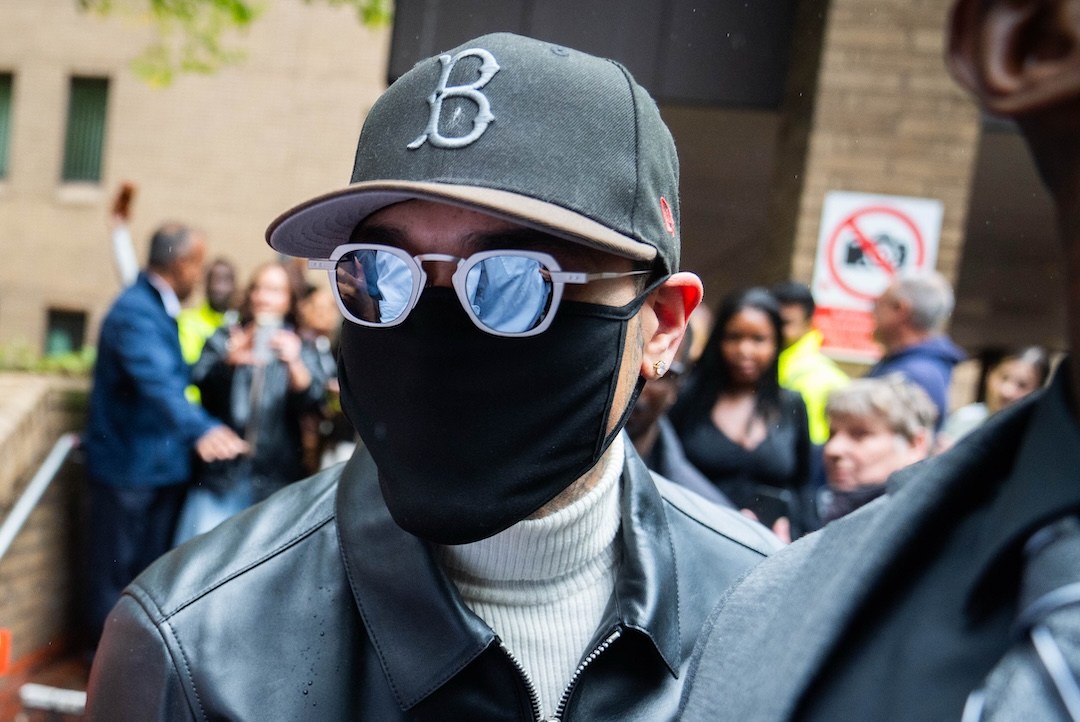
The initial court appearances were a spectacle in themselves, with Brown making a statement through fashion, donning a black leather jacket and mask, perhaps to shield from prying eyes and cameras. Meanwhile, the media circus surrounding the case only amplifies the dual nature of justice for the famous. Brown's pop culture presence, akin to Nicki Minaj's political moves, keeps him in the public eye, for better or worse.
Justice is often a game of reactions and reputations, not just facts.
But the real question remains: Does fame guarantee favorable treatment in the justice system? History tells us it often does, harkening back to cases like Michael Jackson's past legal battles and more recently, Tory Lanez's legal woes. The system seems to treat the rich and famous with a different set of rules, often to public dismay. This disparity fuels public outcry, as many question whether justice can truly be blind when wealth and influence are at play. The preferential treatment of celebrities highlights the broader societal issue of inequality, where those with resources can handle legal challenges more easily than those without, perpetuating a cycle of privilege and disparity.
Justice is often a game of reactions and reputations, not just facts. In the world of celebrity, perception can outweigh reality, with public image playing a crucial role in legal outcomes. For stars like Chris Brown, the ability to sway public opinion can be as powerful as any legal defense. This dynamic turns the courtroom into a theater, where narratives are crafted and public sympathy is courted. The interplay of media coverage, fan loyalty, and strategic legal maneuvering creates an environment where justice is not just about what happens in the courtroom but also about how it's perceived outside. It's a complex dance that often leaves the public questioning the integrity of the system.
For Chris Brown's audience, this case might be another test of loyalty, a reminder of the complexities tied to supporting artists who toe the line of legality. For the industry, it's a reflection of the broader dynamics where hits and scandals intertwine seamlessly, keeping artists relevant in a unique way. The video below shows Brown's nonchalant post-courthouse demeanor, offering a thumbs-up to fans, a gesture of relief or perhaps defiance. This moment encapsulates the duality of Brown's public persona: the artist capable of captivating audiences with his talent and the controversial figure consistently embroiled in legal drama. His fans are left to grapple with this dichotomy, weighing their admiration for his artistry against the reality of his actions.
Industry-wise, this situation highlights the balance labels must strike between profiting off an artist’s talent and mitigating the fallout from their personal missteps. One wonders how much longer the scales can tip in Brown's favor before irreversible damage occurs. Meanwhile, audiences continue to engage, drawn by the drama and the music. Record labels are acutely aware of the financial implications tied to an artist's public image, often finding themselves in a tough spot when personal controversies threaten to overshadow commercial success. As long as Brown continues to deliver hits, the industry is likely to stick by him, yet there's an underlying tension about how his actions may eventually impact his career's longevity and the label's bottom line.
Advertisement
The racial and social dynamics within the justice system cannot be overlooked. Cases like Brown's often serve as stark reminders of privileges afforded to Black celebrities that aren't extended to all Black men. Where class and race intersect, leniency can sometimes shield those in the spotlight, a conversation echoed in Killer Mike's controversies too. This reality shows the complex layers of inequality within the justice system, where intersectionality plays a significant role in determining outcomes. While high-profile artists may handle the system with relative ease, countless others face harsher realities, prompting ongoing discussions about the need for reform and equity in legal proceedings.
As for what happens next, Brown is unlikely to see any significant career downturn unless he lands in another scandal or legal predicament. The reality is, in this media-driven world, every move keeps him newsworthy. This story is yet another chapter in a book that fans and critics alike continue to read, questioning what's next for Chris Brown and whether the cycle will ever break. The narrative remains hooked on Brown's every turn, and for now, his journey with the law has taken a fortunate pause.
