
Nicki Minaj vs. Kathy Hochul: Why the Rap Queen's Political Rant Matters
By DeShawn Price, PowerVault Staff Nicki Minaj's vocal criticism of New York Governor Kathy Hochul took center stage this past week, as the rap icon didn't hold back, labeling Hochul as an 'evil woman.' She's not just...
Advertisement

By DeShawn Price, PowerVault Staff
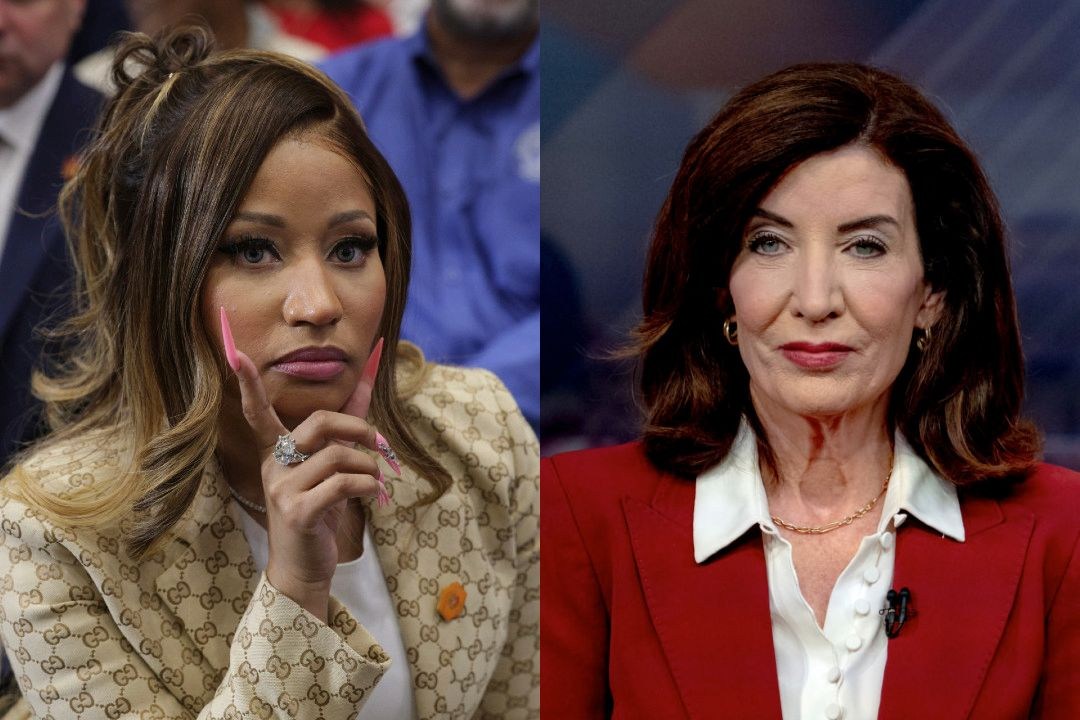
Nicki Minaj's vocal criticism of New York Governor Kathy Hochul took center stage this past week, as the rap icon didn't hold back, labeling Hochul as an 'evil woman.' She's not just venting frustrations; she's rallying her massive fan base to consider Republican challenger Bruce Blakeman as a viable alternative. This is more than about personal beef; it's a bold political statement that throws Hip Hop into the electoral spotlight, challenging the status quo. Nicki's stance shows the increasing power of celebrity voices in political spheres, especially when those voices belong to artists with influence that spans across continents and cultures. Her comments are likely to resonate deeply, creating an intense intersection between Hip Hop's cultural clout and the ongoing pressure cooker of political discourse.
On October 28, Nicki Minaj didn't mince words when she posted on X, formerly known as Twitter, to launch a scathing critique of Governor Kathy Hochul's leadership. Accusing the Democratic Governor of staying silent on pressing issues that affect innocent lives, Nicki's outburst is more than just a celebrity rant, it's a clarion call to action. Her voice, amplified by millions of followers, has sparked a broader conversation about the role artists play in shaping political opinions. With such a massive platform at her disposal, Nicki's ability to influence and mobilize her audience is undeniable, bringing to light the profound impact that celebrity endorsements, or in this case, disapprovals, can have on political dynamics. Her words serve as a reminder of how interconnected the worlds of entertainment and politics have become, where a single tweet can shift public discourse and challenge existing political narratives.
Nicki didn't stop there; she took it a step further by directly challenging the loyalty and integrity of Black voters and Christians who support Hochul. In a fiery post, she questioned their political affiliations and urged them to reconsider, saying, 'HOW MUCH MORE DO YOU NEED TO SEE & HEAR FROM THEM?!!' It's a powerful call to action, encouraging her audience to align their votes with their values. Her demand for accountability is a provocative move, pushing her followers to not just passively consume political rhetoric but actively engage with it. By endorsing Bruce Blakeman, she's not only stirring the political pot but also highlighting a growing divide within traditionally Democratic constituencies. Nicki's influence here is a blessing and a curse: she can sway opinions but also ignite debates about what it means to be politically conscious in today's scene.
Governor Hochul, not one to back down from a confrontation, swiftly responded while on the campaign trail in Albany. She didn't just brush off Nicki's critique; instead, she took a subtle jab at the rapper by suggesting she should 'get outside and offline a little more.' Hochul also criticized what she sees as Nicki's alignment with Trump-like ideologies, which she believes are dangerous. The stakes are undeniably high as both camps ramp up their efforts ahead of Election Day. This clash between a sitting politician and a mega celebrity isn't just about differing opinions; it's a microcosm of the larger ideological battles playing out across the country. Hochul's response demonstrates her awareness of the power dynamics at play and her determination to maintain narrative control in a political climate where the lines between entertainment and governance are increasingly blurred.
Hochul currently holds a healthy lead over Blakeman in the polls, but Nicki Minaj's comments could be the wildcard in this race, particularly among young voters who often feel alienated by conventional political narratives. Nicki's influence speaks to a broader desire for change, a yearning for leaders who break the mold and offer something fresh. Her call for new leadership resonates with a demographic that craves authenticity and is tired of the same old political playbook. As Hochul's team strategizes how to counter this unexpected challenge, the unfolding drama highlights how celebrity endorsements and criticisms can shake up traditional campaign tactics. In a political scene where public perception can shift rapidly, the impact of Nicki's words could be more significant than the current polling numbers suggest. Hochul's decision to engage with Nicki directly may also indicate a recognition of the cultural force behind the rapper's words.
This isn't the first time a high-profile artist has had a significant impact on public opinion. In 2018, Kanye West's controversial support for Donald Trump sparked intense debates about the influence celebrities wield in political arenas. Similarly, Jay-Z and Beyoncé's endorsement of Barack Obama in 2008 not only bolstered his campaign but also signified a shift in how cultural icons could sway the political scene. These instances highlight a long-standing tradition of Hip Hop and politics intersecting, where artists leverage their platforms to champion causes or challenge the establishment. Nicki Minaj's recent political commentary fits squarely within this history, adding another layer to the ongoing narrative of how Hip Hop culture continues to shape societal and political conversations. As artists increasingly step into the political spotlight, they bring with them fresh perspectives and the power to mobilize their audiences in ways that traditional political figures often cannot.
Nicki’s latest political commentary is more than just a headline; it's a wake-up call for the culture.
Nicki's outspoken stance isn't just about politics; it's a call for accountability within our community.
Nicki's outspoken stance isn't just a fleeting moment of celebrity politics; it's a profound call for accountability within our community. Her challenge to Black voters and Christians is not a mere political jab; it's an urgent invitation to critically examine the leaders we support and the values they claim to represent. In a society where celebrity voices often echo louder than traditional ones, Nicki's bold words encourage us to pause and reflect on the choices we make at the ballot box. Her message compels us to consider the broader implications of our political decisions and to scrutinize the intentions and track records of those in power. By leveraging her influence, Nicki is not only advocating for a particular candidate but also urging her audience to engage in a deeper, more meaningful dialogue about governance, representation, and accountability in our communities.
For the music industry, Nicki's move signals a deeper shift in how artists are utilizing their platforms. Historically, artists have had the power to shape culture, but now they're stepping into the realm of activism with the intent to influence political landscapes. This transformation from entertainment to activism highlights how the industry is becoming a battleground where culture and politics intersect. Artists like J. Cole have recently reflected on this evolution, acknowledging the responsibility that comes with their influence and the potential to guide narratives beyond music. Nicki Minaj's foray into political commentary exemplifies this new reality, where the lines between celebrity, activism, and politics are increasingly blurred. Her actions serve as a reminder of the growing role artists play in societal conversations, challenging the notion that entertainment and politics must remain separate spheres.
The community's takeaway from Nicki's bold move is unmistakable: it's time for a conversation about our political engagement. Nicki's call to action disrupts the status quo and challenges us to engage with the political scene in a more informed and critical manner. When artists like Nicki step into the political arena, they bring with them fresh perspectives and challenge issues that might otherwise go unexamined. Her actions prompt us to question whether we are truly informed about those who govern us and whether our political choices align with the values we hold dear. This moment serves as a catalyst for deeper introspection about our role in shaping the political future and the importance of being active participants in the democratic process.
Advertisement
The dynamics at play in this clash between Nicki Minaj and Governor Hochul extend far beyond a simple celebrity-politician spat. This is fundamentally a story about race, class, and power dynamics within political discourse. Historically, Black voices have been marginalized and sidelined, but figures from the culture like Nicki are rewriting the narrative, demanding to be heard and acknowledged in political spaces. Her critique of Hochul isn't just another celebrity squabble; it's emblematic of broader societal shifts that demand recognition and inclusion of Black communities in political conversations. This moment reflects a growing insistence on addressing racial and class inequalities in the political sphere, echoing recent events that have pushed societal issues to the forefront. It's a call to action for all communities to ensure their voices are not only heard but also respected and acted upon in meaningful ways.
As Election Day draws near, the unfolding political drama between Nicki Minaj and Governor Hochul warrants close attention. Nicki's influence is undeniable, and the ripple effects of her comments could catch both adversaries and allies off guard. This moment is more than just a celebrity feud; it's a vivid illustration of the intersection between Hip Hop and politics, where voices from the culture challenge established power structures. The stakes are high for both the music industry and the political arena, as they watch closely to see how this narrative unfolds. Nicki's involvement shows the powerful role that artists can play in shaping political discourse, and it is a reminder of the ever-evolving relationship between cultural influence and political engagement.
