Rising Black Voter Turnout in Southern States: What It Means for 2024
By Renee Fontaine, PowerVault Staff Black voter turnout is surging across the South, a powerful counter-movement against recent redistricting efforts that threaten to dilute their political power and silence their voi...
Advertisement

By Renee Fontaine, PowerVault Staff
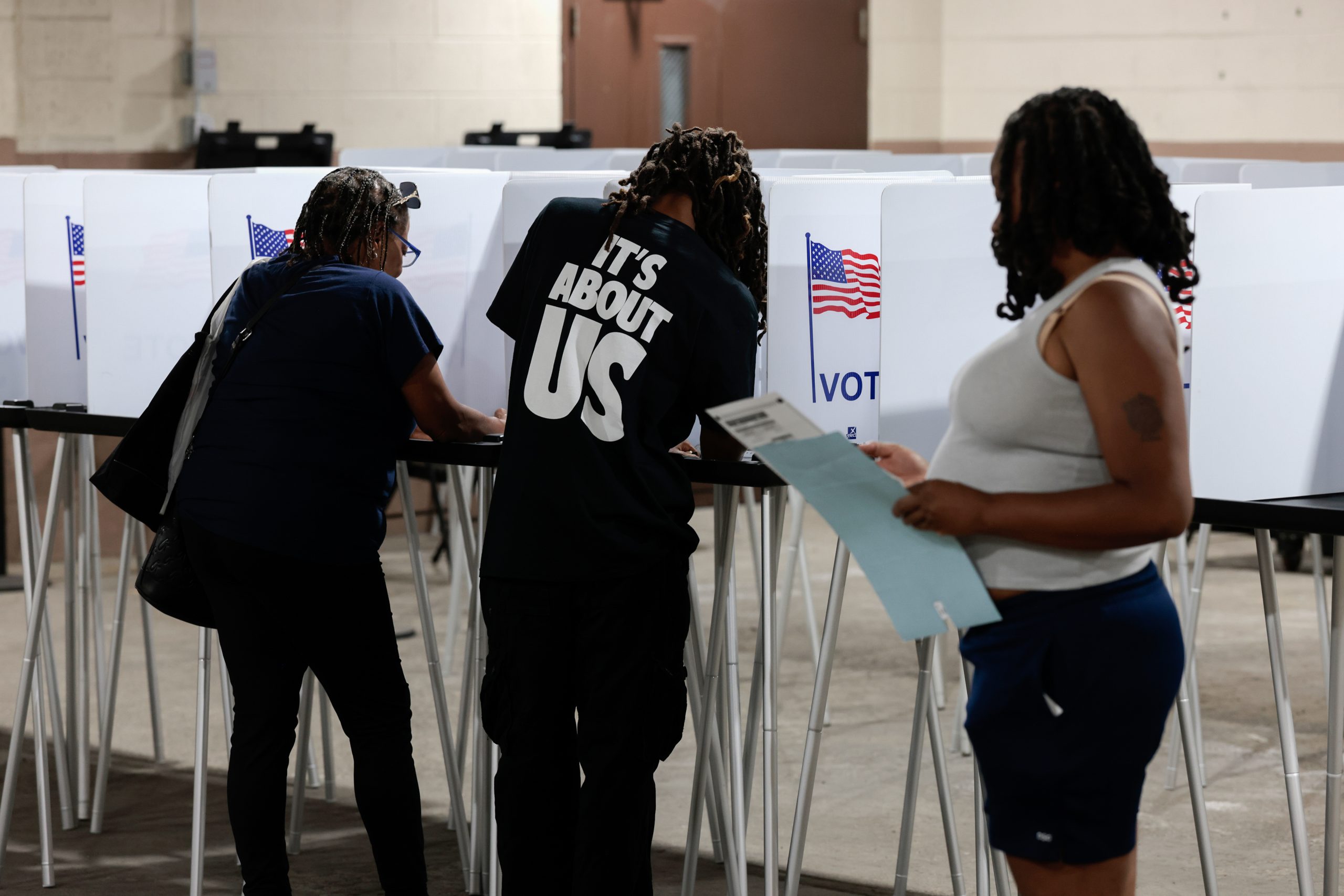
Black voter turnout is surging across the South, a powerful counter-movement against recent redistricting efforts that threaten to dilute their political power and silence their voices. In Louisiana, where historically high Black voter participation has been recorded, this surge is a direct response to aggressive attempts by lawmakers to undermine majority-Black districts. These efforts follow a controversial decision by the Supreme Court, which has emboldened states to redraw district lines in ways that weaken Black political influence. Yet, this surge is more than just a reaction; it’s a declaration of resilience and determination from a community that refuses to be marginalized. The increased turnout is not just about numbers but reflects a broader fight for justice and representation in the face of systemic efforts to disenfranchise Black citizens.
According to Capital B, the decision in Louisiana v. Callais has opened the floodgates for states like Alabama to manipulate district lines, disproportionately affecting Black voters and threatening their representation. Alabama's new map is a glaring example, as it eliminated a majority-Black district, putting Representative Shomari Figures' reelection prospects in jeopardy. Figures, who has been a tireless advocate for securing federal funding aimed at boosting rural education and infrastructure, has his back against the wall. Since taking office in 2024, Figures has worked to channel resources to underserved areas, making his potential loss not just a political issue, but a community crisis. The stakes are high, as losing his voice in Congress could mean losing critical support for initiatives that directly impact Black communities struggling with systemic neglect.
But it’s not just Alabama facing this political upheaval. In Tennessee, the state has taken drastic steps to divide Memphis into three separate districts, effectively weakening its lone Black Democratic stronghold. State Representative Justin J. Pearson finds himself in the crosshairs of a redistricting map that strategically splits his urban base, forcing him to step outside his traditional constituency and appeal to rural voters if he hopes to retain his seat. Pearson, known for his passionate advocacy and grassroots approach, is now tasked with bridging divides and connecting with voters who may not share the same immediate concerns as his urban base. The video below captures some of Pearson's innovative efforts to engage with these communities, emphasizing a campaign that seeks to unite rather than divide, despite the challenging political scene.
The stakes in these elections are incredibly high. Legislative maps don’t just define geographical boundaries; they shape who can run for office, who can win, and who ultimately gets to influence policy. The implications for Black political representation couldn’t be clearer. Voter turnout has surged in North Carolina, increased in Georgia, and Tennessee has seen a sharp rise in early voting. This isn’t merely a battle for political seats; it’s a fight for the very essence of democracy itself. The ability of these communities to mobilize and challenge these changes says a lot about their determination to safeguard their rights. The following video provides more depth into how these changes have been affecting voter behavior, illustrating a community that refuses to be sidelined.
Kristen Clarke of the NAACP has highlighted that the redistricting battle is not merely a theoretical issue of lines and numbers; it is about sustaining the momentum of the civil rights movement within today’s political context. Clarke shows that Black voters are not just statistics to be manipulated, they are individuals with voices, aspirations, and the right to be heard. Meanwhile, activists like Evan Milligan in Alabama are vocal about their demands, insisting, 'We deserve a fair shot at electing officials who understand our lives and our goals.' This is about preserving the hard-fought gains of past generations and ensuring that Black communities have a say in the policies that affect their daily lives. It's about demanding a seat at the table where decisions are made.
This is not the first time Black political power has faced significant threats. Following the Reconstruction era, Jim Crow laws systematically dismantled Black political influence, nullifying Black votes across the South through intimidation and unjust legal barriers. Fast forward to 2013, when the Supreme Court gutted the Voting Rights Act’s preclearance requirement, it opened the floodgates for a wave of voter suppression laws that disproportionately targeted communities of color. Now, the current fight over redistricting echoes these historical challenges, serving as a somber reminder that the struggle for fair representation is far from over. The redistricting battles we see today are not just about drawing lines on a map, they are about who gets to have a voice in shaping the future and whose rights are prioritized in the democratic process.
These redistricting battles are not just about lines on maps; they’re about who gets to claim power.
These redistricting battles are not just about lines on maps; they’re about who gets to claim power.
The recent uptick in Black voter turnout is a clear repudiation of persistent efforts to disenfranchise communities of color. It’s a powerful testament to the community’s determination to resist not just quietly, but through active participation at the ballot box. This groundswell of voter engagement says unequivocally, 'enough is enough,' as Black voters push back against systemic disenfranchisement with their votes. It's the sort of pushback that shows the vitality of democracy itself, a democracy that thrives on active participation and the unwavering resolve of its citizens to fight for equity. Despite the obstacles placed in their path, Black voters are making it clear that they refuse to be passive observers in a system that historically seeks to marginalize them.
But there's an inherent danger here: the more successful these voter mobilization efforts become, the more likely it is that states will feel emboldened to enact even more severe restrictions. This potential for escalation creates a vicious cycle that requires a systemic solution. The courts alone can't be the battleground for these fights; there needs to be a comprehensive legislative priority at the federal level to safeguard voting rights. Without such systemic protections, we risk repeating the dark chapters of history where disenfranchisement was rampant and unchecked. Lawmakers must recognize the urgency of these issues and act decisively to ensure that the foundational principles of democracy are upheld for all citizens, regardless of race or background.
Yet, amidst these challenges, there is a sense of hope and resilience. Organizations like the NAACP and local advocacy groups are demonstrating that grassroots movements can effect significant change. This is reminiscent of the civil rights movements of the 1960s, where ordinary individuals banded together to challenge the status quo and demand justice. In this ongoing fight for fair representation, education and mobilization are proving to be the most potent weapons. These efforts are empowering communities, enabling them to handle and challenge systemic barriers with informed strategies and unwavering solidarity. As these grassroots movements gain momentum, they serve as a reminder that collective action remains a powerful force for change in the fight for equality and justice.
The underlying issues of race and class in redistricting battles are impossible to ignore. These maps disproportionately affect communities of color, providing a stark reflection of the systemic inequalities that extend beyond mere political lines. When lawmakers argue that mixing communities serves everyone’s interests, we must critically examine whose interests are truly being prioritized. The notion of 'serving everyone' often masks deeper inequalities, as communities of color find themselves further marginalized under the guise of fair representation. This practice perpetuates a cycle of disenfranchisement and highlights the need for a more equitable approach to political representation, one that genuinely considers and addresses the unique needs and challenges faced by communities of color.
Advertisement
As we move closer to 2024, it’s crucial to remain vigilant about how these battles over redistricting will unfold. The fight for fair maps is far from over, and the significance of these elections will resonate well beyond their immediate outcomes. The challenge for all of us is to sustain this momentum, ensuring that every voter has the opportunity to participate in shaping the future they envision for themselves and their communities. By staying engaged and informed, we can continue to push for a democracy that truly reflects the diverse voices and interests of all its citizens. Our collective efforts today will lay the groundwork for a more inclusive and equitable political scene for generations to come.
More from PowerVault Network: