Shedeur Sanders' Second Chance: Will He Seize It?
By Andre Coleman, PowerVault Staff Shedeur Sanders could step back into the spotlight this weekend as Deshaun Watson's concussion puts him in line to start for the Cleveland Browns against the New Orleans Saints. This...
Advertisement

By Andre Coleman, PowerVault Staff
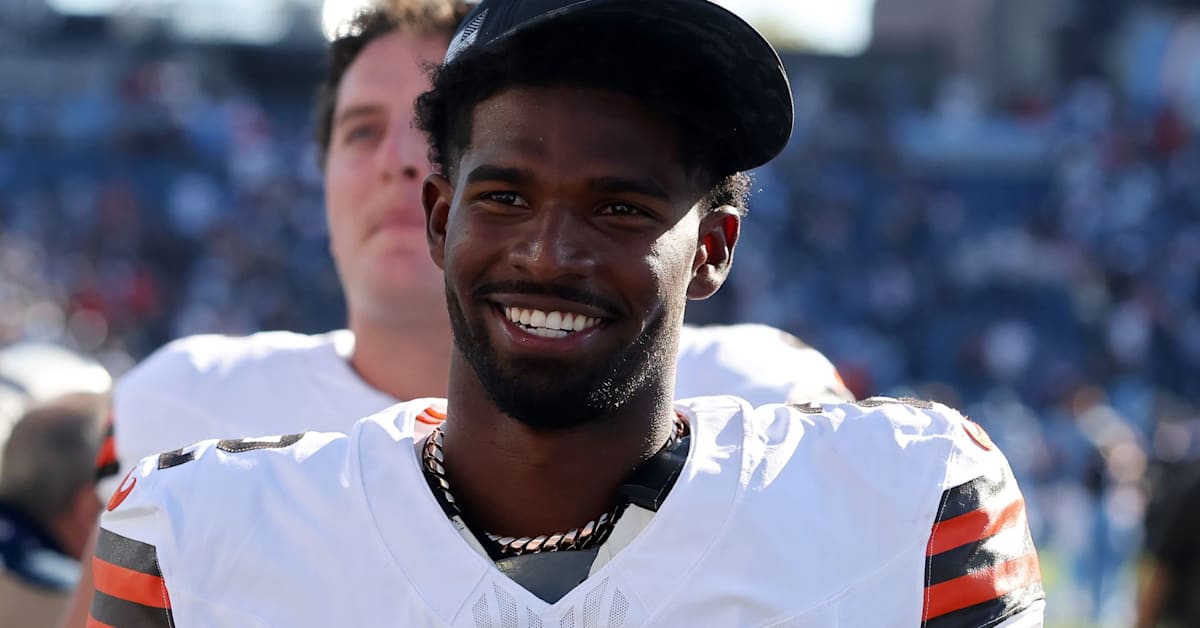
Shedeur Sanders could step back into the spotlight this weekend as Deshaun Watson's concussion puts him in line to start for the Cleveland Browns against the New Orleans Saints. This opportunity is more than just an athletic endeavor; it serves as a litmus test for Sanders, a young Black quarterback handling the complex terrain of the NFL. In this league, narratives about players, especially Black quarterbacks, are quick to form and hard to change. Sanders faces the challenge of proving himself against a backdrop where the stakes are not only personal but also cultural. His journey to the starting lineup involves overcoming entrenched stereotypes that often undermine Black quarterbacks' potential, making this game an essential chapter in a career that could redefine perceptions.
According to a report from The New York Post, Deshaun Watson suffered a concussion during Sunday's game against the Pittsburgh Steelers, the result of a helmet-to-helmet collision with defensive back Jaquan Brisker. Initially, Watson was cleared by medical staff after being examined on the sidelines, a decision that highlights the ongoing debate about concussion protocols in the NFL. However, symptoms emerged later that evening, underscoring the unpredictable nature of head injuries. By Tuesday morning, Watson had reported these symptoms to the medical staff, which led to his placement in the NFL’s concussion protocol. This incident puts a spotlight on the effectiveness of sideline evaluations and the long-term health implications for players like Watson, whose careers hinge on their physical well-being.
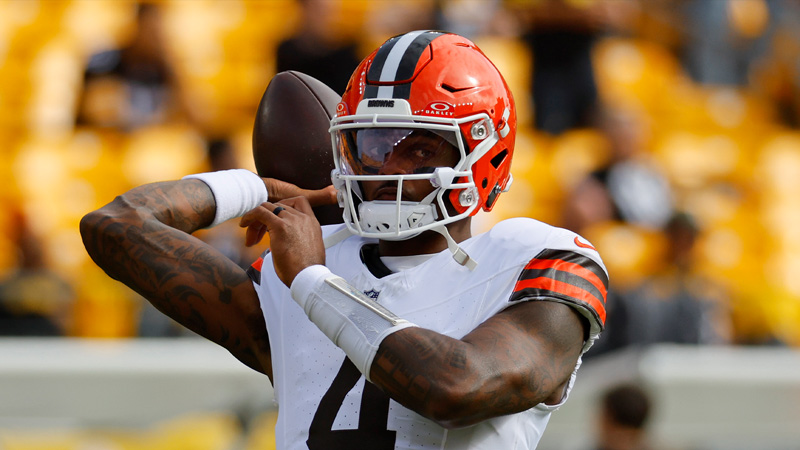
Now, the Browns look to Sanders, who briefly appeared in the Pittsburgh game, completing both his passes for a modest two yards. Although his appearance was minimal, it set the stage for what could be a significant comeback. This brief moment on the field captured the intensity of the situation, as Sanders took control of the offense under challenging circumstances. With every snap, Sanders carries the weight of expectation, not just for a team fighting for playoff contention, but for himself as he seeks to prove his readiness and resilience. The stakes are high, and Sanders' performance could be the fulcrum that tips the scales in Cleveland's favor or cements his place as a backup, highlighting the thin line between opportunity and obscurity.
The Browns, currently holding a 5-3 record alongside the New England Patriots but lagging in playoff tiebreakers, find themselves in desperate need of a win. Sanders is no stranger to pressure; he spent most of his rookie season on the bench before stepping up when Dillon Gabriel went down with a concussion last year. During that stint, he posted a 3-4 record, throwing for 1,400 yards with seven touchdowns and ten interceptions. Those numbers reflect a young quarterback still finding his footing, but they also show flashes of potential that could be realized if he were given consistent opportunities. Sanders' ability to perform under pressure will be critical as the Browns face a turning point in their quest to secure a playoff berth.
Coach Todd Monken made the difficult decision to start Watson over Sanders at the start of the season, a choice influenced by Watson's return from an Achilles injury. Monken praised Sanders, stating, 'I think Shedeur has done a great job, come a long ways and we are excited about his future.' This acknowledgment of Sanders' growth and potential was significant but ultimately not enough to earn him the starting role. However, with Watson sidelined, Sanders' future may begin to unfold sooner than expected. The dynamics of this decision are complex, reflecting not only the immediate needs of the team but also long-term considerations about leadership and development at the quarterback position.
This isn't the first time a young Black quarterback has been underestimated. Sanders' journey echoes that of previous players who have had to claw for every opportunity. Players like Charlie Ward, who chose the NBA over a less certain NFL future back in the '90s, illustrate the systemic challenges still present today. Sanders is battling a system that has often been slow to embrace quarterbacks who look like him. His slip to the fifth round of the 2025 draft, despite having the skills and potential, is a telling reminder of the racial undertones that still pervade the NFL. The league's historical reluctance to fully invest in Black quarterbacks continues to shape the narratives around them, making Sanders' journey both a personal and collective struggle.
But this is more than a comeback story for Sanders; it's a moment that could redefine his trajectory.
For Sanders, this is more than another game; it's a battle for respect and recognition in a league that scrutinizes Black quarterbacks more than it celebrates them.
For Sanders, this is more than another game; it's a battle for respect and recognition in a league that scrutinizes Black quarterbacks more than it celebrates them. His rookie season saw him amass a record $17.7 million in NFL licensing income, proof of his marketability and broad appeal. Yet, the question remains whether Sanders can translate that off-field potential into on-field success. The pressure to perform is immense, as every game becomes a referendum on his ability to lead an NFL team. Sanders must handle these challenges while under the intense scrutiny that comes with being a Black quarterback, where his successes and failures are often viewed through a different, more critical lens.
From a league perspective, the decision to potentially start Sanders could signal a shift in how teams evaluate Black quarterbacks. Despite societal progress, Black quarterbacks still face an unspoken quota in the NFL, where their presence is scrutinized more heavily than their white counterparts. Sanders has a chance to challenge those conventions and prove that talent and resilience can transcend dated stereotypes. If he can seize this opportunity, it could encourage teams to reassess their biases and open doors for future quarterbacks who share his background. Sanders stands at the intersection of talent and change, with the potential to reshape old narratives and contribute to a broader shift in the league's dynamics.
For the Black community, Sanders' second shot is symbolic of the broader cultural struggles we face: the constant need to prove worth, to rise above and redefine narratives thrust upon us. The NFL, with its massive cultural influence, serves as more than just a game; it's a microcosm reflecting wider societal challenges Black athletes confront daily. Sanders' journey is a reminder of the resilience required to succeed in environments that have historically been unwelcoming. His performance on the field is not just about personal achievement; it's about challenging the status quo and inspiring others to believe that change is possible and that talent should be the only metric for success.
Yet, underlying all of this is the stark reality of team politics and financial implications. The Browns' decision to keep Sanders amidst trade rumors suggests both his value and the hesitance to fully commit to him. This reluctance speaks to the broader issues within the NFL, where decisions are often driven by financial considerations as much as by athletic potential. Whether this weekend’s game acts as a catalyst for his career or adds another layer of complexity to his standing, the decision-makers in Cleveland will be watching closely. Sanders' ability to handle this scene could define not only his future but also influence how other teams approach similar decisions.
Advertisement
As the Browns prepare to face the Saints, Sanders is not just playing for a win. He’s playing for his future, a position in the league, and potentially, a reshaping of preconceived paradigms. This game could redefine Sanders, and by extension, challenge the NFL to rethink its stance on Black quarterbacks. Whether Sanders seizes this opportunity will not just impact his career, but it could ripple across the league, posing a challenge for fans and franchises to think differently about what a quarterback should look like. The stakes are immense, and Sanders' performance could leave a lasting impact on both his career and the broader NFL scene.
More from PowerVault Network: