
The Bronx Gave Hip Hop Everything. Fifty Years Later It Still Waits.
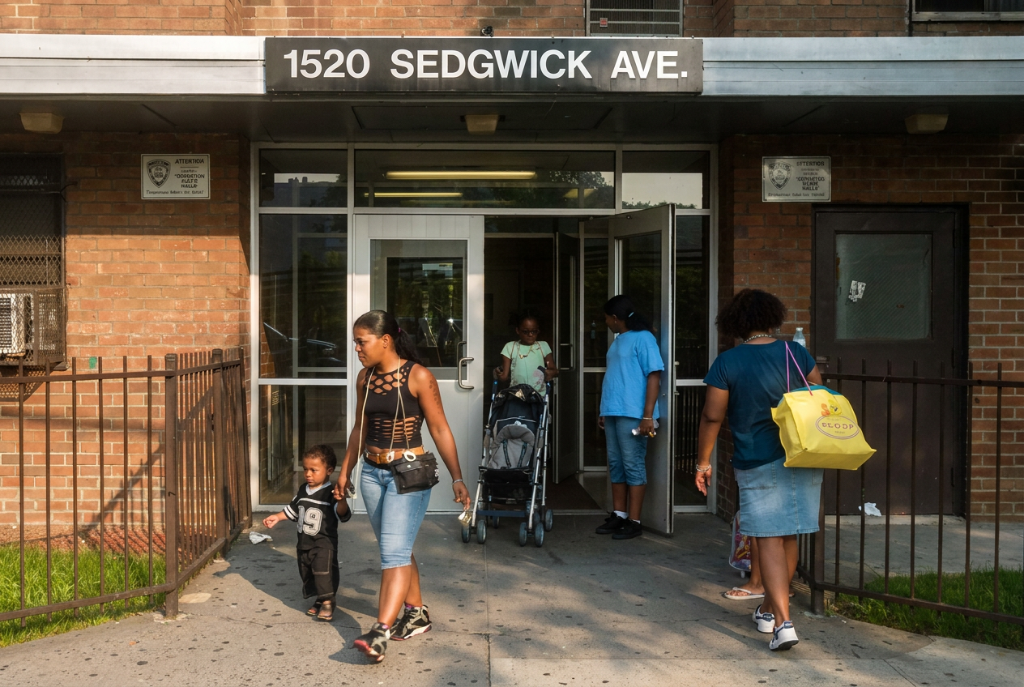
There is a community room on the ground floor of 1520 Sedgwick Avenue that most people walk past without knowing what happened inside it. On August 11, 1973, a teenager named Clive Campbell set up two turntables in th...
Advertisement

There is a community room on the ground floor of 1520 Sedgwick Avenue that most people walk past without knowing what happened inside it. On August 11, 1973, a teenager named Clive Campbell set up two turntables in that room for a back-to-school party his sister Cindy was throwing, and charged 25 cents for the women and 50 cents for the men. He was known around the neighborhood as Kool Herc. What he did with those records over the next few hours is the reason we still mark the date.
Campbell came from Kingston, Jamaica, and landed in the Bronx at twelve years old. He brought soundsystem logic with him, the idea that a DJ is not background music but the whole architecture of a night. At that party he found the part of a record where the drums and bass break down to nothing but rhythm, and he stretched it out by playing two copies of the same record back to back. The break. The merry go round. Nobody had to sit down and wait for the good part to pass.
That is the mechanical fact of hip hop's birth. The cultural fact is messier and more important. The Bronx in 1973 was a borough on fire in the most literal sense. Buildings were burning for insurance, blocks were being emptied out, landlords were walking away, and a generation of young Black and Puerto Rican kids were being written off by every institution that was supposed to protect them. The gangs in the Bronx were real and the violence was real. Out of that, teenagers built a culture in parks, rec centers and community rooms that cost almost nothing to participate in. You needed a record and a wall to dance near.
What Herc started spread fast. Grandmaster Flash took the turntable technique further and made it technical. Afrika Bambaataa, up the way at Bronx River Houses, organized the culture into something with a philosophy and a name, and laid out the elements that still define it. B-boys and b-girls claimed the floor. Writers took the walls and the trains. MCs kept the crowd up between breaks. None of it needed a label, a radio station or a permission slip from anyone downtown.
Fifty years later the borough that built that is still arguing with the industry it created. The AP came back to the Bronx for the anniversary and found the same tension everybody from there already knows. There is pride, real and earned, walking around the Grand Concourse. There is also a housing crisis, schools that get the short end and a poverty rate that keeps the Bronx the poorest borough in the city. Hip hop became a global business worth billions. A lot of that money did not come back up the block.
1520 Sedgwick is the clearest example of how that works. The building sat in the Mitchell-Lama program, built to keep housing affordable for working and middle income families. By the mid 2000s its finances were a mess and the tenants were fighting for repairs. Herc and a group of advocates pushed to have the building declared a landmark, both for what happened in that room and because landmark status was leverage to keep the housing affordable. State preservation officials found it eligible for the National Register in 2008. In 2008 it sold anyway to private investors for seven million dollars, and then it fell further into disrepair while the financing wobbled. The building where hip hop was invented spent years as a distressed property on paper, which tells you exactly how the culture gets valued by the people who profit from it.
There is a version of hip hop history that gets told every August, and it usually starts and ends with a party. The party matters, but it is not the whole story. The reason a South Bronx rec room could produce a global art form is that the kids in it were building something with what they had, in a place that had been stripped. That is the same instinct that makes a rapper record a whole project in a bedroom, that makes a DJ press up his own tapes out of a trunk, that makes a producer flip a three second loop into a career. The Bronx did not get lucky in 1973. The Bronx got resourceful, because it had to.
Advertisement
Watch: DJ Kool Herc and Cindy Campbell on the party that started it all.
Which is why the industry's amnesia is expensive. Every label that signs a kid out of the Bronx and never sets foot in the borough again is taking from a well it does not maintain. Every brand that sells the aesthetic and skips the neighborhood is doing the same. Hip hop's fiftieth year was full of tributes and commercials and tribute commercials. What the Bronx needed was repairs and rent that people could pay and schools that were not cutting art programs. The culture gave the world a language. The least the world can do is keep the building standing.
