
Uncle Luke, 2 Live Crew and the Miami Fight That Saved Free Speech.
Before 2 Live Crew ever reached a courtroom, Luther Campbell was a kid from Liberty City riding a bus to Miami Beach High School just as desegregation was beginning. In the opening pages of his memoir, The Book of Luk...
Advertisement

Before 2 Live Crew ever reached a courtroom, Luther Campbell was a kid from Liberty City riding a bus to Miami Beach High School just as desegregation was beginning. In the opening pages of his memoir, The Book of Luke: My Fight for Truth, Justice, and Liberty City, he describes a Miami Beach that was still segregated, where Black people "weren't even allowed there except to work as maids and janitors." He writes that he was "not even five minutes into this world and I was already making noise some place I wasn't supposed to be." That line is the whole Miami story in miniature, and it is where this installment of The Hometown Files begins.
The book is due out August 4 from Amistad, the HarperCollins imprint, and New Times Broward-Palm Beach, where Campbell is a columnist, ran an excerpt that PVN is leaning on here. Credit belongs to that outlet and to editor Chuck Strouse, who framed the chapter. What follows is built from that excerpt and from the public record around it, and where the memoir is one man's account, we say so.
Campbell was the youngest of five brothers. He played football in Hadley Park and aimed at the NFL before he turned to the turntables. After high school he started DJing under the name Luke Skyywalker, borrowed from the Star Wars hero, and the story he tells from there is one of hassles with police, clubs, riots and a record company before 2 Live Crew changed everything. The group, he writes, ended up facing down Broward County Sheriff Nick Navarro and Gov. Bob Martinez, and in doing so proved that "a little lewdness, a few bad words, and some parody" are protected by the Constitution.
Watch: 2 Live Crew performing, plus an Uncle Luke interview from the archive.
The receipts start with the business model, because the business model is what made the fight possible. Campbell describes himself in that period as Black-owned, independent and making serious money, and he argues that this was exactly what unsettled his critics. "Nobody could pressure me," he writes. He was not a signed act who could be dropped by a nervous parent company. He owned the label, which meant he could not be leaned on from above, and in his telling that is why he was the only one in a position to take the fight all the way. He also remembers who did not stand with him. Major-label artists distanced themselves, he says, naming Salt-N-Pepa and Kid 'n Play as groups that went on BET and criticized 2 Live Crew publicly, and he says he never heard Russell Simmons say a word. That is his recollection and his framing, and it is worth reading as a memoir claim rather than settled history. But it points at a real tension that ran through hip hop in 1990, between artists who wanted to prove the music could be respectable and a Miami crew that refused to apologize for being explicit.
The legal timeline is where the record is firm. As Nasty as They Wanna Be came out on February 7, 1989, and became the group's biggest seller, eventually certified platinum. In 1990 a federal district court in the Southern District of Florida ruled the album legally obscene, which made it the first album in history to receive that label. The Eleventh Circuit later overturned that ruling, and when the case was appealed, the United States Supreme Court declined to hear it. That last detail matters, because the popular version of the story often says the Supreme Court saved 2 Live Crew. It did not rule on the obscenity question. It let the appeals court's win stand. The Court did take up a separate 2 Live Crew case, Campbell v. Acuff-Rose Music, decided in 1994, which held that a commercial parody can qualify as fair use. That case grew out of the group's rewrite of Roy Orbison's "Oh, Pretty Woman."
Campbell's account of the night he chose to test the law is the most vivid part of the excerpt. On June 9, 1990, he and his bandmates Mr. Mixx, Fresh Kid Ice and Brother Marquis rolled up to a rundown Broward club called Club Futura in a white limousine, with at least 30 police cruisers parked outside. His lawyer, Bruce Rogow, had told him that if he sang about elected officials, the performance could be defended as a political rally, so the crowd chanted against Martinez and Navarro and wore shirts reading "Let Luke play." Another popular shirt that night said, "I used to live in America, now I live in Broward County." Undercover officers sat in the crowd with mini-cassette recorders in their shirt pockets, and Campbell says he leaned down and sang straight into them. "I was there to get arrested," he writes, "to take a stand for the First Amendment."
He got his wish. Deputies pulled the limousine over after the show, booked him around 3 in the morning, and held him in a cell until sunrise, with television crews already waiting at the traffic stop. He remembers a hacked Broward police radio band playing "Me So Horny" on repeat the next day. The arrest turned him into what he calls public enemy number one, the lead story on Nightline, with Rogow debating the First Amendment against the activist attorney Jack Thompson. He went on MTV, Geraldo and Donahue, and the group landed in USA Today, Newsweek and Time. For every store that pulled the album, he says, another doubled its order.
What he did next is a lesson in how Black independent labels have always moved faster than the machine that tries to contain them. Listening to a rock station that summer, he heard Bruce Springsteen's "Born in the U.S.A." and reworked it in his head as "Banned in the U.S.A." He says he called Springsteen's manager, got the singer on the phone for about five minutes, and was told it was no problem, that he understood the struggle. The group cut the record in Campbell's Liberty City studio, shot a video in a fake courtroom, and rush-released it for the Fourth of July. Campbell says it was the first single ever digitally distributed to radio, beamed to stations by satellite so that every outlet could play it at the same time. He says Banned in the U.S.A. shipped platinum, and that the tour that followed was the craziest three months of his life.
There is a cost in his telling too. Police in other cities lined up to be the next to arrest him, and Campbell says he spent much of the tour slipping out of venues before officers could act, with a stage trick involving a flash and a second shirt under the first. He describes Detroit and Cincinnati as especially tense. The legal fight was not abstract. It meant a Black record executive being watched in town after town.
The through-line to the national industry is real and it is not small. Campbell is widely credited as the creator of the Miami bass genre and as a pioneer of Florida hip hop, and he brought Southern rap onto the Billboard charts. The 2 Live Crew rulings also became part of the legal footing for explicit music, even as the debate never fully went away. And the ownership lesson, that the person who holds the masters and the label can say no, is one every independent artist working today is still trying to learn.
It would be easy to turn this into a nostalgia piece, and that would miss what Miami is now. The city that produced 2 Live Crew is a very different place from the one Campbell describes, and Liberty City, where he cut "Banned in the U.S.A." in his own studio, is still the neighborhood named in the title of his book. The question underneath his fight, whether the law applies to a Black man the same as a white man, has not gone anywhere either.
That is the part of the story the national outlets tend to skip, and it is why The Hometown Files exists. The record of Miami hip hop lives in the people who were in those clubs, who rode those buses, who stood in line for the tapes sold out of a trunk. If you were at Club Futura, or you remember the night "Banned in the U.S.A." hit your station, PVN wants to hear from you. Tell us what the record missed.
Advertisement
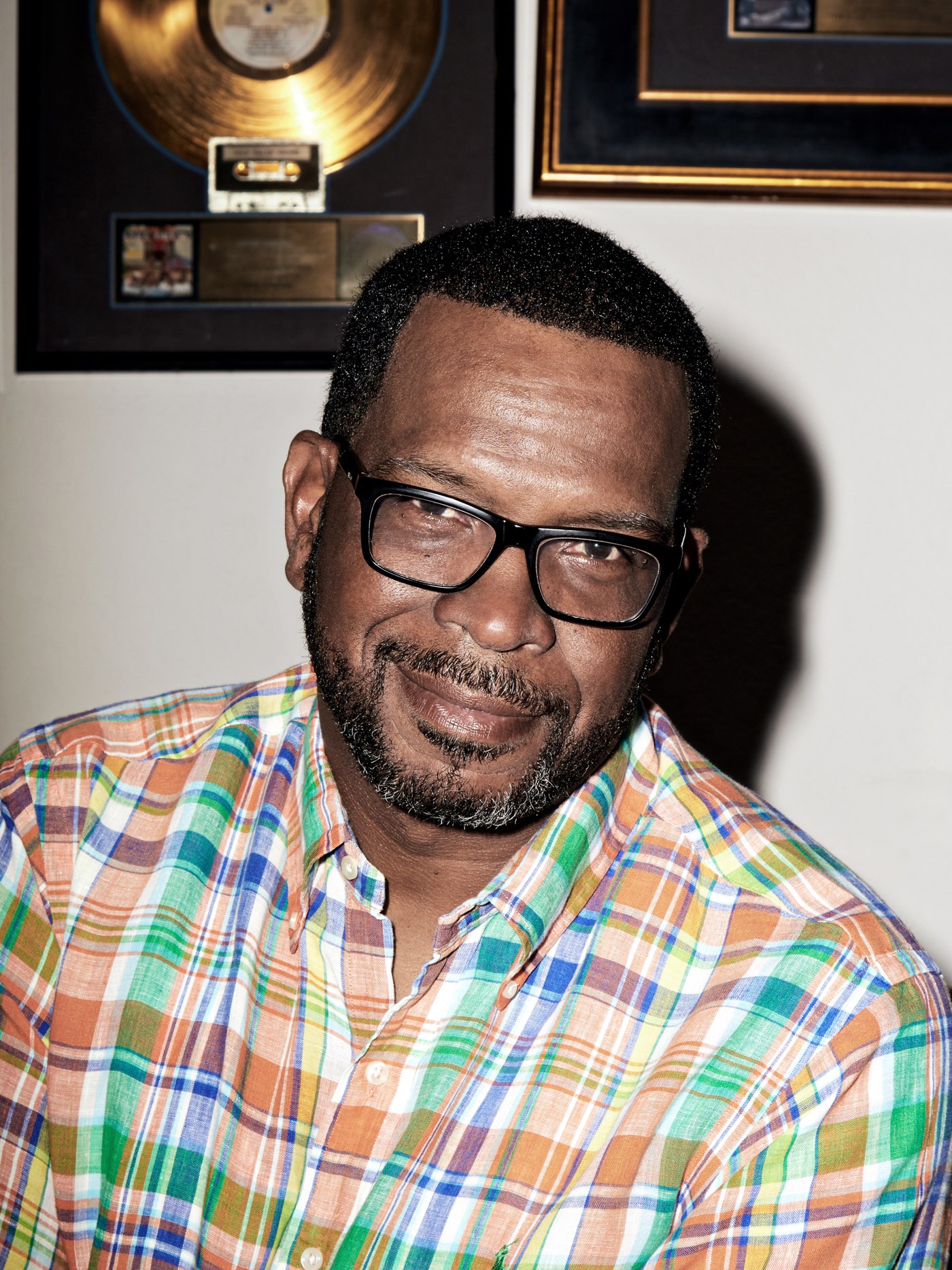
Source: New Times Broward-Palm Beach, excerpt from Luther Campbell's The Book of Luke (Amistad/HarperCollins). Photo: Luther Campbell by David Cabrera, via Wikimedia Commons, CC BY-SA 4.0.
More from PowerVault Network: