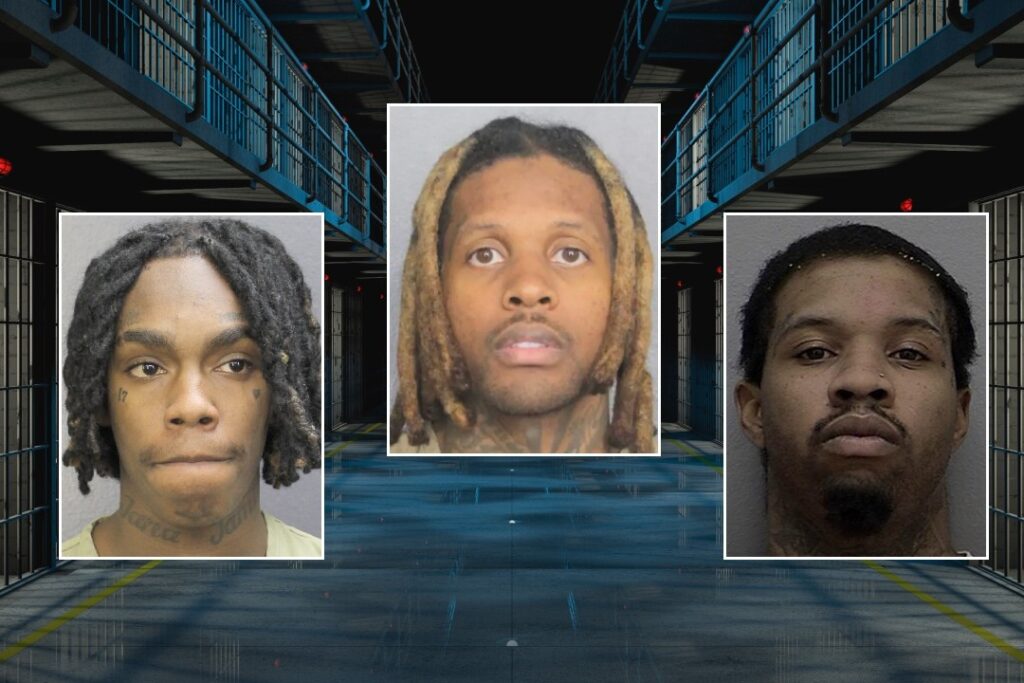
Let’s be real: the intersection of hip hop and the justice system is a conversation we need to keep having. Right now, there are 25 rappers behind bars, caught in a web of legal troubles that often reflects the harsh realities of our communities. From gun charges to drug trafficking, these artists are navigating a system that frequently targets us. We’re not just talking about celebrities; we’re talking about our people, men and women whose stories often go unheard, overshadowed by the beats and bars that made them famous.
Take a moment to think about what it means for a young Black artist to rise through the ranks of hip hop, only to find themselves on the wrong side of the law. For many, the streets are a breeding ground for creativity but also a trap that can lead to incarceration. The artists we love, the ones who spit verses that resonate with our struggles, often face the same systemic barriers that plague our communities. Their music tells our stories, yet their lives become cautionary tales of the consequences that come with living authentically in a society that doesn’t always have our backs.
Consider the impact this has on our culture. When a rapper goes to jail, it’s not just a singular loss; it disrupts the entire landscape of hip hop. Collaborations get stalled, tours get canceled, and the voices that should be lifting us up are silenced. It’s a painful reminder that the very system that celebrates our success is also quick to confine us when we step out of line. And let’s not forget the problematic narratives that media outlets spin when they report on these cases. They often focus on the sensational aspects, ignoring the deeper societal issues at play.
Yet, there’s resilience in our community. Each time one of these artists faces trial or serves time, there’s a conversation that arises about reform, about justice, about systemic racism. We rally around their stories, sharing our own experiences and advocating for change. It’s a reminder that while they might be behind bars, their impact on the culture doesn’t just fade away. They become symbols of a larger fight, representing not only their struggles but the struggles of many of us who feel the weight of the world on our shoulders.
As we reflect on these rappers in jail, let’s not just see them as lost voices; let’s recognize the larger narrative about justice and survival in America. They are proof that while the system may try to silence us, our stories will always find a way to be told. So, the next time you hear a name or see a headline, remember the real-life implications and the stories that lie beneath the surface. These artists may be locked up, but their legacy — and our fight — continues.
About The Author