The movie’s basis emerged from the author’s private relationship along with his mom, shaping an emotionally resonant story.
Black girls’s views formed the movie’s growth and course, making a nuanced portrayal of Black girls’s internal lives.
The movie challenges narratives that recommend girls ought to cease wanting extra as they grow old, reclaiming want with out disgrace.
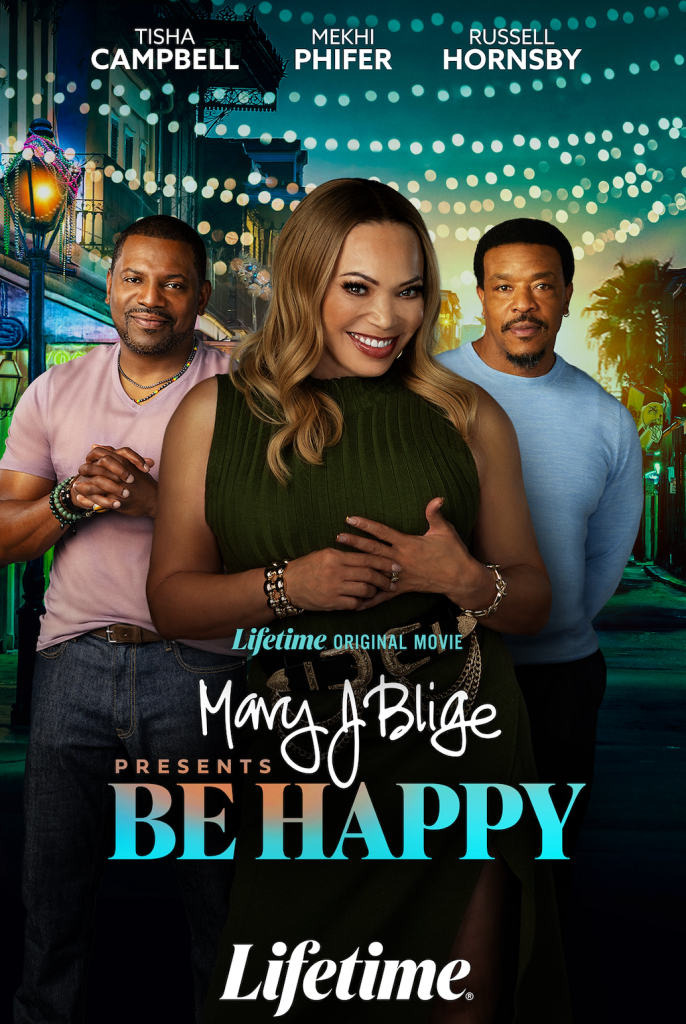
In a panorama that not often offers Black girls the area to pause, pivot, or prioritize themselves, Lifetime’s Mary J. Blige Presents: Be Happy arrives with clear intention.
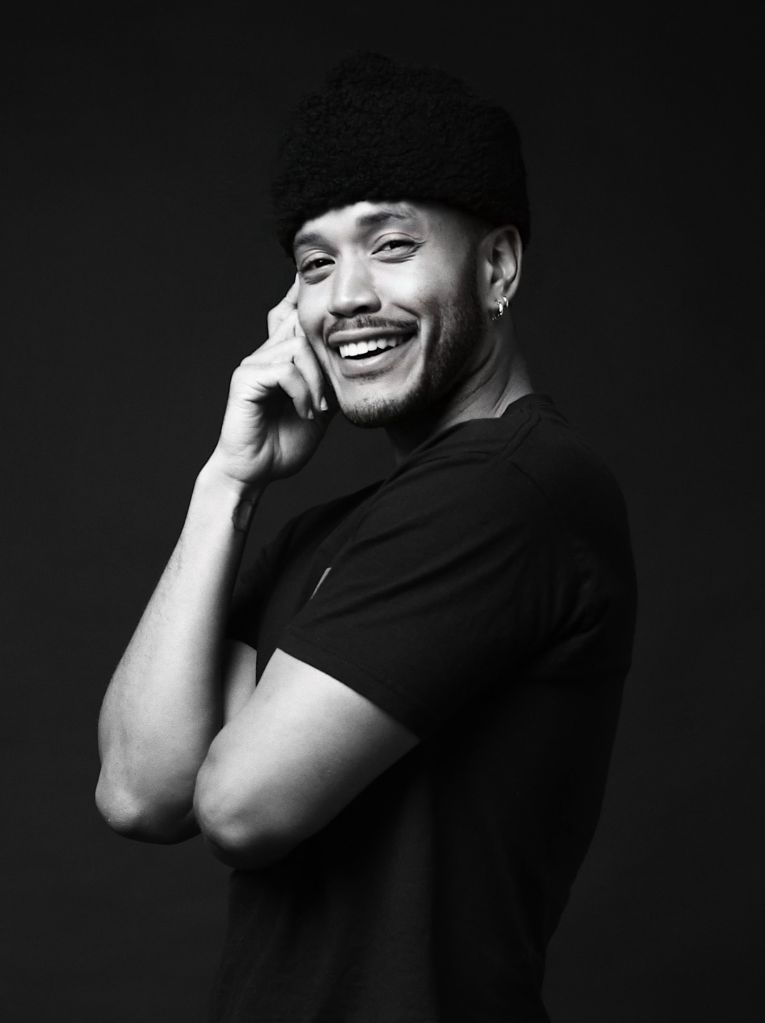
At the middle of that imaginative and prescient is Cameron J. Ross, the author and co-star of the unique, premiering February 7. The movie marks a serious artistic second for Ross, who not solely wrote the undertaking but additionally seems onscreen, shaping a narrative pushed by emotional honesty and reflection.
Source: Courtesy of Lifetime
Executive produced by Mary J. Blige and directed by Academy Award nominee Gabourey Sidibe, it continues Lifetime’s enlargement into creator-led storytelling.
The movie stars Tisha Campbell as Val, a girl whose life has lengthy been outlined by care, dedication, and duty, till she reaches a second that forces her to show inward and rethink what success appears to be like like on her personal phrases.
For Ross, the story emerged from paying shut consideration to the Black girls round him fairly than following trade traits.
“This movie was impressed by my mother,” Ross mentioned. “Not simply because she’s iconic in my life, however as a result of she’s additionally a extremely nice buddy.”
That relationship helped form the emotional basis of the movie, permitting Ross to discover what occurs when girls select themselves out of necessity and self-awareness. Be Happy presents a portrait of Black girls’s internal lives, capturing their doubts, wishes, and the braveness it takes to need extra.
Source: Courtesy of Lifetime
An award-winning multi-hyphenate, Ross’ profession spans Broadway, movie, and tv. His credit embody writing for Amazon’s The Summer I Turned Pretty, appearing and writing on Netflix’s Peabody-nominated Gentefied, and receiving a Special Tony Award as a co-founder of the Broadway Advocacy Coalition. He additionally holds an general growth deal and is at the moment creating new sequence throughout platforms.
Source: Courtesy
With Be Happy, Ross continues to construct a physique of labor that facilities emotionally resonant storytelling for mainstream audiences, reinforcing his dedication to tales that really feel sincere, intentional, and deeply human.
A Story Rooted in Listening
Ross mentioned the movie’s basis got here collectively shortly after Lifetime reached out to him about growing an authentic film. A telephone name along with his mom helped make clear what sort of story he wished to inform.
“I began to give you this coming of age story for a girl in her 50s attempting to navigate life after motherhood,” Ross mentioned. “She form of reached, I might say, the ceiling in her relationship together with her husband, and he or she’s attempting to discover what’s life after me for them.”
Source: Courtesy of Lifetime
Rather than framing Val’s journey as dissatisfaction or escape, Ross mentioned the movie focuses on what occurs when a girl begins to query how a lot of herself she has put aside.
“The spotlight of the film is the journey again to self,” he mentioned.
Black Women Shaping the Film From the Beginning
Ross mentioned the course of the movie was influenced early on by Black girls in growth who acknowledged the story while not having it defined or softened.
“Karen Wilson, the event exec, occurs to be this unimaginable Black lady, and he or she noticed a lot connectivity from her to the piece,” Ross mentioned. “In her workplace, she had this actually massive poster of Claudine, and he or she mentioned that was the film that impressed her to begin telling tales particularly about Black girls.”
Source: Leon Bennett / Getty
As the undertaking moved ahead, that alignment solely deepened.
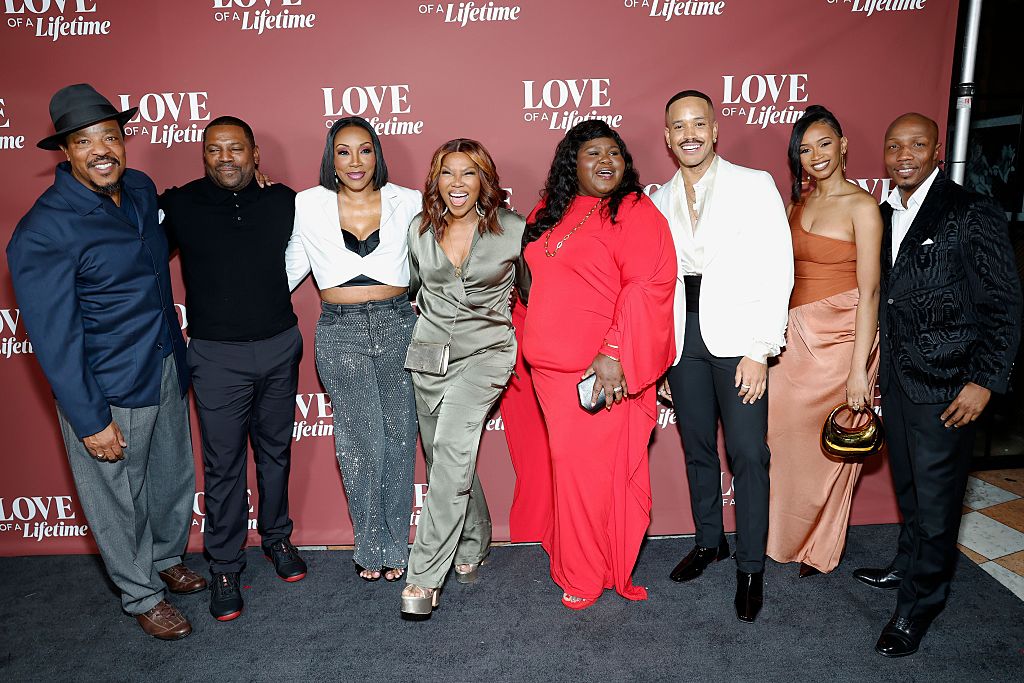
“So as I’m growing this film, I begin to get all these updates,” Ross mentioned. “The first replace was like, ‘Hey, Mary J Blige is connected.’ Then I bought a name like, ‘Okay, now Mona Scott Young is connected.’ And then they had been like, ‘Oh, and this shall be Gabourey Sidibe’s directorial debut.’”
Ross mentioned these moments made it clear the movie was not simply his story to inform.
“At this level, I’ve a choir of Black girls which are supporting me on this journey of writing the script,” he mentioned.
Art because the Entry Point Back to Self
In Be Happy, Val’s transformation unfolds by way of artwork and surroundings, with the setting designed to assist her inner shift fairly than overwhelm it.
“New Orleans is simply such a beautiful backdrop on the subject of like tradition and artwork and the meals,” Ross mentioned. “Even the sensualness that the town form of has, it performs as a beautiful backdrop to the movie.”
Source: Courtesy of Lifetime / Courtesy of Lifetime
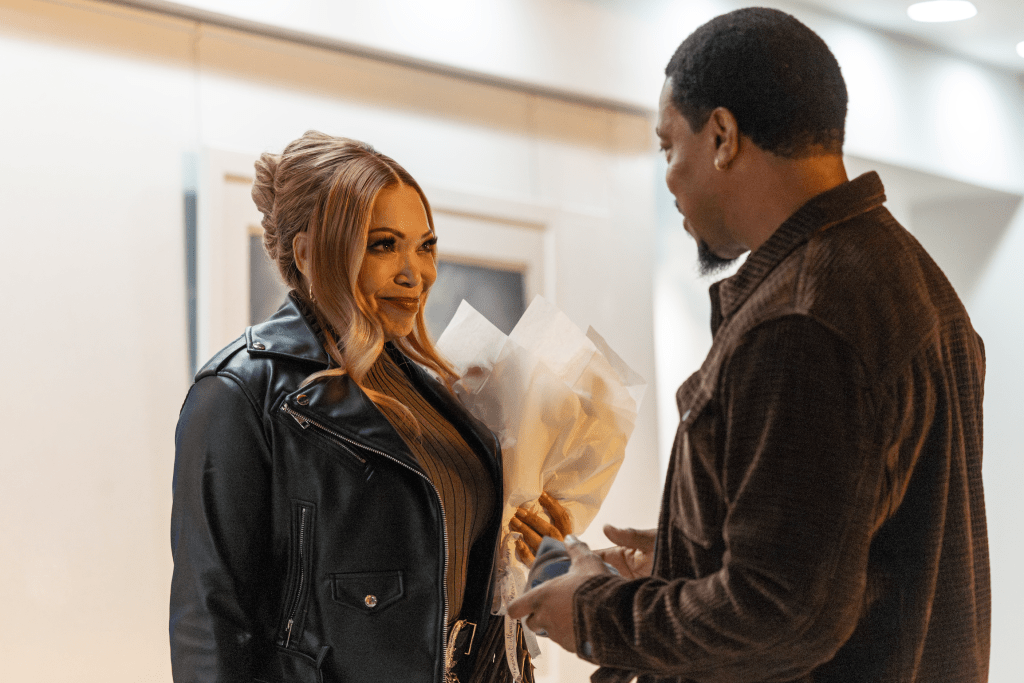
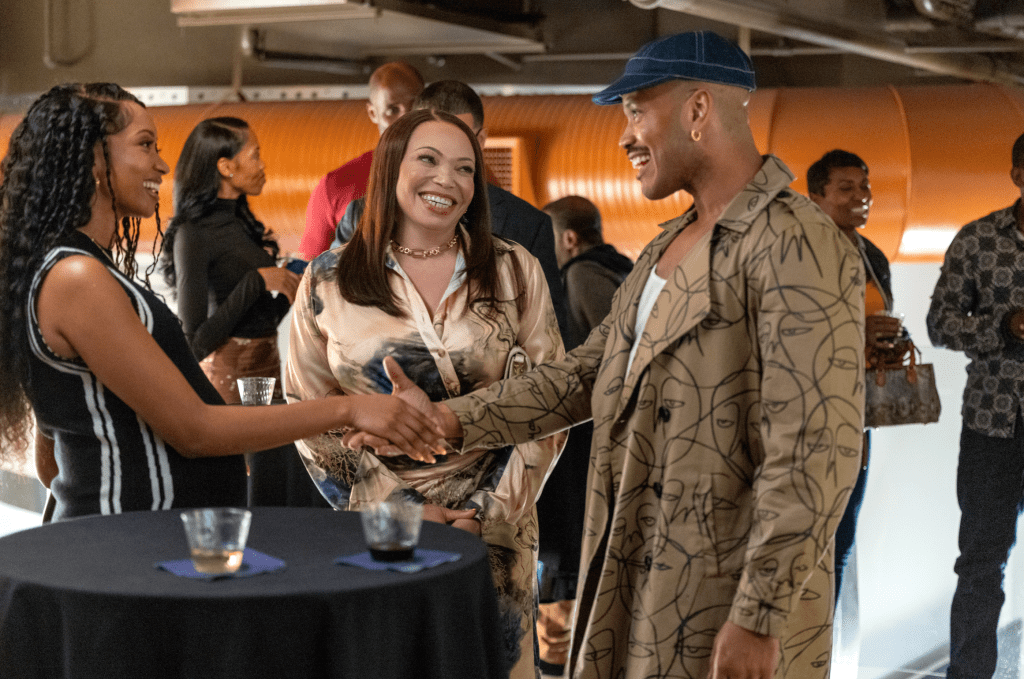
Ross performs Jacoby, the proprietor of the artwork gallery the place Val works, a job he mentioned was written as an invite fairly than a rescue.
“Jacoby particularly is the proprietor of the gallery that she works at,” he mentioned. “He offers her a possibility to form of be launched to a love that she had earlier than she grew to become a mom.”
For Ross, artwork turns into the area the place emotion, want, and self recognition start to floor once more.
“Art has the ability to do this,” he mentioned. “When you’re taking a look at it, you’re capable of really feel issues.”
Reclaiming Desire Without Shame
Ross mentioned one of many movie’s most essential moments comes when Val confronts herself mid awakening, unsure however current.
Source: Courtesy of Lifetime / Courtesy of Lifetime
“She has this second of like, ‘Oh my God. Who am I? What am I doing?’” he mentioned. “And I see her form of settle into it like, ‘No, I’m. It is essential for me to be current on this new journey.’”
That second displays a bigger fact the movie is fascinated by exploring.
“Not to age herself out of feeling attractive, to not physique disgrace herself out of feeling attractive,” Ross mentioned. “Just saying like, okay, I really am.”
The movie additionally challenges narratives that recommend girls ought to cease wanting extra as they grow old. Especially when the girl is positioned as well worth the chase.
“There’s nothing fallacious with combating for what’s price it,” Ross mentioned. “When it involves partnership, if it’s proper and it makes you are feeling complete, combat for that.”
A Multi Hyphen Story On and Off Screen
The movie additionally marks the primary time Ross has written a undertaking and appeared in it as an actor on the similar time, one thing he mentioned displays a path formed by different multi-hyphen creatives.
Source: Leon Bennett / Getty
“I consider individuals like Donald Glover and Issa Rae and Lena Waithe and Tina Fey,” Ross mentioned. “All these unimaginable multi hyphens which have made this phrase form of entrance going through.”
He added that the movie represents a private milestone.
“This is the primary time in my profession that I’ve written one thing the place I additionally had the second the place I used to be capable of stroll on set, not solely as the author, but additionally because the actor, Cameron J. Ross,” he mentioned. “So this film would form of go down in historical past for me as being iconic for that motive alone.”
What Ross Hopes Viewers Take With Them
While the title suggests pleasure, Ross mentioned the movie’s message is extra particular.
Source: Courtesy of Lifetime / Courtesy of Lifetime
“Outside of simply being comfortable, the takeaway is ensuring we’ve time for self,” he mentioned. “Those self targets, these self wants, these self needs.”
Mary J. Blige Presents: Be Happy premieres TONIGHT, Saturday, February 7 at 8 7c on Lifetime.
And for Black girls watching, the movie presents a reminder that wanting extra doesn’t imply you’re ungrateful, and selecting your self doesn’t imply it’s too late.