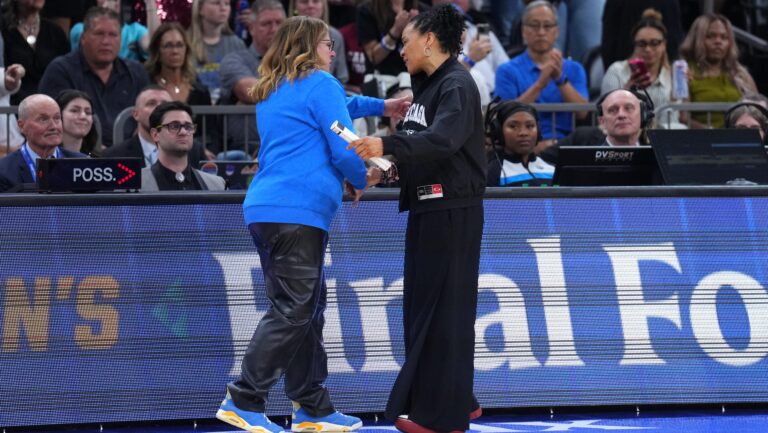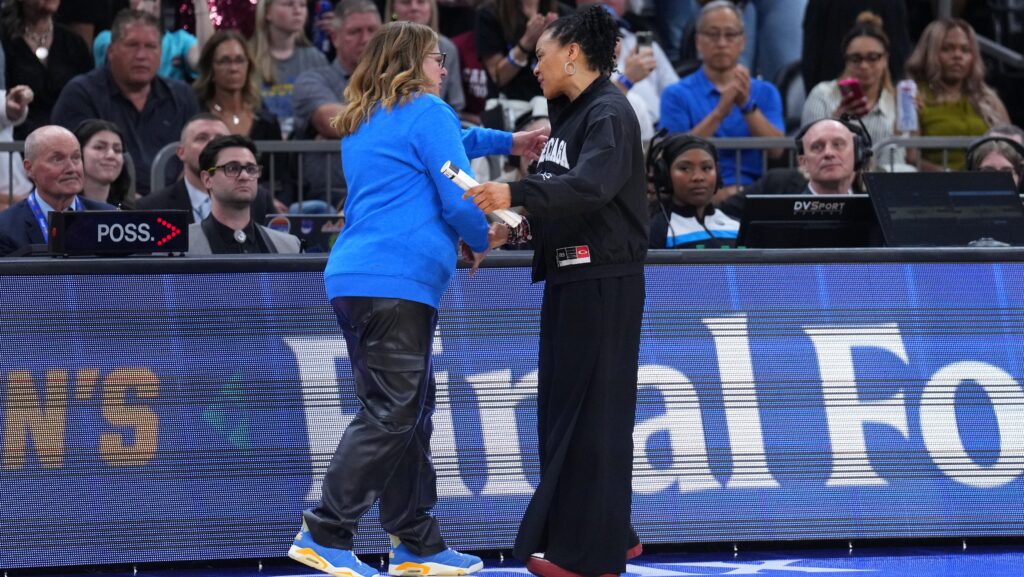
In the world of college basketball, the spotlight often shines brightest on the teams, but on Sunday, two women took center stage in a way that transcended the game itself. Dawn Staley, the powerhouse head coach of South Carolina, and Cori Close, at the helm of UCLA, represent a generation of coaches who have fought not just for titles, but for respect, equity, and a voice in a sport that has historically sidelined women. As they prepared to face off in a national championship, the conversation was as much about legacy as it was about victory.
Staley, who has already etched her name into the annals of basketball greatness, spoke with genuine admiration for Close. It’s a rare sight in a competitive arena where rivalry can often overshadow camaraderie. Yet, Staley’s words reflected a deeper understanding — she remembers the struggle, the sacrifices, and the sheer determination it took to win that first title. It’s a mountain that many Black women in sports have been climbing, sometimes feeling like the peaks are just too far away. Seeing another woman on that same journey, especially one who has faced her own hurdles, is a reminder that we’re not just competing against each other; we’re lifting each other up.
In a moment of vulnerability, Staley expressed her hope that Close would experience the euphoria of a championship win, even as she prepared to lead her own team to glory. This type of solidarity stands out in a world where competition can quickly turn toxic. Instead, it highlights what we have always known in our community: when one of us wins, we all win. It’s about more than personal accolades; it’s about opening doors for those who come after us, creating pathways that were once blocked.
The journey to that coveted title can feel isolating at times, particularly for Black women in a predominantly white sport. Staley and Close are not just coaches; they are symbols of resilience, proving that with grit and grace, mountains can be scaled. Their presence on such a grand stage is a statement in itself — a declaration that Black women belong at the top. As they strategize for the game, they’re also rewriting the narrative of what success looks like in collegiate athletics.
As we sit back and watch these two powerhouses clash, let’s remember the stories behind their teams. The countless late nights, the early morning practices, and the relentless pursuit of excellence. This isn’t just about basketball; it’s about representation, pride, and the relentless climb toward equality in sports. We’re here to cheer, to celebrate, and to remind the world that we’ve always known the strength of our voices and the power of our perseverance. Because as we support our champions, we’re not just witnessing history — we’re making it.
From The Source


About The Author