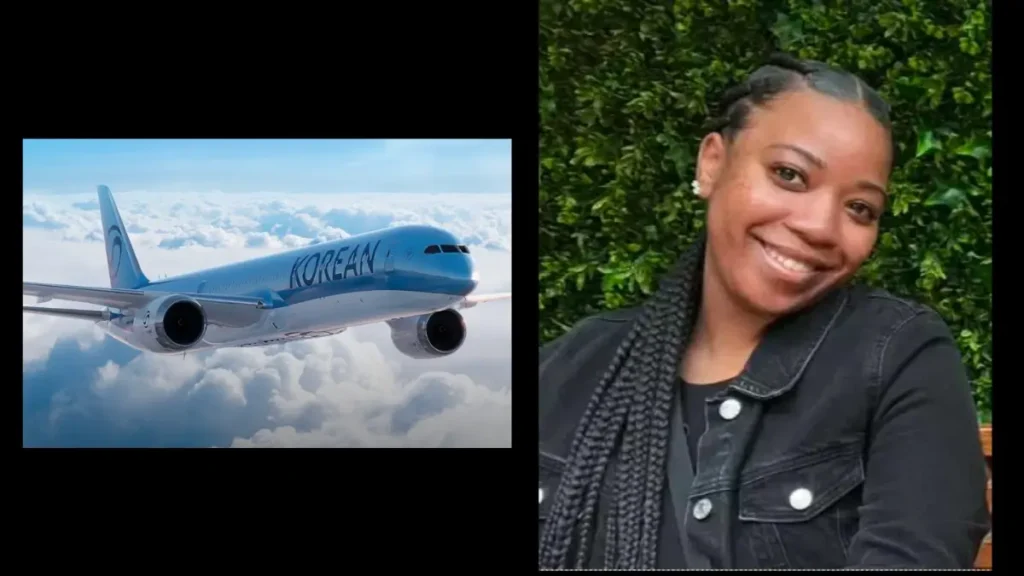
When we board a plane, we put our lives in the hands of flight crews, trusting they’ll be our lifeline in a moment of crisis. But what happens when that trust is shattered? A heartbreaking case is unfolding, revealing how the negligence of a Korean Air flight crew led to the untimely death of a 33-year-old Black woman. This tragedy is more than just a story; it’s a stark reminder of the systemic issues that often plague our interactions with institutions that are supposed to protect us.
According to reports, the flight crew handed the woman a mask that was not even connected to an oxygen tank as she collapsed mid-flight. Instead of acting swiftly and decisively to help her, they reportedly watched as her condition deteriorated. This inaction raises serious questions not only about their training and preparedness but also about the underlying biases that may have influenced their response. How often do we see our lives treated as expendable, especially when the person in distress is a Black woman?
In moments of crisis, every second counts, and the lack of urgency shown by the crew is not just a tragic oversight; it speaks volumes about a culture that fails to prioritize some lives over others. For the family left behind, this isn’t just about grief; it’s about the fury of knowing that had the crew acted differently, their loved one might still be alive today. Imagine being forced to confront the chilling reality that your loved one’s life was deemed less worthy of immediate action.
As we reflect on this devastating loss, we must also grapple with the implications of such negligence. This incident isn’t just an isolated event; it’s part of a larger narrative that highlights how often our community faces indifference, neglect, and even hostility in systems designed to support and protect. We’ve seen it in healthcare, law enforcement, and now, tragically, in air travel. It’s enraging to consider how the intersection of race and gender can lead to such catastrophic outcomes.
We have to demand accountability and change. The lives of Black women should never be treated as an afterthought. This situation is a call to action for all of us—demand better training for flight crews, push for policies that ensure prompt responses, and advocate for systemic reform that prioritizes our safety and dignity. We owe it to that young woman and to all those who have suffered under similar circumstances to fight for change.
In a world that often twists its narrative around us, we must continue to raise our voices and challenge the status quo. Because if we don’t, who will?
About The Author