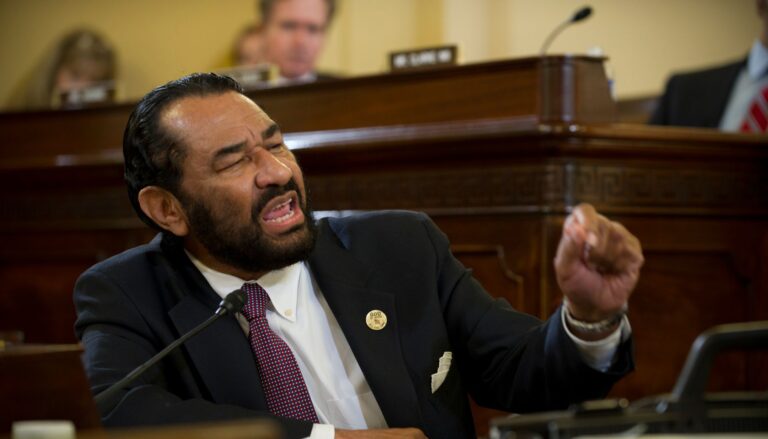
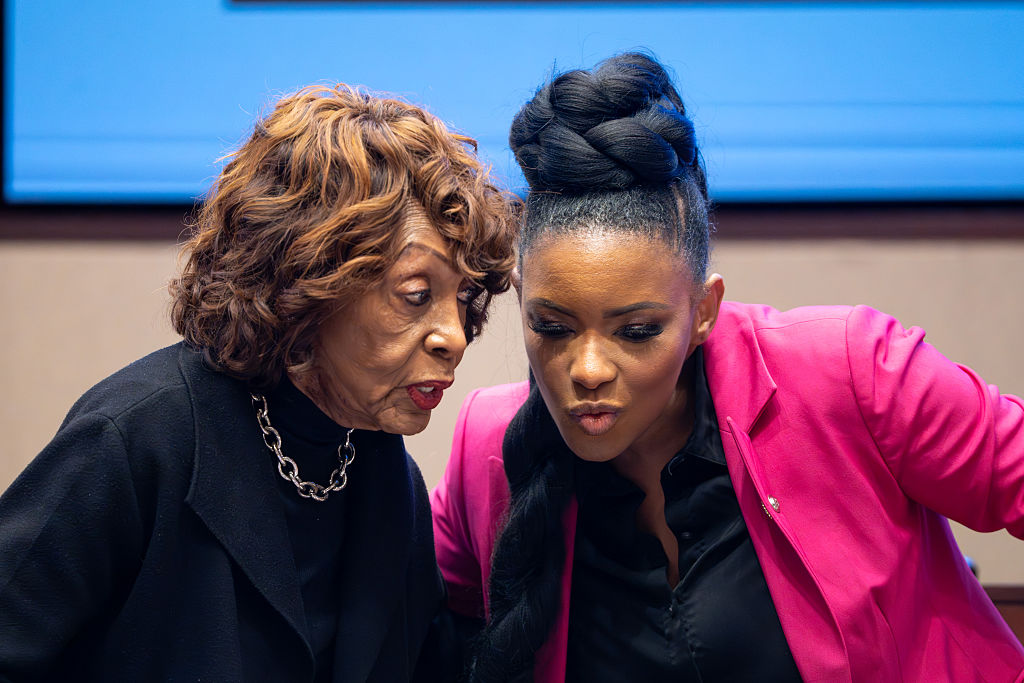
Texas Rep. Jasmine Crockett introduced her U.S. Senate bid this week, and inside hours, the political press did what it has lengthy perfected when Black ladies attain for energy. HuffPost and different shops described her not by her platform, document, or technique, however by her temperament, branding the first-term congresswoman as “combative.”
“Combative” is a kind of respectable-sounding smear phrases clear sufficient for newsroom model guides and loaded sufficient to do racial and gendered injury with out anybody having to say a Black girl is offended, aggressive, or uncontrolled. When HuffPost calls Jasmine Crockett “the combative first-term congresswoman,” that adjective is ideological signaling. It primes the reader earlier than they even get to her politics. You’re supposed to listen to problematic, tough, an excessive amount of, not female, grateful, or deferential.
The language snapped into place nearly instantly.
One headline saying Jasmine Crockett’s Senate bid led not along with her platform or electoral math, however with a persona tag, describing her as “the combative first-term congresswoman, a number one critic of Trump” in a write-up syndicated by Yahoo Information. One other outlet reached for a well-recognized shorthand, calling her a “firebrand” in its announcement that Texas Rep. Jasmine Crockett launched a run for Senate.
An extended nationwide profile revealed final summer time went additional, framing Crockett as a Democrat testing “the coarse model of politics that the GOP has embraced,” subtly recasting her rhetorical posture as an imitation of Republican extra quite than a response to a brutal political surroundings, as reported by the Atlantic. Native protection leaned into the identical groove, crediting her rising visibility to “fiery clashes” and “viral spats” which have helped flip her right into a family identify, language echoed in protection by KFOX and bolstered in further nationwide commentary.
The framing isn’t solely uniform, however that variation is revealing. Extra impartial shops keep away from “combative” altogether, opting as an alternative for descriptors like “outspoken,” “daring,” or “direct.” Different shops, typically extra hostile, sharpen the protection into “diva” character critique, referencing inner workers complaints or leaning on gendered accusations.
Taken collectively, the sample is unmistakable. “Combative” isn’t a stray adjective. It belongs to a well-recognized cluster: firebrand, fiery, confrontational, and abrasive. Whether or not these traits are framed as management or legal responsibility relies upon much less on Crockett’s conduct than on the outlet doing the framing and the viewers it imagines.
What’s particularly telling is the timing. Crockett pronounces a Senate bid, entering into severe energy, and the descriptor reveals up instantly. Not her document. Not her coverage positions. Not her authorized background. Not her effectiveness. Her tone. This is similar regulatory language that’s been used for hundreds of years to self-discipline Black ladies who refuse softness as a survival technique. It’s the plantation logic that claims you could communicate, however you could not sound like that.
And spot how pointless it’s.
White male politicians who yell, threaten, insult colleagues, shut down governments, or storm hearings aren’t routinely described as “combative.” They’re “outspoken.” They’re “fighters.” They “don’t again down.” They’re “robust.” The identical conduct, filtered via a Black girl’s physique, all of a sudden turns into a temperament situation as an alternative of a political stance.
White ladies occupy a center tier on this hierarchy, and their remedy is contingent on alignment with white consolation and patriarchal norms.
When white ladies yell, insult colleagues, grandstand in hearings, or needle opponents, they’re far much less prone to be labeled “combative.” As a substitute, they’re framed via a softer however nonetheless gendered vocabulary. They’re “forceful.” “Blunt.” “Sharp.” “No-nonsense.” At worst, they is perhaps known as “formidable” or “overzealous,” phrases that recommend extra power quite than ethical risk.
However the catch is that white ladies are granted legitimacy so long as they’re seen as working throughout the system, not difficult it. Their assertiveness is tolerated, typically even praised, when it reinforces present energy, not when it exposes or destabilizes it.
Take into consideration Liz Cheney. She has been brazenly confrontational and keen to torch her personal get together. She was framed as “principled,” “courageous,” and “brave,” even when she was ejected from management. Her self-discipline was ideological, not behavioral.
The media has routinely known as Nancy Pelosi “robust,” “savvy,” or “a grasp legislator,” not often “combative.” The loud, disruptive, and conspiratorial Marjorie Taylor Greene was typically described as “excessive,” “unhinged,” or “provocative.” However discover the framing is ideological pathology or spectacle, not temperament policing in the identical moralizing method it’s for Black ladies.
Hillary Clinton is the exception that proves the rule. When she challenged male energy instantly, and particularly when she sought the presidency, she was framed as chilly, shrill, calculating, and unlikable. Nonetheless, even then, the language not often crossed into the racialized register reserved for Black ladies. She was “unlikable,” however not harmful.
White ladies in politics could also be criticized, mocked, or disliked, however they’re not often framed as uncontrolled. They’re not often handled as a bodily risk. Their anger is customized or psychologized, however it isn’t learn as an existential hazard to the political order. The precise phrases used for white ladies (“robust,” “direct”) harden into warnings when utilized to Black ladies (“combative,” “hostile,” “offended”).
What we’re witnessing is a well-recognized media reflex that makes an attempt to warn the viewers that this Black girl shouldn’t be right here to appease them. And the truth that the phrase retains resurfacing, time and again, in second after second when Black ladies declare authority, is exactly the purpose.
The adjective is acquainted. From Shirley Chisholm to Barbara Jordan, Maxine Waters to Kamala Harris, Black ladies who problem political norms have routinely been framed as aggressive, abrasive, or tough—language that alerts disruption quite than substance.
In Crockett’s case, “combative” capabilities much less as a descriptor than a warning label, one which has traditionally appeared each time Black ladies refuse performative softness and as an alternative confront energy instantly. This has occurred repeatedly throughout generations. And the sample is so constant that it capabilities much less like commentary and extra like a disciplinary script.
Shirley Chisholm was punished with language lengthy earlier than the phrase “combative” turned newsroom shorthand.
From the second she entered Congress in 1968 as the primary Black girl elected, mainstream media struggled to position her wherever besides outdoors the bounds of acceptable femininity and political decorum. Relatively than centering her coverage positions like anti-war, pro-childcare, pro-education, and anti-poverty, the protection fixated on her disposition.
Historians and media students who’ve examined protection of Shirley Chisholm persistently be aware that reporting centered much less on her coverage agenda than on her demeanor and perceived disposition.
Up to date information accounts and retrospective analyses alike describe a press surroundings that framed Chisholm as unusually forceful, disruptive, or tough. This language functioned to mark her as outdoors the boundaries of acceptable political femininity quite than as a severe legislative actor. Her assertiveness was regularly interpreted as temperament, her independence learn as obstinacy, and her refusal to defer to get together management was solid not as precept however as insubordination. The commentary about her voice, method, and magnificence circulated way more readily than sustained engagement along with her positions on conflict, childcare, training, or financial justice.
That framing sharpened dramatically throughout her 1972 presidential marketing campaign, the primary by a Black girl. Protection routinely handled her candidacy as symbolic quite than viable, typically characterizing it as aspirational, protest-oriented, or quixotic quite than strategic.
Political reporters and columnists questioned her seriousness, emphasised her marginal standing throughout the Democratic Social gathering, and introduced her run as unrealistic or disruptive to get together unity. In each tone and substance, Chisholm was not often portrayed as a visionary or tactician, regardless of advancing a platform on racial justice, gender equality, and social welfare that will later transfer squarely into the Democratic mainstream. As a number of students have noticed, the press response revealed much less in regards to the feasibility of her marketing campaign than in regards to the constraints positioned on Black ladies who sought energy past the roles the political institution had already outlined for them.
And right here’s the important thing parallel to Jasmine Crockett: white male politicians on the time who behaved way more belligerently have been framed as daring, maverick, or brave, whereas Chisholm’s refusal to melt herself was handled as a persona defect. The difficulty was by no means her concepts; it was her refusal to carry out gratitude, silence, or deference.
Chisholm knew what was taking place. She famously stated, “I’m not the candidate of Black America, though I’m Black and proud. I’m not the candidate of the ladies’s motion, though I’m a lady and equally proud. I’m the candidate of the folks.” That insistence on self-definition instantly challenged how the press wished to comprise her.
In hindsight, historians now describe her as principled, fearless, and prophetic. However that readability solely comes after the hazard has handed. In actual time, the media used coded language to warn audiences: this girl won’t be managed.
Which is strictly what “combative” is doing now to explain Rep. Crockett.
Barbara Jordan was described as stern, unyielding, extreme, and intimidating regardless of being one of the vital measured, legally exact audio system in Congress. Her calm, deliberate cadence throughout Watergate was learn not as authority however as coldness. White males delivering the identical gravitas have been known as statesmanlike. Jordan was framed as rigid, nearly forbidding, as if ethical readability itself have been a risk when it got here from a Black girl.
Maxine Waters has spent a long time being labeled offended, incendiary, divisive, unhinged, and confrontational. When she interrogates energy, the protection nearly by no means facilities on the substance of her critiques of Wall Road, police violence, and voter suppression. As a substitute, it circles her tone. Even her nickname, “Auntie Maxine,” emerged as a option to comprise and cultivate somebody the media in any other case portrays as perpetually on the verge of eruption.
Carol Moseley Braun, the primary Black girl elected to the U.S. Senate, was described as temperamental, tough, erratic, and “arduous to work with.” Her coverage disagreements have been commonly psychologized. The place white male senators have been “principled holdouts,” she was framed as unstable or overly emotional. Protection typically advised she was her personal worst enemy, not that she was navigating a Senate brazenly hostile to her presence.
Kamala Harris, earlier than the presidential marketing campaign, was routinely described as aggressive, overly formidable, sharp-elbowed, and calculating. Throughout debates, her prosecutorial questioning was handled as extreme or mean-spirited. Even her facial expressions have been pathologized. She smiled an excessive amount of. She didn’t smile sufficient. She pressed too arduous. She laughed “mistaken.”
Stacey Abrams has been labeled abrasive, bossy, insistent, and refusing to concede. That is language that quietly recasts constitutional disputes over voter suppression as a private temperament flaw. Her refusal to vanish politely after voter disenfranchisement was handled as emotional instability quite than civic resistance.
Even Michelle Obama, who scrupulously averted direct political confrontation for years, was framed as offended, emasculating, militant, and resentful. Her very seriousness, her refusal to carry out cheerfulness for white consumption always, was taken as hostility.
What issues isn’t any single phrase, whether or not it’s combative, offended, strident, divisive, or abrasive. It’s the operate. These labels don’t describe conduct; they police boundaries. They warn audiences that this Black girl doesn’t prioritize white consolation, doesn’t soften her authority, doesn’t apologize for occupying house.
And identical to Shirley Chisholm, historical past finally rewrites them as brave, prophetic, and forward of their time. The language solely softens as soon as the risk recedes.
Jasmine Crockett isn’t being uniquely described. She’s being positioned appropriately inside a protracted lineage of Black ladies whose readability, refusal, and political audacity needed to be reframed as temperament issues in order that the ability construction wouldn’t must reply their arguments.
And right here’s the factor—Black ladies in politics are offended. We are combative. As a result of the stakes are excessive. Should you can go searching in any respect the meanness and evil and cruelty happening on this nation proper now and never really feel anger, then one thing is mistaken with you.
Black ladies don’t arrive in politics via gentleness alone. We don’t survive centuries of sanctioned violence, racial terror, stolen youngsters, stolen labor, voter disenfranchisement, and gendered exclusion by being agreeable or palatable. We survive by resisting and confronting. By refusing to carry out calm whereas our rights are being dismantled and lives are being erased in actual time.
So when the media labels Black ladies leaders “offended” or “combative,” it isn’t diagnosing a flaw in character; it’s registering a refusal to submit. “Combative” on this context shouldn’t be a temperament situation; it’s a political posture. It’s what civic engagement seems to be like when the system itself is hostile. It’s what democracy feels like when these most harmed decline to whisper.
Dr. Stacey Patton is an award-winning journalist and creator of “Spare The Youngsters: Why Whupping Youngsters Received’t Save Black America” and the forthcoming “Strung Up: The Lynching of Black Youngsters In Jim Crow America.” Learn her Substack right here.
SEE ALSO:
Texas Powerful: Rep. Jasmine Crockett Formally Launches US Senate Run
Fox Hates Jasmine Crockett As a result of She’s A Good Black Girl
About The Author