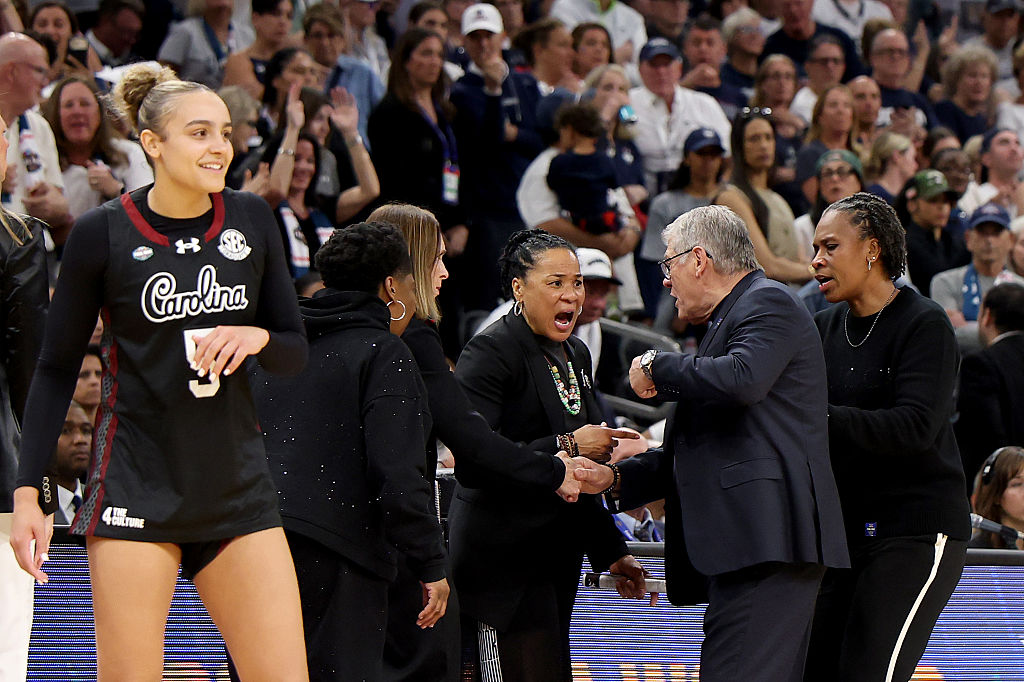
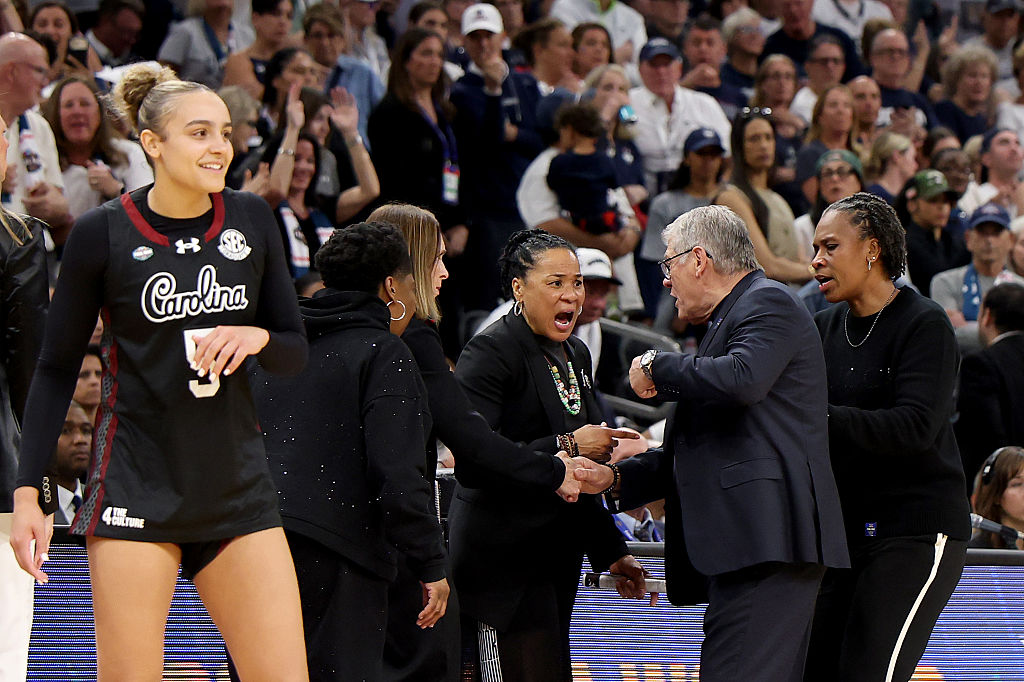
When Dawn Staley, the fierce head coach of South Carolina’s women’s basketball team, declared she would ‘beat Geno’s ass’ after a tense exchange with Geno Auriemma, head coach of UConn, many of us felt that deep in our souls. It wasn’t just about basketball; it was about something we’re all too familiar with: the blatant disrespect that Black women often face in the workplace. Those words echoed across social media and sparked conversations that reach far beyond the hardwood floor.
We’ve seen it play out countless times, whether in boardrooms, classrooms, or any space where our voices fight to be heard. Staley’s unapologetic response is a testament to the frustrations that simmer under the surface for Black women everywhere. The condescending tone used by Auriemma, who has long been a prominent figure in women’s basketball, is a reflection of a systemic issue that pits not only gender against gender but also race against race, often allowing those in power to dismiss the passion and authority that Black women wield. Staley’s passionate defense of her territory wasn’t just a coach standing up for her team; it was a declaration of our right to exist and command respect.
This incident resonates deeply with so many of us who have confronted the subtle (and not-so-subtle) microaggressions in our careers. That feeling of being constantly scrutinized, judged, or underestimated because of the color of our skin and our gender can wear down even the strongest of spirits. It’s the exhaustion of having to work twice as hard to receive half the acknowledgment, all while maintaining a façade of professionalism that often feels like a mask. Staley dropping the bravado and leading with authenticity is a reminder that we don’t have to play by the unspoken rules that have been set for us.
Dawn Staley’s words stirred a conversation that we need to embrace; it’s time to stop tiptoeing around the discomfort of addressing disrespect. We should hold our heads high and demand equity and acknowledgment not only in sports but across all industries. We can’t forget that disrespect in the workplace isn’t just a momentary offense. It’s a long game strategy that aims to stifle our brilliance and reduce our impact. Staley’s outburst may have shocked some, but it was a rallying cry for all of us who have had enough.
In a world where Black women are often expected to be quiet, composed, and graceful in the face of disrespect, we need more voices like Staley’s that break the mold. Let’s channel that energy and continue to fight for our rightful space. The narrative that surrounds us is shifting; we are taking the reins and redefining what it means to command respect and assert our positions. We stand tall, shoulders back, ready to beat back the disrespect that has lingered for too long. Let this be a reminder that when we claim our power, the world moves differently.
From The Source
About The Author