Nas & DJ Premier "Light-Years" Album Review
For a rapper whose discography has lengthy been framed as his Achilles heel, Nas has spent the previous six years steadily dismantling that narrative. What as soon as felt like a profession outlined by chasing the unattainable customary set by Illmatic has, within the 2020s, change into one thing nearer to reclamation. Nasir—his terse, Kanye West–produced 2018 album—now reads just like the final actually pressured entry in his catalog, much less a failure of inventive ambition than a mismatch of chemistry. The run that adopted, nevertheless, informed a distinct story. Across six albums with Hit-Boy, Nas reframed himself not as a legacy act greedy for relevance, however as a veteran sharpening his pen, successful his first Grammy, and proving that longevity in rap doesn’t must imply dilution.
Still, Illmatic stays each a blessing and a burden. Every Nas album launched since 1994 has existed in its shadow, judged not by itself phrases however towards a debut broadly thought to be untouchable. The limitless anniversary cycles—20, 25, now 30 years—have solely bolstered that fixation, sometimes surfacing a bitterness in Nas that’s comprehensible. Yet in 2025, there’s additionally one thing newly seductive about that period: a eager for hip-hop’s rawness in a post-algorithm, post-genre-collapse panorama the place “timeless” appears like a misplaced language.
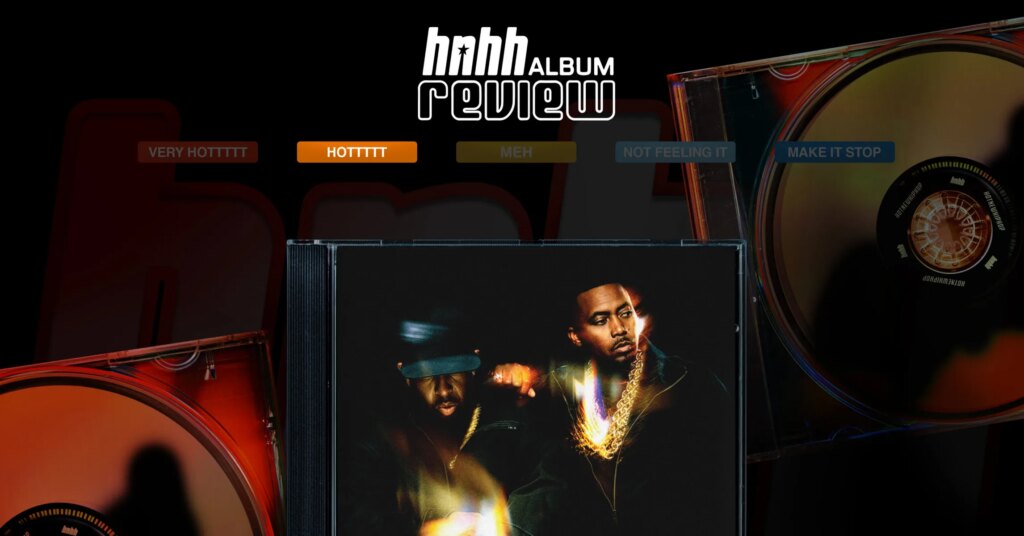
That longing is the spine of Light-Years, the long-anticipated full-length collaboration between Nas and DJ Premier. Released as a part of Mass Appeal’s Legend Has It collection, the album arrives after a broader movement of reconnecting with hip-hop’s architects. The collection has already pulled Slick Rick out of dormancy, reunited Wu-Tang pillars like Raekwon and Ghostface Killah with impressed outcomes, and even ushered in posthumous moments from Big L, Trugoy, and Prodigy. Still, nothing carried the load of expectation fairly like Nas and Premier lastly committing to a full challenge collectively.
NEW ORLEANS, LOUISIANA – JULY 6: Rapper Nas performs on stage throughout Night 3 of the 2025 ESSENCE Festival of Culture at Caesars Superdome at Caesars Superdome on July 6, 2025 in New Orleans, Louisiana. (Photo by Paras Griffin/WireImage)
The stakes are excessive for good cause. Their chemistry is foundational to East Coast rap: “NY State of Mind,” “Memory Lane,” “Represent.” Premier doesn’t simply perceive Nas—he helped encode his creative DNA. Unlike Nas’s partnerships with Kanye or Hit-Boy, this collaboration isn’t about reinvention a lot as excavation. And that’s each Light-Years’ best power and its most limiting flaw.
Premier’s manufacturing is unapologetically rooted in a particular period. His beats depend on easy loops and dusty samples that really feel lifted intact fairly than deconstructed into one thing new. For crate diggers and oldheads, that’s the attraction. These beats perform like museum items—rigorously preserved, reverent, heavy with historical past. References to basic hip-hop information are woven all through, nods that reward listeners fluent in liner notes and WhoSampled rabbit holes, like “Droppin’ Science” by Marley Marl feat. Craig G on “Pause Tapes” or Fat Joe and Beastie Boys references intertwining with Steve Miller Band’s “Fly Like An Eagle” on “It’s Time.” But at instances, that constancy curdles into stasis. Tracks like “Welcome to the Underground” really feel much less like timeless throwbacks than workouts in reenactment.
When it really works, although, it actually works. “Writers” is a standout, marrying Premier’s jazz-inflected grit with Nas’s deep affection for New York’s unseen architects—graffiti writers, tunnel artists, and underground tastemakers who formed the town’s cultural cloth. The beat strikes like a subway automotive chopping by darkness, all pressure and momentum. “Madman” channels basic Gang Starr power, full with scratches that sound tailored for Guru, whereas nonetheless giving Nas room to maneuver.
The album’s lone visitor spotlight comes from AZ on “My Story Your Story,” a reunion that feels virtually ceremonial. Since Illmatic, Nas and AZ have shared a uncommon lyrical symmetry, and right here they return to the granular storytelling that made “Life’s a Bitch” immortal. It’s a reminder of how pure this world as soon as felt—and the way not often it’s been replicated with this degree of ease.
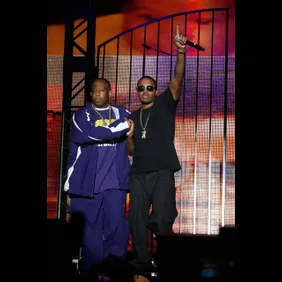
NEW YORK, NY – SEPTEMBER 03: (L to R) DJ Premier and Nas carry out on the eighth Annual Rock The Bells pageant on Governor’s Island on September 3, 2011 in New York City. (Photo by Andy Kropa/Getty Images)
Lyrically, Nas stays dedicated to vivid, cinematic element. His pen continues to be sharp, able to rendering total neighborhoods in a couple of bars. But there’s pressure beneath the floor. His depictions of damaged, disappearing New York are difficult by his personal function in reshaping the town, from controversial growth initiatives to international investments that sit uneasily alongside his street-level nostalgia. “Git Ready” is emblematic of that contradiction, juxtaposing crypto wealth with reminiscences of dreaming about affording a bottle of Moët. It’s technically spectacular, however emotionally hole—Nas catering to crypto-bro aspirations appears like a misuse of a generational voice.
Where the album regains its footing is in Nas’s self-awareness as a performer. On “Nasty Esco Nasir,” he cycles by his previous personas with tonal precision, slipping between eras like a rap Dr. Jekyll and Mr. Hyde. That shape-shifting turns into a motif. “New York State of Mind, Pt. III” doesn’t attempt to recreate the unique a lot as interrogate the town’s evolution—nightlife landmarks erased, neighborhoods sanitized, Queens residents cautious of the on line casino bids bearing Nas’s title. “Third Childhood,” a sequel to the Stillmatic minimize, positions rap veterans as the fashionable equal of legacy rock bands, arguing that hip-hop doesn’t age a lot as accumulate.
Ultimately, Light-Years fulfills its mission—however that mission is narrower than many years of anticipation may counsel. This isn’t a masterclass meant to redefine both artist’s legacy. It’s an indulgent train in preservation, a love letter to a uncooked, stressed New York that now not exists in the identical approach. The album’s aura is unmistakably ’90s: graffiti-scarred trains, flickering streetlights, stoop conversations buzzing with pressure and creativity. For listeners who lived in that second—or mythologize it—this challenge will really feel comforting, even mandatory.
But nostalgia cuts each methods. Premier’s manufacturing, whereas impeccable, is rigidly dedicated to freezing time. And whereas Nas’s pen not often falters, the album doesn’t attain the heights of Magic or King’s Disease. Instead, it occupies a parallel lane in his 2020s canon—one the place honoring hip-hop’s previous takes priority over pushing it ahead. That pressure is the present and the curse of Light-Years. In an period the place “underground” typically means one thing unrecognizable to its origins, Nas and DJ Premier select reminiscence over momentum. They remind us who constructed the inspiration, even when they don’t increase the home. And maybe that’s the purpose: making certain that when future generations look again, they bear in mind the trailblazers—not simply the tendencies.
User Reviews:
SizzlingNewHipHop customers rated Nas and DJ Premier’s Light-Years 4.38 out of 5 stars based mostly on 20 critiques. Users praised how the duo executed the album in its totality, with one person writing, “Amazing Album. Enjoyable Concepts and lyrics are at all times.” Another one wrote, “nonetheless sounding actually good three many years later.”
About The Author