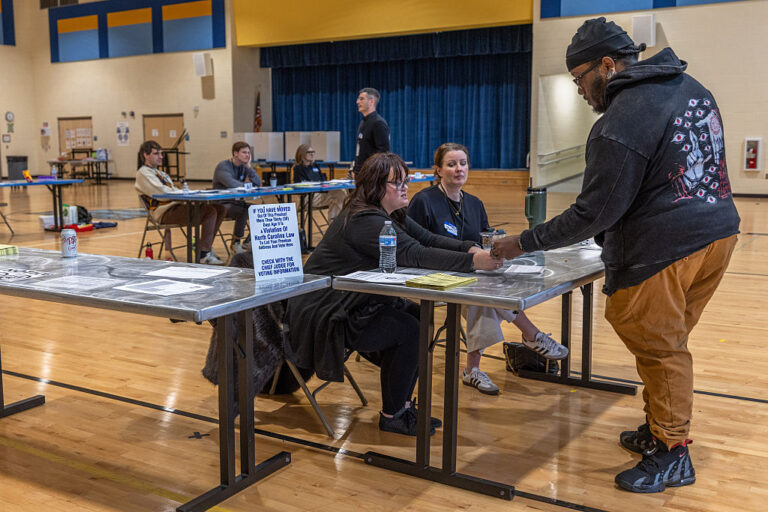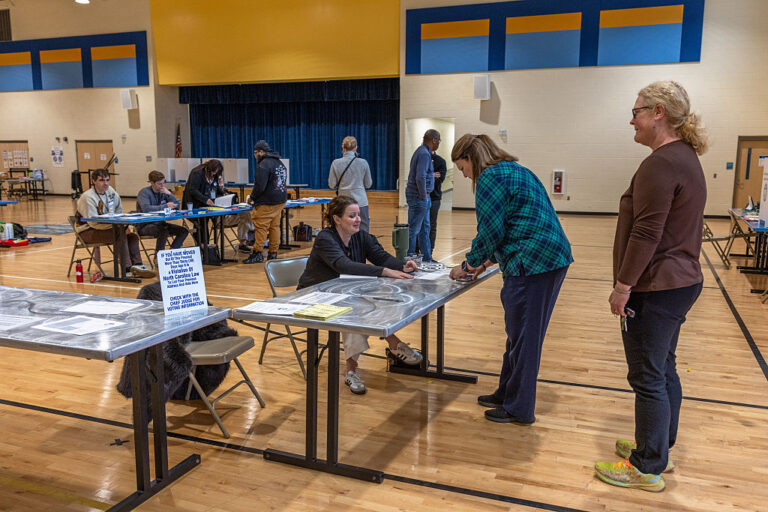
In the weeks earlier than North Carolina’s main, two issues occurred that many citizens by no means heard about, and collectively, they let you know every part it’s worthwhile to know in regards to the state of voting rights on this state.
First, simply weeks earlier than the first election, the State Board of Elections (SBE) despatched roughly 241,000 letters to registered voters, a list overrepresented by Black and brown voters, suggesting that their registrations could also be invalid and inflicting considerations amongst voters that they could possibly be turned away on the polls. Next, we had been confronted with the elimination of Sunday voting in a number of counties and the closure of Early Voting sites on multiple college campuses– together with the nation’s largest HBCU.
Taken individually, every of those conditions may be defined away as “administrative error” or “logistics adjustments.” However, whenever you have a look at these items collectively and examine them towards the arc of North Carolina’s previous and up to date electoral historical past, they reveal what organizations like Forward Justice see as deliberate, strategic, and acquainted patterns of constructing it more durable for Black voters to take part in our democracy.
We have been right here earlier than.
In 2016, the Fourth Circuit Court of Appeals struck down North Carolina’s monster voter suppression legislation in NAACP v. McCrory. The court docket discovered that the legislature had focused Black voters “with almost surgical precision.” That phrase has haunted organizers, attorneys, and on a regular basis North Carolina voters ever since. To be clear – the ways haven’t stopped, they’ve advanced. Literacy assessments grew to become restrictive voter ID legal guidelines, racial gerrymandering grew to become “partisan” gerrymandering, and ballot taxes grew to become polling place closures. Through all of this, the goal stays the identical: Black, brown, and low-income voters.
In 2025, our legislature as soon as once more wielded their scalpels in one other try to dilute and silence the Black vote; this time attacking Eastern North Carolina’s historic Black Belt communities by redrawing Congressional District 1 (“CD1”) and Congressional District 3 (“CD3”). I’m a resident of CD1, the place the proportion of Black voters was initially about 40%. Under the new maps, that representation dropped to 32%. Advocates instantly sued in opposition, however the maps had been upheld by N.C. Courts. Though they conceal behind the time period “partisan” of their reasoning for redistricting, it’s clear that the true objective was to attenuate the voice of Black voters.
Think about what the 241,000-letter campaign achieved, no matter intent. It created doubt, worry, and communicated to tons of of hundreds of individuals, a lot of whom had been registered and voted in North Carolina elections for many years, that perhaps they had been not likely voters in spite of everything. The letter got here on the heels of a extremely publicized election problem based mostly on voter registration information and the NCSBE’s personal Registration Repair Project, inflicting further anxiousness and confusion for voters.
For communities which have spent generations combating for voting rights, entry, and fairness, that doubt isn’t just a minor clerical inconvenience; it’s a weapon. Confusion and worry suppress turnout simply as successfully as a locked polling place door. You would not have to cease folks from voting for those who can persuade them they don’t seem to be allowed to attempt.
For many years, voters have tried to take part in a democratic course of that will give them a voice and leverage in a rustic that has persistently turned a deaf ear to their wants. Enacting a voter ID legislation, citing identification considerations, all whereas deliberately excluding types of ID generally held by Black and Brown communities, or rising the scrutiny on absentee ballots for “safety” functions, whereas dismissing hundreds of ballots for minor discrepancies, are prime examples. At each step of the best way, voters had been met with schemes and plots wrapped in a bow to silence their voices and strip their energy.
This is why organizations like Forward Justice exist, alongside our companions throughout the voting rights ecosystem. Not as a result of we assume dangerous religion in each administrative choice, however as a result of the historical past of this state—the documented historical past, affirmed by federal courts—calls for that we watch, analyze, and keep able to act. The Fourth Circuit referred to as it surgical precision, but it surely’s one thing advocates have described for years. Our job is to ensure that when these patterns reassert themselves in new types, they meet exact, sharp, and strategic resistance.
In the times main as much as the first, our staff labored alongside companion organizations to supply emergency voter help, join justice-involved voters with authorized sources, and monitor the provisional poll course of. The second referred to as for us to indicate up, so that’s precisely what we did. When folks confronted aggressive electioneering, we contacted election officers to make sure that conduct tips had been enforced to guard the security and luxury of voters. When we had been notified of police site visitors stops arrange outdoors a polling place in a various group, we deployed employees to the world to analyze and decide applicable advocacy or de-escalation measures.
While we’ll proceed to combat, one factor is for certain: we must always not need to combat this battle each single cycle. The indisputable fact that we do, and the truth that every election brings new variations on the identical outdated theme, is itself an indictment of the system. North Carolina has extraordinary Black political organizing, highly effective civic vitality, and deep voting rights authorized infrastructure. All of that exists as a result of the choice is yielding the sphere to those that would quite Black voters keep house.
So sure, North Carolina tried to make Black, brown, poor, and younger grownup voters invisible earlier than the first via confusion, bureaucratic ambiguity, and challenges designed to exhaust and intimidate. And we fought again the best way we at all times combat again: following the lead of organizers, via authorized channels, group companions, data, and with the cussed conviction that the appropriate to vote shouldn’t be one thing that may be taken away.
As we transfer towards November, maybe probably the most consequential elections in latest historical past, we will likely be prepared, we will likely be watching, and we aren’t going anyplace.
Ashley Mitchell is a local of Elizabeth City, NC, and a graduate of Wake Forest University and the North Carolina Central University School of Law. As a employees legal professional for Forward Justice (FJ), Attorney Mitchell acts as Voting Rights Counsel on varied election-related litigation and works carefully with FJ’s organizing and communications groups on technique round analysis, group outreach, and advocacy efforts. Since the 2020 election season, Attorney Mitchell has been instrumental in main work with voting rights companions to protect and expand voting rights throughout North Carolina – particularly in Rural Black, Brown, and low-income communities.
SEE ALSO:
Lessons From North Carolina: A Canary In The Democracy Coal Mine
North Carolina And Texas Primaries Show People’s Appetite For Democracy
About The Author