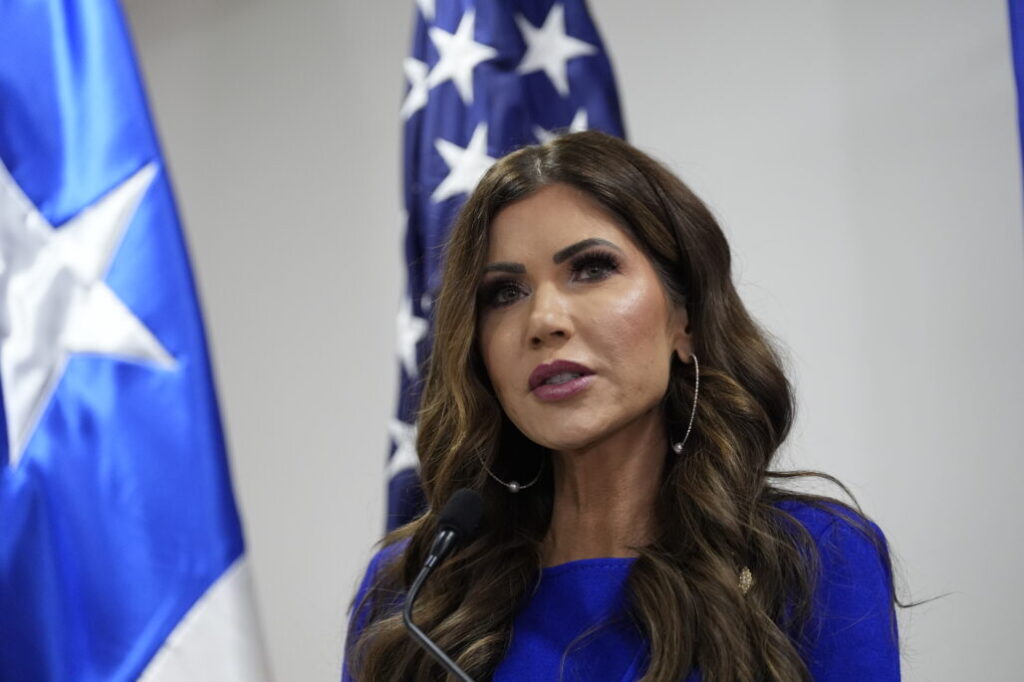
Former Department of Homeland Security Secretary Kristi Noem’s recent appointment to the State Department has raised eyebrows, not just for its cushy nature but for her alarming lack of commitment. In the political world, where optics matter as much as actions, Noem’s sparse presence in her new role is seen as a failure to deliver on promises made during her climb to this position. Speculation swirls in Washington, as insiders question whether her appointment was merely a strategic move to placate Trump supporters after a tumultuous exit from her previous role.
The irony here is rich, as Noem, a vocal supporter of the former president, finds herself sidelined after trying to leverage her loyalty into power. While many expected her to thrive in a position that allows for significant influence during a turbulent time, it appears she’s more interested in maintaining her brand than actually stepping up to the plate. Her transition from a hard-hitting role in the Department of Homeland Security to what critics are calling a ‘fake’ role in the State Department has not only been awkward but has also led to noticeable disillusionment among her staff who feel they were brought in to cover for a lackluster commitment.
As the political landscape shifts, the consequences of Noem’s half-hearted approach are coming into clearer focus. The fallout from her appointment serves as a reminder of the pitfalls that come with attempting to satisfy conflicting interests without a solid plan. Her team, who once stood by her side, now finds themselves in a position of uncertainty, leading many to wonder if they will be the next collateral damage in this political chess game.
Noem’s drift from accountability has become symbolic of a larger issue within the current political framework: the tendency to prioritize personal ambition over genuine service. In a time when leadership should encompass resilience and dedication, her actions may just be a microcosm of what’s wrong with the system. As observers watch this drama unfold, the burning question remains: will she reclaim her political narrative, or will this blunder be the nail in the coffin for her career aspirations?
About The Author