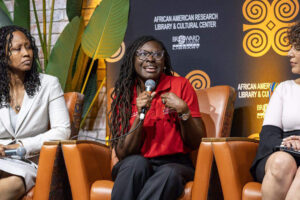
Coral Springs Commissioner Nancy Metayer Bowen, center, speaks during the Out of Many, One Community: Combating Anti-Immigrant Rhetoric panel discussion hosted by South Florida People of Color at the African-American Cultural Research Center on Thursday, October 17, 2024, in Miami. (D.A. Varela/Miami Herald/Tribune News Service via Getty Images)
We’re reeling after the tragic news out of Coral Springs, where the city has lost its newly elected first Black female vice mayor, who was found murdered. This is more than just a story; it’s a heartbreak that strikes deep into our community, reminding us of the fragility of life and the alarming realities many face. The events surrounding her death are shocking, particularly with the arrest of her husband as the primary suspect. It’s almost unfathomable to think that the person you trust the most could be capable of such violence.
Our community just celebrated a significant milestone with her election, a moment that was supposed to symbolize hope and progress. She represented more than just a seat at the table; she was a beacon for aspiring leaders, a testament to resilience in a world that often tries to silence our voices. But now, we’re left grappling with questions that have no easy answers—how could this happen? What led to this tragic turn? It seems we’re all too familiar with the narratives of loss and betrayal, yet they never hit any less hard.
As we process this heavy news, we can’t help but reflect on the societal issues that permeate our existence. This isn’t just an isolated incident; it’s part of a larger conversation about domestic violence, mental health, and the pressure that comes with leadership in our communities. When someone steps into the spotlight, they carry not just their ambitions but also the weight of expectations and personal struggles. The juxtaposition of her public triumph and private tragedy is a painful reminder of how complex our lives can be.
It’s crucial for us to rally together in the wake of such devastation. We must support one another, uplift those who are hurting, and hold conversations that matter. This isn’t just about mourning the loss of a leader; it’s about creating a community that empowers every individual to seek help and speak out against violence. We must ensure that her legacy lives on and that her tragic end serves as a wake-up call to all of us.
As we mourn, let’s also commit ourselves to change. Let’s honor her memory not just with tears but by fostering an environment where love triumphs over hatred and support wins over silence. Her story doesn’t end here; it becomes a rallying cry for justice, awareness, and healing. In our grief, we find purpose, and in our community, we find strength.
From The Source

About The Author