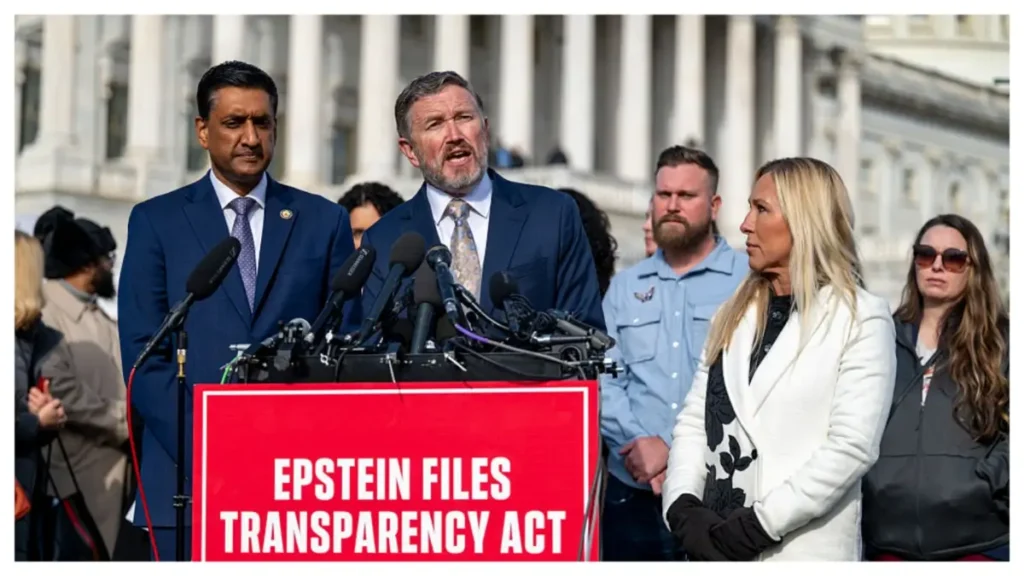
The fallout from the Epstein saga refuses to fade, as the Justice Department found itself scrambling yet again following an explosive exchange initiated by Representative Thomas Massie. Shortly after the departure of former Attorney General Pam Bondi, who faced her own share of controversies during her tenure, the department seemed to breathe a sigh of relief, hoping the storm would pass. Yet, in a world where accountability often feels like an elusive dream, Massie’s rebuttal sent shockwaves through the establishment. His bold declaration—‘That’s a lie!’—wasn’t just directed at an individual; it was a piercing indictment of the system that has seemingly protected powerful figures at the expense of justice.
Epstein’s shadow looms large, and every time the dust appears to settle, a new revelation emerges, reigniting public outrage. As if he were flicking a switch, Massie’s retort brought back to the forefront the questions that have haunted the Justice Department: What truly happened during those years of silence, and who else might have been involved? These unanswered questions have created a climate where accountability isn’t merely desired; it’s demanded. The initial wave of silence and avoidance was palpable, but Massie’s confrontation forced them back into the spotlight, reminding us all that this narrative is far from over.
Adding fuel to the fire, the Justice Department’s reactions post-Massie were less about defending their previous statements and more about damage control—a tactic all too familiar in the political arena. The mere whisper of Epstein conjures images of wealth, power, and the insidious connections that often lurk in the shadows of our institutions. While Bondi’s resignation was seen as the end of a chapter, Massie has proven that the book is still being written, and the pages are far more complex than anyone in a position of power might care to admit.
This relentless pursuit of truth highlights a critical moment in our political landscape. It’s a reminder that the public is not ready to accept half-truths and political maneuvering. As we tread into the murky waters of elite privilege and legal evasion, we must remain vigilant, questioning the narratives pushed by those in authority. Massie’s sharp words resonate beyond the chamber walls; they echo the collective frustration and demand for transparency that so many are yearning for in the aftermath of Epstein’s chilling legacy. The game isn’t over, and as the stakes rise, we can only hope that this momentum will lead to genuine accountability—because when power is left unchecked, everyone suffers.
About The Author