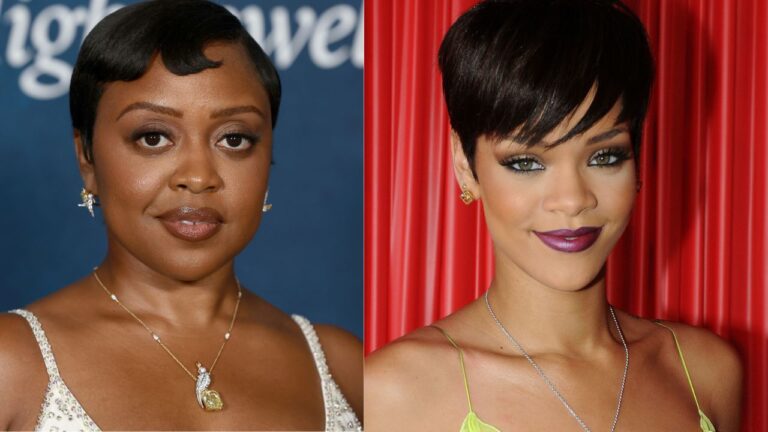
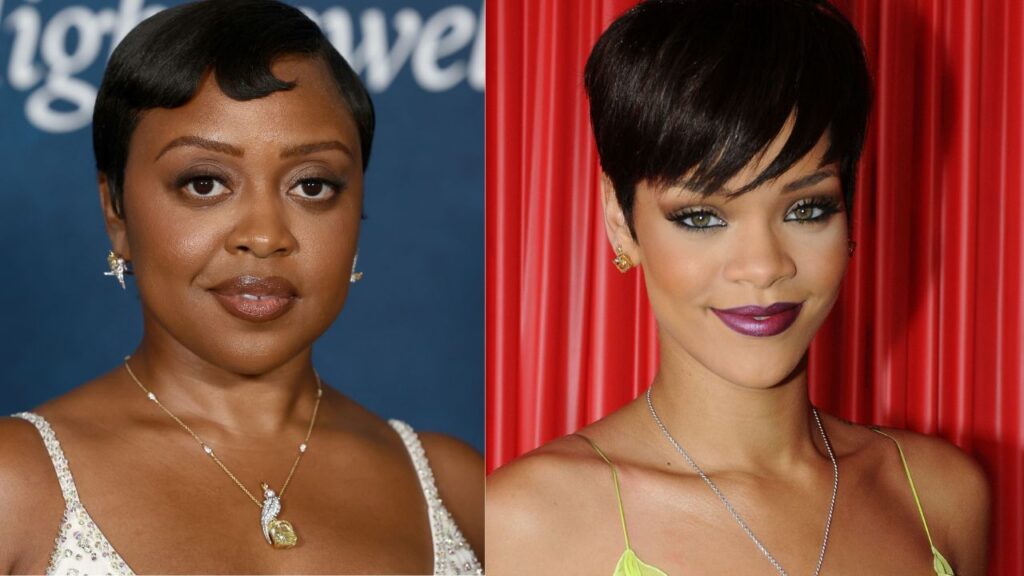
For the previous couple of years, the common-or-garden bob haircut, also referred to as the FAB, has occupied the pole place for brief haircuts. But there may be one reduce that supersedes the usual bob in each stylistic aptitude and cultural weight: the pixie, a brief reduce with a prolonged legacy.
As historical past reminds us and cultural evaluation maintains, hair is rarely “simply” hair the place Black ladies are involved. It virtually all the time represents a deeper by means of line between aesthetic achievements, in addition to the intersections of Blackness and womanhood. For higher and for worse, every part is related.
The act of reducing your hair is a famously charged and highly effective step, particularly in a length-obsessed society. In normal, lengthy hair is perpetually tied to femininity, a static social foreign money, however a foreign money all the identical.
It’s all the time greater than ‘simply’ hair for Black ladies
That stated, for Black ladies, the act of reducing your hair is an particularly charged choice in a length-obsessed society that closely scrutinizes Black femininity, which is already a notoriously fraught metric for us.
That makes it all of the extra particular that the pixie reduce has turn into synonymous with unlocking a new chapter of womanhood for Black women. Unlike “big chops,” the place individuals reduce off their hair with the intention to develop it again longer, these pixies are sometimes seen because the end line — the last word stage of self-acceptance.
Unconventional femininity
From Quinta Brunson to Teyana Taylor and “Take a Bow” era Rihanna, pixie cuts signify a shift in to energy and dominance, which on its face contradicts conventional requirements of femininity. But like Black ladies have executed with most societal expectations, we have now turned current suppositions on their head. And now the pixie isn’t simply female, it represents a brand new vanguard of womanhood.
Pixies don’t simply characterize femininity in its most pragmatic kind. It’s an intentional elevation, if not deviation, into a brand new spectrum of womanhood that doesn’t depend on pre-established and infrequently archaic beliefs. It’s concurrently a reclamation and divergence from the established order, a juxtaposition Black ladies have all the way down to a science.
About The Author