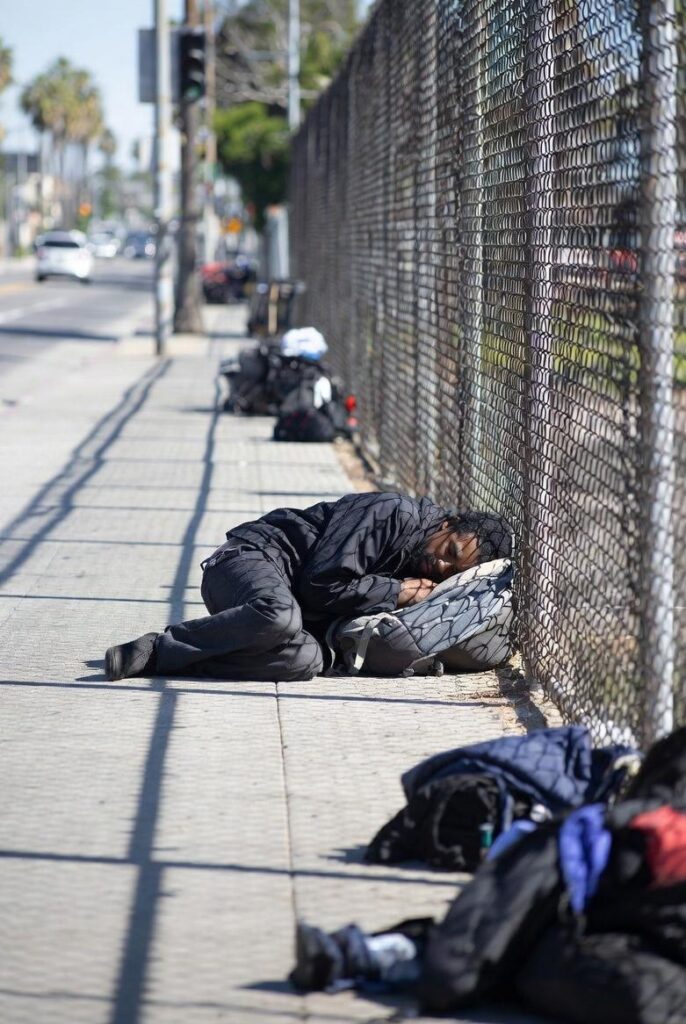
Every time we walk through the streets of L.A., we confront a stark reality that we’ve come to accept as normal: Black men sleeping on the sidewalks. It’s a sight that barely raises an eyebrow in a city known for its glitz and glamor. We’ve grown desensitized, haven’t we? Those faces lying on the pavement, tucked away behind a thin blanket or a tattered jacket, are like ghosts haunting our everyday lives, but how often do we truly see them?
This isn’t just about homelessness; it’s a reflection of systemic failures that have plagued our community for decades. We can’t ignore the intricate layers of poverty, mental health crises, and the consequences of mass incarceration that have left too many of our brothers exposed to the elements, stripped of dignity and support. These men are not just statistics; they are brothers, fathers, friends—members of our community who have fallen through the cracks of a society that too often turns a blind eye.
So why do we pass by, seemingly unfazed? Perhaps it’s easier to dismiss the uncomfortable truths than to confront the systems that put them there. We’ve heard the discussions, the debates about gentrification and public housing, yet the sight of a Black man curled up on the sidewalk barely elicits a collective gasp. Are we so numb to our reality that we can walk past suffering without flinching?
This issue isn’t just L.A.-specific; it resonates across cities and towns where Black men are disproportionately impacted. The narrative surrounding them often fails to capture the complexity of their lives. They are painted as lazy or unmotivated, yet we know the barriers they face—discrimination in employment, lack of access to mental health resources, and the haunting specter of systemic racism that looms over every opportunity they’re denied. This isn’t a problem that can be solved overnight, but we must start by acknowledging their existence.
We have to ask ourselves what kind of community we want to build. It’s not enough to walk by and pretend it doesn’t affect us. The stories that lead to these heartbreaking scenes matter—every single one of them. We’ve got to lift our heads from our phones, engage with each other, and advocate for transformative solutions that support our brothers. As we think about the future we want for ourselves, let’s not forget the lives at stake right in front of us.
It’s time to open our eyes and realize that every man sleeping on the sidewalk holds a piece of our shared struggle. We can’t afford to turn away anymore.
From The Source
About The Author