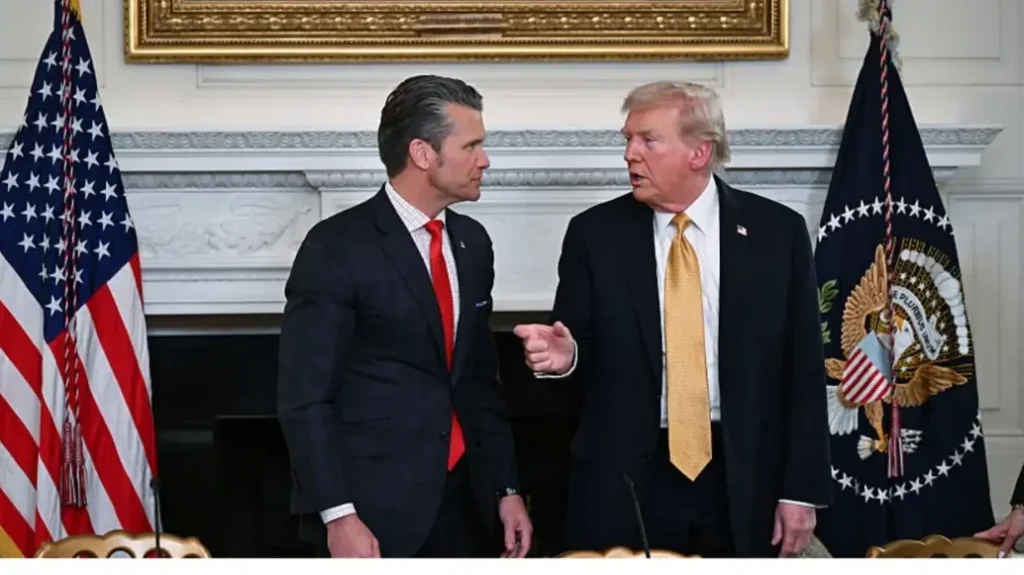
In a world where political narratives shift faster than the news cycle, Pete Hegseth, Defense Secretary and staunch Trump ally, found himself at the center of an unexpected storm this week. His attempts to project unwavering strength in support of the former president came crashing down when Iran’s swift and biting response went viral, leaving him reeling in the aftermath. The irony was palpable as many watched Hegseth, who has spent his career building a platform on patriotism and military prowess, get dragged into the fray by the very secrets he thought he had buried deep.
Hegseth’s initial comments were aimed at rallying support within the GOP, implying that Trump’s policies had been a bastion of strength against terrorism and foreign threats. But instead of bolstering his argument, his words seemed to trigger a collective memory among the public, recalling not just the events of the past few years, but the deeper, troubling undertones of American foreign policy that many believed had been swept under the rug. When Iran responded with its own blast on social media, pointing out the contradictions in Hegseth’s statements, the move was seen not just as a political counter, but as a reflection of the geopolitical chess game that continues to unfold.
What followed was a deluge of memes, tweets, and videos mocking Hegseth—an avalanche that seemed to flip the narrative on its head. While he had hoped to depict strength and resilience, viewers were treated to an altogether different performance: a man caught off-guard, grappling with the ghosts of his political past. The public’s reaction wasn’t just about Hegseth’s comments; it was a critique of the broader system that allows such contradictions to fester and thrive. In a moment where authenticity is craved, the political elite’s facade was cracking.
This incident serves as a reminder of how quickly fortunes can change in the political arena and how the internet has become a powerful tool for accountability. The public is more than just an audience; we are participants in an ongoing dialogue, and the lines drawn in the sand often shift underfoot. As Hegseth navigates the fallout from this debacle, one can’t help but wonder if this moment might serve as a wake-up call for those entrenched in the status quo. The political landscape is evolving, and this latest episode is a testament to that reality—where words matter, and their reverberations can resound far beyond the intended audience.
About The Author