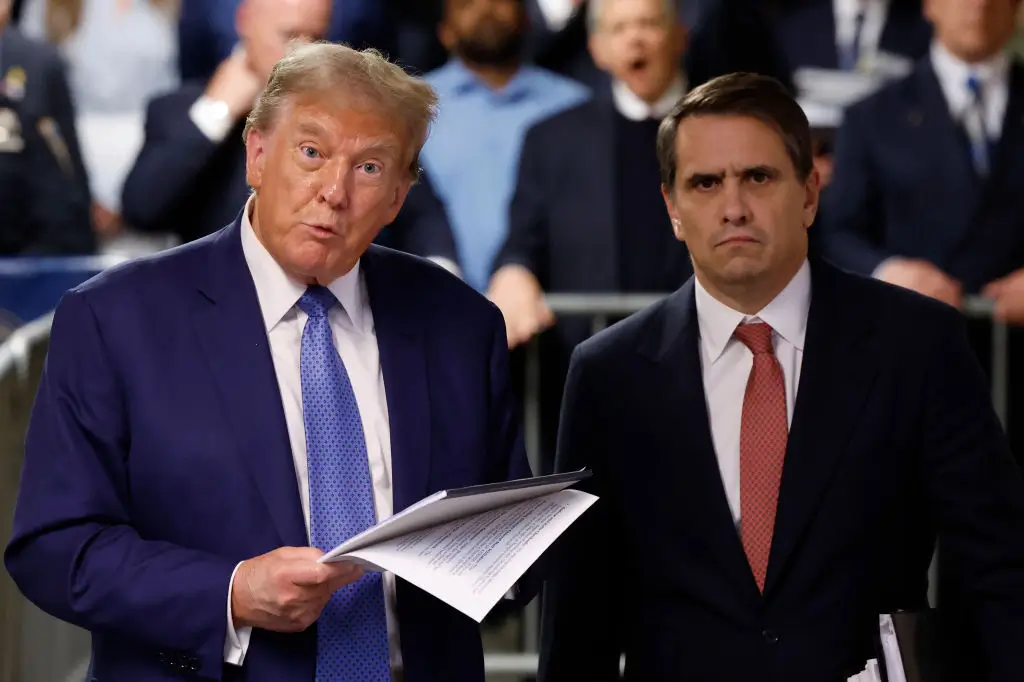
President Donald Trump’s new $1.8 billion “Anti-Weaponization Fund” is already igniting fierce backlash as critics warn the administration could end up rewarding January 6 rioters. In a recent interview, Todd Blanche, Trump’s attorney, attempted to articulate the fund’s purpose, but his defense quickly faltered when a seemingly innocuous word slipped from his lips. This slip not only exposed the fragile foundations of his argument but also sparked a significant question from Black America that Washington is desperately trying to avoid.
The idea that this fund could be used to bolster those who participated in the insurrection has resonated deeply within communities that have long faced systemic oppression and brutality at the hands of law enforcement. For many, Blanche’s misstep highlighted the glaring hypocrisy at play. While the government has historically weaponized its resources against marginalized communities, here it appears poised to offer financial support to those who would disrupt the democratic process. This contradiction is not lost on the Black community, which has been left to question: Why are the perpetrators of violence against democracy being treated with leniency, while peaceful protesters advocating for civil rights are met with force?
As the backlash grows, it’s clear that this fund is not just a political maneuver but a reflection of deeper societal issues. Washington must confront the uncomfortable reality that the allocation of federal resources often reinforces existing inequalities. The response to Blanche’s comments underscores a critical moment in political discourse, where the voices of Black Americans are demanding accountability and equity. The silence from the corridors of power is deafening, but the questions being raised are impossible to ignore.
About The Author