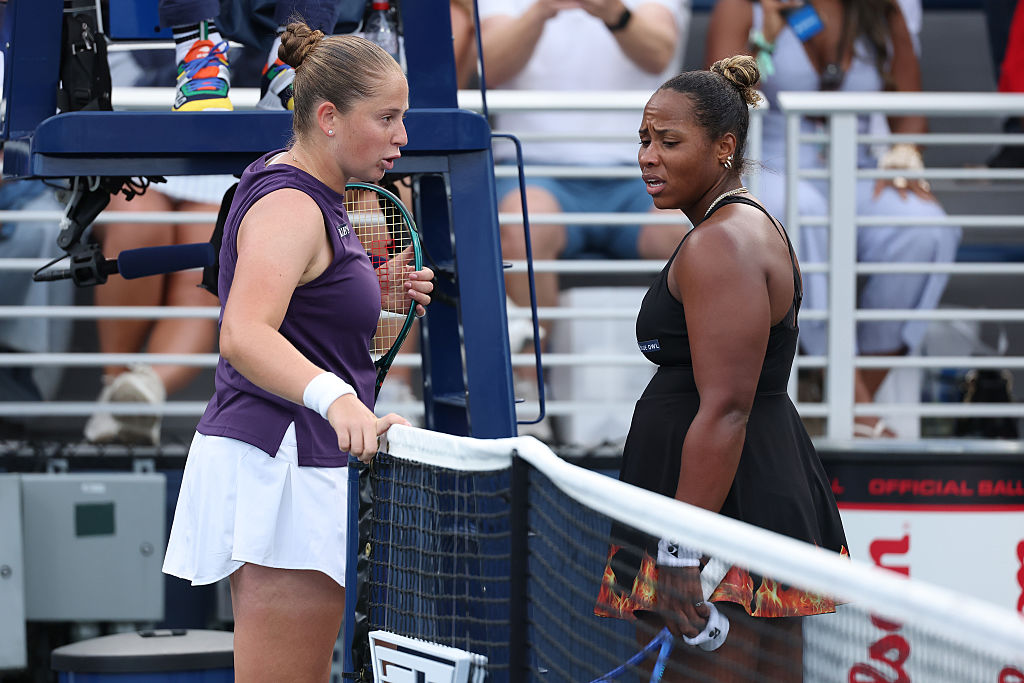
In the heat of competition, emotions can run high, but nothing quite stirs the pot like a direct shot to the character. During the recent U.S. Open, we witnessed a tense exchange between Taylor Townsend and Jelena Ostapenko that sparked conversations beyond the tennis court. When Ostapenko accused Townsend of having “no education” following her victory, it wasn’t just a clash between athletes—it was a moment that encapsulated the ongoing struggle against stereotypes and the resilience of our community in the face of ignorance.
Townsend’s response was a masterclass in composure. Instead of descending into a petty tit-for-tat, she stood tall and reflected on her upbringing, her achievements, and the hard work that brought her to this point. In a sport often criticized for its lack of diversity, Townsend’s grace under pressure is a reminder that representation matters. It’s not just about winning matches; it’s about showing young Black girls that they can occupy space in arenas dominated by narratives that don’t often include them.
Ostapenko’s comment struck a nerve, resonating with many who have experienced the harsh sting of racial and cultural assumptions. For anyone who’s faced a similar situation, we can appreciate how Townsend transformed a moment of hostility into a platform for dignity and self-affirmation. Her ability to remain poised speaks volumes about the strength of our community. When one of us is attacked, we all feel it, yet how we respond is what defines us.
This incident underscores the intersection of sports and the broader societal narratives that often seep into them. It’s not just about rallies and serves; it’s about how athletes like Townsend confront prejudice head-on while simultaneously smashing boundaries in their respective fields. It’s about the ongoing journey toward equality in spaces that have historically marginalized voices like ours.
As the dust settles on this altercation, one thing remains clear: tennis, like many sports, is a reflection of society, filled with its triumphs and trials. Townsend’s story is a testament to resilience, reminding us that the fight against ignorance is ongoing, and it requires us to respond with grace, wisdom, and unwavering pride. In the end, it’s not just about a match won or lost; it’s about the broader message we send when we stand our ground. As we continue to watch these narratives unfold, let’s keep supporting athletes who not only compete but also inspire change.
From The Source

About The Author