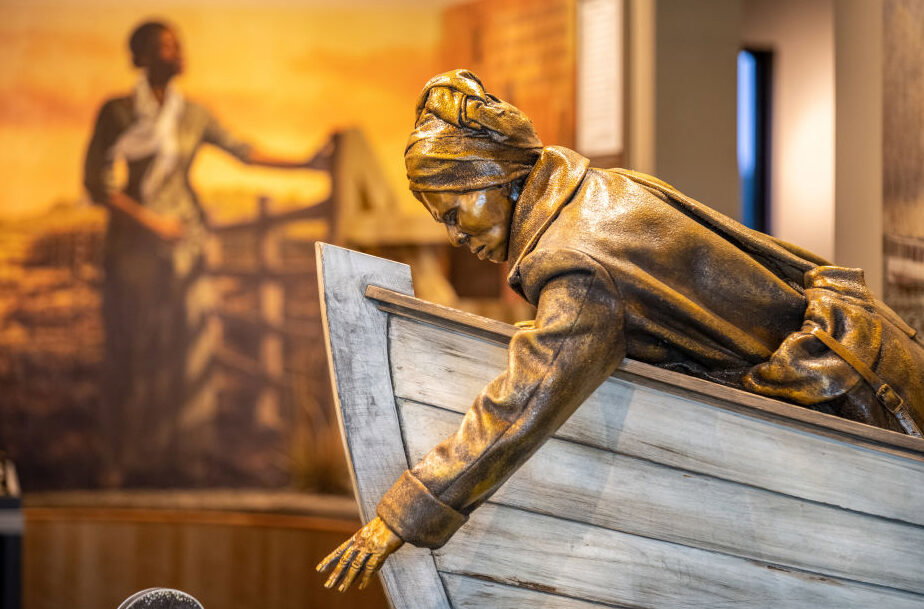
A display of a Harriet Tubman statue at the Harret Tubman Visitor Center. (Photo by: Edwin Remsberg/VW Pics/Universal Images Group via Getty Images)
As we celebrate the contributions and legacies of Black women throughout history, it’s essential to acknowledge spaces that honor their stories, artistry, and impact. Museums dedicated to showcasing the achievements and experiences of Black women not only preserve critical narratives but also inspire future generations. From the vibrant works of artists to the poignant stories of activists, these institutions offer a sanctuary where Black women’s voices are amplified and celebrated.
One such space is the National Museum of African American History and Culture in Washington, D.C., which has a rich collection dedicated to the lives of Black women, from the era of slavery to contemporary times. Here, visitors can explore the contributions of figures like Harriet Tubman and Ella Baker, whose legacies paved the way for future generations of leaders and artists. The museum serves as a testament to the resilience and creativity of Black women and is a must-visit for anyone looking to understand the depth of their influence.
Another remarkable institution is the Studio Museum in Harlem, renowned for showcasing contemporary Black artists, many of whom are women. This museum not only exhibits their work but also provides a platform for emerging talent, fostering an environment where new stories can be told through art. By highlighting the perspectives of Black women artists, the museum plays a crucial role in ensuring that their experiences and visions are recognized and celebrated.
There are also smaller, community-focused museums and galleries that spotlight local Black women artists and historians, creating intimate environments for storytelling. These spaces often serve as vital resources for education and cultural exchange, providing workshops and programs aimed at empowering the next generation of Black women. They remind us that Black women’s art and history are not just topics of the past but living narratives that continue to evolve and inspire.
In visiting these museums, we not only honor the histories of Black women but also engage in a conversation about intersectionality and representation in art and society. As we explore these rich collections, we are reminded of the powerful legacies that continue to shape our world today. The importance of these museums reaches beyond their walls; they are integral to understanding the full tapestry of Black history and the vital role that Black women have played within it.
About The Author